Smart En-Route EV Charging Solutions for Sustainable Mobility
The global transition toward electric mobility is accelerating at an unprecedented pace. Governments, automakers, energy companies, and consumers are increasingly embracing electric vehicles (EVs) as a practical solution to reduce carbon emissions, improve energy efficiency, and decrease dependence on fossil fuels. While electric vehicles have achieved significant technological progress in recent years, one challenge continues to shape consumer confidence and adoption: convenient and reliable charging infrastructure.
Among the various charging methods available today, en-route EV charging plays a critical role in enabling long-distance travel and supporting the broader electrification of transportation networks. Unlike home or destination charging, en-route charging focuses on providing rapid energy replenishment during a journey, allowing drivers to continue traveling with minimal interruption. This charging model has become an essential component of modern EV ecosystems, especially as more drivers begin using electric vehicles for intercity commuting, commercial transportation, logistics operations, and cross-country travel.
As electric vehicle ranges continue to improve and fast-charging technologies evolve, en-route charging stations are becoming more powerful, intelligent, and widely accessible. Ultra-fast charging corridors, highway charging hubs, smart energy management systems, and renewable-powered charging stations are transforming the way EV owners travel. Today's en-route charging infrastructure is no longer simply about charging batteries; it is about creating a seamless, efficient, and user-friendly mobility experience.
This article explores the concept of en-route EV charging, its importance in modern transportation, charger technologies, infrastructure development, key benefits, industry challenges, technological innovations, and future market trends shaping the next generation of electric mobility.
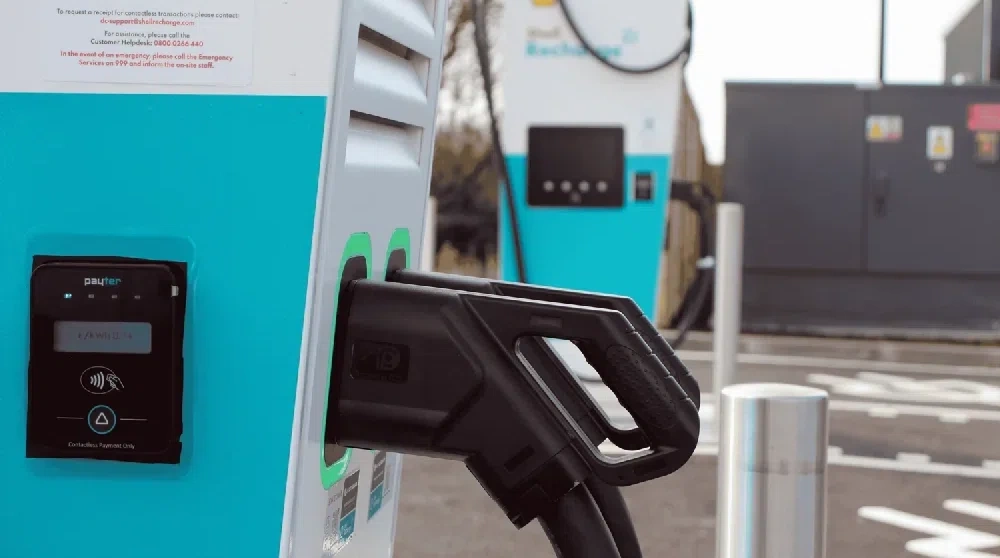
En-route EV charging refers to charging electric vehicles during a journey rather than at the final destination. These charging stations are strategically installed along highways, major transportation corridors, urban transit routes, and high-traffic commercial areas to support drivers who need to recharge while traveling.
This charging approach differs significantly from destination charging. Destination charging typically occurs where vehicles remain parked for extended periods, such as homes, hotels, office buildings, shopping centers, or public parking facilities. Destination charging systems are generally slower because vehicles can remain connected for several hours or overnight.
En-route charging, by contrast, is specifically designed for speed and convenience. Drivers stopping at these charging stations expect to quickly recharge their batteries and resume their trips within a short period of time. As a result, en-route charging infrastructure commonly uses DC fast chargers or ultra-fast chargers capable of delivering substantial energy within minutes rather than hours.
En-route charging stations are increasingly becoming integrated mobility hubs that offer multiple charging bays, digital payment systems, food services, rest areas, convenience stores, and vehicle maintenance support. This integration improves driver comfort and enhances the overall EV travel experience.
Although most EV charging sessions still occur at home or workplaces, en-route charging is becoming increasingly important as EV adoption expands globally. Long-distance travel remains one of the key concerns among potential EV buyers, often referred to as “range anxiety.” Drivers worry about running out of battery power before reaching a charging station, especially in unfamiliar regions.
En-route charging infrastructure directly addresses this concern by creating dependable charging networks along travel routes. Reliable charging availability encourages consumer confidence and supports broader EV market acceptance.
Several factors are driving the growing importance of en-route charging:
As EV sales continue rising worldwide, more drivers are relying on public charging infrastructure for daily and long-distance transportation. Public fast-charging networks are essential for apartment residents, fleet operators, and travelers who may not have access to home charging.
Electric vehicle owners increasingly expect the same convenience and flexibility provided by traditional gasoline refueling systems. En-route charging allows EVs to support road trips, tourism, commercial delivery routes, and regional transportation without significant travel limitations.
Commercial EV fleets, including delivery vans, buses, taxis, and freight vehicles, require rapid charging to maintain operational efficiency. En-route charging hubs enable fleet operators to minimize downtime and maximize vehicle utilization.
Governments worldwide are investing heavily in charging infrastructure development to support carbon neutrality targets and transportation electrification policies. Highway charging networks are considered critical infrastructure for achieving national sustainability objectives.
Modern battery systems and charging technologies now support ultra-fast charging speeds that dramatically reduce waiting times. These advancements make en-route charging more practical and attractive for consumers.
Electric vehicle chargers are generally categorized into three primary levels based on charging speed and power output.
Level 1 charging uses a standard household electrical outlet and is primarily intended for residential use. These chargers typically operate using 120V power in North America and provide relatively slow charging speeds.
Level 1 charging can require more than 40 hours to charge a fully depleted battery electric vehicle to approximately 80% capacity. Plug-in hybrid electric vehicles generally require fewer hours because of their smaller battery sizes.
Although Level 1 charging is affordable and convenient for overnight home charging, it is not suitable for en-route charging applications because of its limited charging speed.
Level 2 charging systems operate using higher-voltage electrical supplies, commonly 208V or 240V. These chargers are widely used in homes, workplaces, parking garages, retail locations, hotels, and public charging stations.
Level 2 chargers can typically charge a battery electric vehicle within four to ten hours, depending on battery size and charger power output. Plug-in hybrid vehicles may require only one to two hours.
While Level 2 chargers are practical for destination charging, they are generally too slow for high-demand en-route charging scenarios where rapid energy replenishment is essential.
Level 3 charging, also known as DC fast charging, represents the core technology behind en-route charging networks. These systems deliver direct current power directly to the vehicle battery, bypassing the onboard charger and enabling significantly faster charging speeds.
DC fast chargers commonly operate within power ranges of 50kW to 350kW or higher. Depending on vehicle compatibility and battery conditions, many EVs can charge from 10% to 80% in approximately 20 to 40 minutes.
Ultra-fast charging technology continues evolving rapidly, with next-generation chargers expected to exceed 500kW in commercial applications.
Modern en-route charging stations are designed to minimize waiting times and maximize travel efficiency. Charging speed depends on several factors, including:
- Charger power rating
- Vehicle battery capacity
- Battery temperature
- Vehicle charging capability
- Battery state of charge
Most en-route charging stations today offer charging capacities between 50kW and 350kW. High-performance electric vehicles equipped with advanced battery systems can achieve extremely rapid charging times at ultra-fast charging stations.
For example:
- A 50kW charger may add approximately 100 to 150 miles of range per hour.
- A 150kW charger can significantly reduce charging times for compatible EVs.
- A 350kW ultra-fast charger may recharge certain EV batteries to 80% capacity in as little as 15 to 20 minutes.
Charging stations along highways increasingly feature multiple charging bays to reduce congestion and waiting queues. Some charging hubs now include six, eight, or even dozens of ultra-fast chargers operating simultaneously.
Developing effective en-route charging networks requires more than installing charging equipment. Comprehensive infrastructure planning includes several interconnected components.
High-power charging equipment forms the foundation of en-route charging systems. These chargers must provide reliable, efficient, and safe power delivery under demanding operating conditions.
Modern chargers include advanced cooling systems, digital displays, communication interfaces, payment terminals, and remote monitoring capabilities.
Fast-charging stations require substantial electrical capacity. Utility providers and infrastructure developers must coordinate grid upgrades, transformer installations, and energy management systems to support large-scale charging operations.
Some charging hubs require power capacities comparable to small industrial facilities.
Smart software platforms manage charger availability, user authentication, billing, energy optimization, maintenance diagnostics, and load balancing.
Mobile applications now allow drivers to:
- Locate charging stations
- Check charger availability
- Reserve charging sessions
- Monitor charging progress
- Process digital payments
- Plan optimized travel routes
Many charging providers are integrating renewable energy sources such as solar and wind power into charging infrastructure. Battery energy storage systems are also increasingly used to reduce grid stress and improve energy efficiency.
Renewable-powered charging stations contribute to the environmental sustainability goals associated with electric mobility.
En-route charging delivers numerous advantages for drivers, businesses, governments, and the environment.
Reliable charging networks provide drivers with confidence that they can travel long distances without worrying about battery depletion. This reassurance plays a major role in accelerating EV adoption.
Ultra-fast charging significantly reduces downtime during travel. Drivers can recharge their vehicles during short breaks for meals, shopping, or rest stops.
En-route charging enables EVs to support interstate transportation, tourism, logistics operations, and regional commuting.
Electric vehicles powered through renewable energy-supported charging networks contribute to lower greenhouse gas emissions and improved air quality.
Charging infrastructure development creates investment opportunities for utilities, charging providers, retail businesses, and real estate developers. Highway charging hubs can attract travelers and stimulate local economic activity.
Commercial fleet operators benefit from reduced fuel costs, lower maintenance requirements, and compliance with environmental regulations through access to rapid charging infrastructure.
Despite rapid progress, several challenges continue affecting the deployment and operation of en-route EV charging systems.
Installing high-power charging stations requires significant investment in equipment, grid upgrades, land acquisition, and maintenance.
Ultra-fast charging stations are substantially more expensive than conventional charging systems due to their advanced electrical requirements.
Large charging hubs can place substantial pressure on electrical grids, particularly during peak demand periods. Utility companies must modernize grid infrastructure to support future charging expansion.
Different EV manufacturers may use different charging standards and connector types. Although industry standardization is improving, compatibility challenges can still create inconvenience for users.
Urban regions often have better charging access than rural areas. Expanding charging infrastructure into underserved regions remains essential for nationwide EV adoption.
As EV ownership increases, some charging stations experience congestion during peak travel periods. Expanding charger availability and implementing intelligent reservation systems can help reduce waiting times.
Extreme temperatures can affect battery charging performance and charging station reliability. Infrastructure providers must ensure durable system operation under diverse environmental conditions.
The EV charging industry is evolving rapidly, with numerous innovations shaping the future of en-route charging infrastructure.
Next-generation charging systems are pushing power outputs beyond 350kW, enabling even shorter charging sessions. Advanced liquid-cooled cables and improved battery chemistries support these higher charging rates.
Some manufacturers and mobility providers are exploring battery swapping technologies that allow depleted batteries to be replaced with fully charged units within minutes.
Battery swapping may become especially valuable for commercial fleets and urban transportation systems.
Wireless inductive charging technology is being developed for static and dynamic charging applications. Future road systems may eventually support charging while vehicles are driving.
Although still in early development stages, wireless charging could transform EV mobility in the coming decades.
Artificial intelligence is increasingly being used to optimize charging station operations, predict maintenance needs, balance grid loads, and improve user experiences.
Smart charging systems can automatically adjust charging speeds based on energy demand, electricity pricing, and grid conditions.
Vehicle-to-grid technology allows EV batteries to send electricity back into the grid during periods of high demand. This capability can help stabilize power networks and improve renewable energy utilization.
En-route charging infrastructure may eventually become part of larger intelligent energy ecosystems.
Countries around the world are heavily investing in public charging infrastructure development.
North America
The United States and Canada are expanding national charging corridors supported by public funding initiatives and private sector investment. Highway fast-charging networks are growing rapidly across major travel routes.
Europe
Europe continues leading global EV adoption and charging infrastructure deployment. Countries such as Norway, Germany, the Netherlands, and the United Kingdom have established extensive charging networks supporting regional and cross-border travel.
China
China remains the world's largest EV market and has developed one of the most comprehensive charging infrastructures globally. Rapid deployment of ultra-fast charging stations supports massive EV adoption across urban and highway transportation systems.
Asia-Pacific
Countries including Japan, South Korea, India, and Australia are accelerating charging infrastructure investments to support growing EV markets and sustainability initiatives.
Commercial transportation is expected to become one of the largest users of en-route charging infrastructure.
Electric trucks, buses, and delivery fleets require reliable rapid charging solutions to maintain operational schedules. Logistics companies are increasingly integrating charging hubs into transportation routes and distribution centers.
Heavy-duty electric trucks require significantly larger battery capacities and higher charging power levels than passenger vehicles. Megawatt charging systems are being developed specifically for commercial transportation applications.
As commercial electrification expands, en-route charging infrastructure will become essential for supporting freight transportation, public transit systems, and industrial logistics networks.
The future of en-route EV charging will likely be shaped by several major trends:
Highway charging networks will continue expanding globally, providing comprehensive long-distance charging coverage.
Charging hubs will include larger numbers of chargers to accommodate growing EV populations and reduce waiting times.
Solar-powered charging stations and battery storage systems will become increasingly common.
Charging infrastructure will integrate with autonomous driving systems, smart cities, and intelligent transportation platforms.
Advanced mobile applications, reservation systems, contactless payments, and predictive navigation tools will enhance charging convenience.
Greater industry standardization will improve compatibility between vehicles, charging networks, and payment systems.
En-route EV charging has become one of the most important pillars supporting the global transition toward electric mobility. By enabling rapid charging during travel, en-route charging infrastructure removes one of the largest barriers to widespread EV adoption: range anxiety.
Modern charging technologies now allow drivers to recharge their vehicles in minutes rather than hours, making electric vehicles increasingly practical for long-distance transportation, commercial logistics, and everyday mobility. Governments, utilities, charging providers, and automakers are investing heavily in expanding fast-charging networks to meet growing demand and accelerate transportation electrification.
Although challenges related to infrastructure costs, grid capacity, compatibility, and geographic coverage remain, ongoing technological innovation continues driving remarkable progress across the EV charging industry. Ultra-fast charging systems, renewable energy integration, smart charging software, wireless charging, and vehicle-to-grid technologies are reshaping the future of sustainable transportation.
As electric vehicle adoption continues rising worldwide, en-route charging infrastructure will play a vital role in building cleaner, smarter, and more connected transportation systems. The future of mobility depends not only on advanced electric vehicles but also on the development of efficient, reliable, and accessible charging networks that keep drivers moving wherever their journeys take them.