
Type 2 to Type 2 EV Charging Cable: A Complete Guide for Modern Electric Mobility
As electric vehicles (EVs) move rapidly from niche products to mainstream transportation worldwide, the need for reliable, standardized, and efficient charging solutions has grown more urgent than ever. Among the various charging connectors and cable formats available today, the Type 2 to Type 2 EV charging cable has emerged as the dominant configuration in Europe and is gaining strong adoption across Asia, Australia, and many other global markets.
This cable type is specifically engineered to connect EVs equipped with a Type 2 inlet—now the industry standard in Europe—to public or private EV charging stations that feature Type 2 sockets. Because of its high compatibility, robust performance, and adherence to internationally recognized standards, the Type 2 to Type 2 cable is now considered one of the foundational components of modern electric mobility.
As EV ownership continues to rise, consumers demand EV charging solutions that are safe, fast, durable, and convenient. For many drivers, selecting the right cable can significantly improve charging efficiency and overall user experience. This comprehensive news report explores everything you need to know—from how to select the correct Type 2 cable to the technical specifications that make it uniquely reliable in a rapidly evolving market.
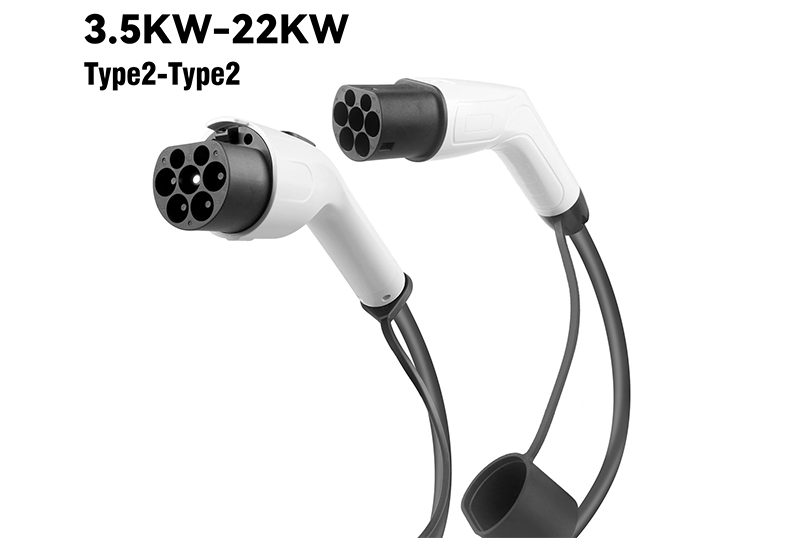
The Type 2 connector, originally developed by Mennekes in Germany, has become the universal AC charging standard across Europe. Its adoption was accelerated when the European Union mandated Type 2 compatibility for all public AC charging stations. This regulatory decision dramatically simplified charging networks, ensuring that vehicles from any manufacturer could use virtually any AC charging point.
Today, Type 2-compatible EVs include models from:
Tesla (European models)
BMW, Audi, Volkswagen, Mercedes-Benz
Volvo, Polestar
Hyundai, Kia
BYD, MG, NIO
Renault, Peugeot, Opel, Citroën
Many others across dozens of brands
Because so many automakers have implemented this standard, the Type 2 to Type 2 cable remains the most essential charging accessory for EV drivers traveling in Europe or using public AC chargers in many other countries.
An EV charging cable may seem like a simple component, but it plays a critical role in ensuring safe, efficient, and reliable charging. A mismatched or low-quality cable can lead to:
slower charging speeds
overheating
compatibility issues
premature cable wear
unsafe operation
With the average EV charging session lasting anywhere from 1 to 8 hours depending on battery size and charging speed, the cable is subjected to substantial electrical load and environmental stress. Selecting a cable that matches your car’s power requirements, your charging habits, and your typical parking situations is essential.
Choosing the right cable involves understanding several important factors, including connector type, cable length, charging capacity, and weather resistance. Below is a detailed look at the most important considerations.
The first and most crucial requirement is connector compatibility. While other connector types such as Type 1 continue to exist—especially in older Japanese or early American models—the Type 2 connector dominates the current EV landscape in Europe.
Manufacturers around the world have begun aligning with the Type 2 standard because it offers:
higher charging power
better longevity
integrated safety features
broader infrastructure compatibility
A Type 2 to Type 2 cable is specifically used for Mode 3 AC charging, the standard type of charging done at public AC charging stations and many home wallboxes.
If your EV has a Type 2 inlet, which most modern European EVs do, then a Type 2 to Type 2 cable is the correct choice.
Cable length significantly impacts convenience:
Shorter cables (4–5 meters)
easier to store
lighter to carry
ideal for home charging where the wallbox and parking position remain consistent
Medium-length cables (7–8 meters)
offer flexibility for different parking orientations
suitable for mixed use—home and public charging
Longer cables (10 meters or more)
useful when parking spaces are tight or poorly aligned
more versatile for public chargers with fixed cable positions
heavier and more difficult to store
Electric vehicle owners should consider:
how close their EV parks to the charging station
how often they use public chargers
whether they need flexibility across multiple locations
A 5–7 meter cable is the most popular option for most drivers.
Type 2 to Type 2 cables come in several power ratings:
Single-phase 16A (up to 3.6 kW)
Suitable for small plug-in hybrids and slow overnight charging.
Single-phase 32A (up to 7.4 kW)
Most common for residential AC charging.
Three-phase 16A (up to 11 kW)
Ideal for EVs that support standard European AC charging speeds.
Three-phase 32A (up to 22 kW)
Preferred for faster AC charging at public stations or for EVs capable of taking 22 kW AC input.
While using a higher-rated cable (e.g., 22 kW) with a slower-charging EV won’t harm your vehicle, it might not be cost-effective. The EV simply draws the amount of power it is designed for, regardless of how capable the cable is.
Knowing your EV’s maximum AC charging speed ensures you choose a cable that meets your needs without unnecessary expense.
Most public charging is exposed to outdoor conditions. Therefore, the cable must be able to withstand:
rain and moisture
UV exposure
temperature extremes
dirt, dust, and impact
High-quality Type 2 cables offer:
IP55 or higher weather resistance
thick insulation
anti-friction sheathing
durable connector caps
strain-relief protection to prevent internal cable damage
By ensuring the cable is built for outdoor use, you protect your EV and charger while guaranteeing long-term performance.
The popularity of Type 2 to Type 2 EV charging cables is driven by several compelling benefits.
Standardized connectors simplify everything:
EV drivers can charge anywhere without compatibility concerns.
Charging station operators streamline installation and maintenance.
Manufacturers reduce waste and lower production costs.
The entire charging ecosystem becomes more accessible and efficient.
This standardization has been a cornerstone of Europe’s EV success story and is being adopted globally.
The Type 2 connector has proven to be one of the most advanced EV charging interfaces available, offering:
Three-phase capability for faster AC charging
Power capacity up to 43 kW AC (rare, but technically possible)
Integrated communication between EV and charger
Automatic locking mechanisms for safety
Long lifespan, even with heavy use
This blend of speed, safety, and durability makes Type 2 cables a cornerstone of modern EV charging infrastructure.
To understand what makes these cables so effective, it helps to break down their technical features.
Premium cables use oxygen-free copper conductors to reduce resistance and heat generation. This ensures maximum charging efficiency and long-term reliability.
Typical multi-core cables include:
protective insulation layers
high-tensile outer sheathing
flame-retardant materials
waterproof sealing
These layers protect the cable from both electrical stress and environmental damage.
High-quality cables can operate safely in extreme conditions:
-30°C to +50°C temperature range
resistance to freezing and overheating
This is especially important in regions with harsh winters or hot summers.
Type 2 connectors are designed to withstand:
10,000+ insertion cycles
impacts from drops and pressure
daily outdoor use
Their ergonomic design also ensures easy handling, even with gloves.
Safety is a top priority. Most Type 2 cables include:
built-in temperature sensors
anti-overheating protection
secure locking to prevent accidental unplugging
reinforced pins
short-circuit protection
These features provide peace of mind during long charging sessions.
High-quality cables provide:
faster charging performance
safer connections
longer service life
reduced risk of overheating
compatibility with all European AC chargers
flexibility for travel and public charging
They also ensure optimal communication between EV and charging station, enabling smart charging functions like:
load balancing
scheduled charging
dynamic power adjustment
Most public chargers require drivers to bring their own cable. Without a Type 2 cable, charging becomes impossible.
Employers often install socket-only chargers to reduce costs. Workers must use their own cables.
Hotels, parking garages, shopping centers, and tourist destinations frequently use Type 2 sockets.
Some home chargers include a Type 2 socket instead of a tethered cable for more flexibility.
With millions of EVs entering the market over the next decade, demand for reliable AC charging cables will continue to rise. Europe’s commitment to the Type 2 standard has influenced many global regions, making it likely that Type 2 technology will remain a dominant anchor in EV charging for the long term.
As charging networks expand, more advanced Type 2 cables featuring:
smart chips
dynamic load control
improved ergonomics
faster charging capabilities
will become common.
The Type 2 to Type 2 EV charging cable is more than just a simple accessory—it is a critical component of the electric vehicle ecosystem. Its compatibility, durability, safety, and efficiency make it an essential tool for everyday EV use, whether at home, at work, or on the road.
By understanding cable specifications, choosing the right length and power rating, and investing in a high-quality, weather-resistant design, EV owners can significantly improve their charging experience and ensure long-term performance.
As global EV adoption accelerates, the Type 2 to Type 2 cable will continue to play a central role in enabling efficient, accessible, and user-friendly charging infrastructure worldwide.
