CCS1 vs CCS2: Understanding the Global EV Charging Connector Standards
As electric vehicles (EVs) continue to gain worldwide popularity, the importance of safe, fast, and unified charging standards has never been greater. Among the most widely used charging systems today are CCS1 and CCS2, two connector standards that dominate different regions of the world. Their emergence reflects not only technological evolution but also the need for cross-compatible and scalable infrastructure that can serve millions of drivers transitioning from gasoline-powered cars to zero-emission electric mobility.
Both standards fall under the Combined Charging System (CCS) family, which integrates AC (alternating current) and DC (direct current) charging capabilities into a single unified port on the vehicle. This dual-function design allows EV owners to conveniently use home EV chargers, workplace EV chargers, community EV chargers, and ultra-fast public charging stations without needing separate charging ports.
Yet despite their shared origins, CCS1 and CCS2 differ significantly in design, functionality, regional adoption, and electrical capabilities. Understanding these differences is crucial for EV buyers, fleet operators, charge point installers, and manufacturers planning to enter global markets.
This in-depth analysis explores the differences, advantages, and regional relevance of CCS1 and CCS2, helping readers make informed decisions in an increasingly electrified world.
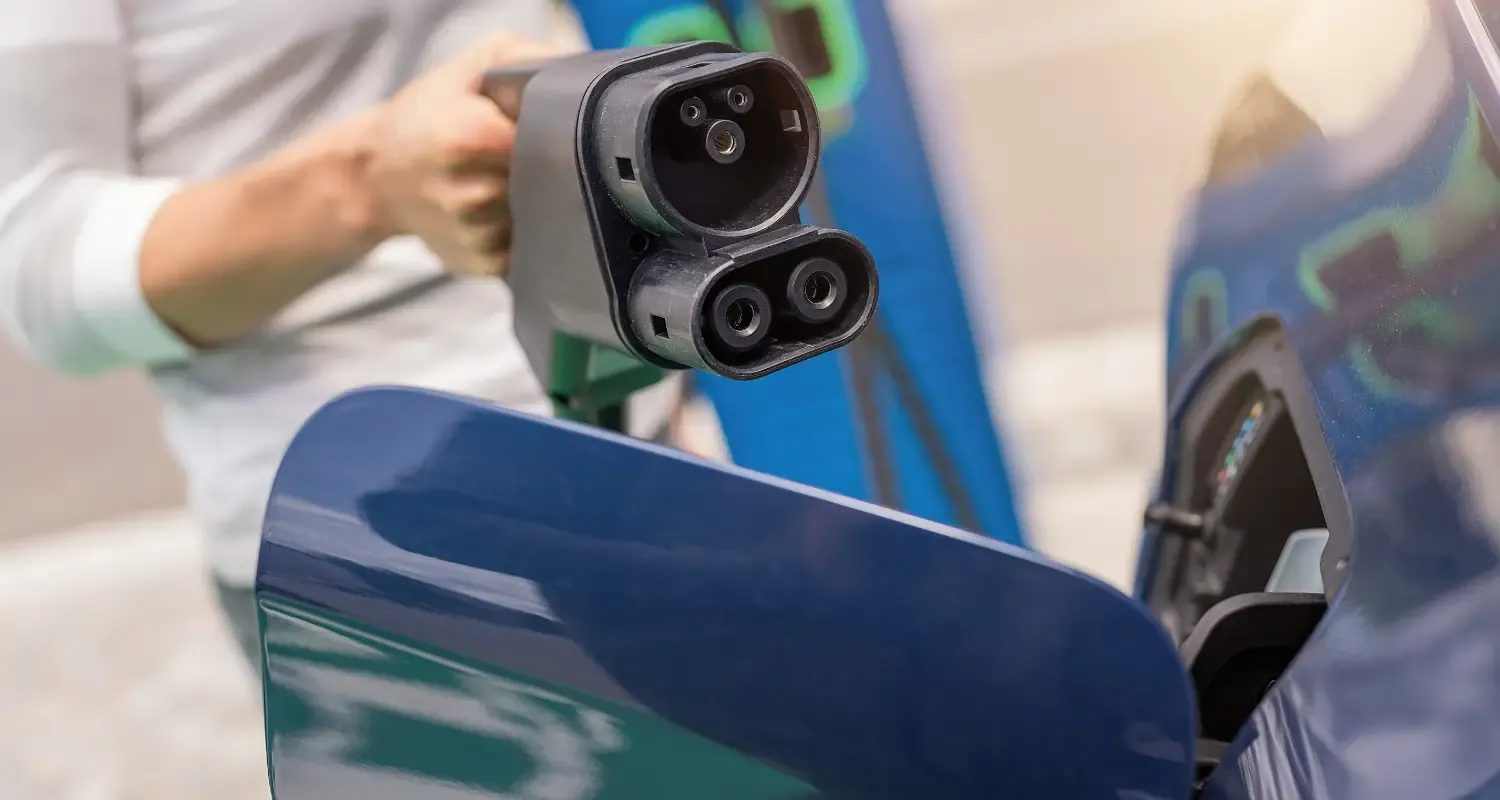
The CCS1 connector, also known as Type 1 CCS, is the primary charging standard used across North America and South Korea. Its design builds upon the widely used SAE J1772 Type 1 AC connector, which is the default AC charging interface in the United States and Canada.
CCS1 integrates:
The J1772 Type 1 AC connector at the top
Two large DC pins located below the AC section
This combined arrangement allows the same vehicle inlet to accommodate both slow AC charging and high-power DC fast charging.
The J1772 connector portion includes five pins:
Two AC power pins (L1 and N)
Ground pin
Proximity detection pin (PD)
Control pilot pin (CP)
This structure supports:
Single-phase AC charging
Power levels of up to 7.4 kW, depending on the vehicle’s onboard charger
Universal compatibility with North American home and workplace chargers
CCS1 is used in:
The United States
Canada
Mexico (increasingly adopted)
South Korea
Major American automakers such as Ford, General Motors, Rivian, Lucid, and older Tesla models (via adapter) support CCS1. In 2025, many U.S. automakers began transitioning toward Tesla’s NACS connector, but CCS1 remains the primary DC fast charging standard on public networks like Electrify America, EVgo, ChargePoint, and others.
Well-established across North America
Compatible with the large installed base of J1772 AC chargers
Supports high-power DC fast charging up to 350 kW
Simple connector design for single-phase power grids
Its limitations arise mainly from the AC portion, which caps charging speed relative to European three-phase AC systems.
The CCS2 connector, also known as Type 2 CCS, dominates the EV charging landscape in Europe, Australia, New Zealand, and many parts of Asia. It was developed to align with European electrical standards and has been adopted as the official EU charging standard.
CCS2 builds upon the IEC Type 2 (Mennekes) AC connector, which is widely used throughout Europe. Like CCS1, it adds two additional pins beneath the AC section for DC charging.
The Type 2 AC connector features seven pins:
Three phase conductors (L1, L2, L3)
Neutral conductor
Ground pin
Proximity detection
Control pilot
This allows support for:
Single-phase AC charging
Three-phase AC charging up to 43 kW
Compatibility with nearly all European AC charging stations
Three-phase capability is a major advantage in regions where industrial-style power distribution is common.
CCS2 dominates in:
The European Union
The United Kingdom
Australia and New Zealand
Middle East regions
India (in combination with Bharat AC/DC standards)
Most of Southeast Asia
Ukraine and parts of Eastern Europe
Because the EU mandates Type 2 for AC and CCS2 for DC charging, nearly all European-made EVs—from Volkswagen and BMW to Mercedes-Benz, Porsche, and Volvo—use CCS2 as standard.
Supports three-phase AC charging, significantly faster than CCS1
Universally mandated across Europe
Compatible with a wide range of AC and DC stations
Supports ultra-fast DC charging up to 350 kW
Highly adaptable to global electrical infrastructure
Its more complex design reflects the diverse and more sophisticated power systems in Europe compared to North America.
Design Differences Between CCS1 and CCS2
Although both connectors serve the same purpose, their designs differ in several important areas:
Feature | CCS1 | CCS2 |
Base AC connector | SAE J1772 Type 1 | IEC Type 2 (Mennekes) |
Number of AC pins | 5 | 7 |
AC charging support | Single-phase | Single-phase + three-phase |
Max AC power | ~7.4 kW | Up to ~43 kW |
Typical region | North America | Europe, Asia, Australia |
DC fast charging | Up to 350 kW | Up to 350 kW |
The addition of three-phase capability in CCS2 is the most substantial technical difference between the two standards.
The AC charging capabilities of the two connectors differ significantly.
Supports single-phase AC
Typical power: 3.3 kW – 7.4 kW
Suitable for home charging and low-power commercial chargers
Limited by the Type 1 system common in North America
Supports single-phase and three-phase AC
Power range:
7.4 kW (single-phase)
11 kW – 22 kW (three-phase)
Up to 43 kW on older Renault models
Much faster and more flexible than CCS1
Ideal for public AC chargers commonly found across Europe
Both CCS1 and CCS2 support:
High-power DC charging up to 350 kW
Compatibility with ultra-fast charging networks worldwide
In practice, many public chargers offer between 50 kW and 175 kW, which is sufficient for most EV travel needs.
CCS1 uses the more compact J1772 Type 1 AC connector, while CCS2 uses the larger Type 2 connector with seven pins.
These design differences arise from:
Electrical grid differences (single-phase vs. three-phase)
Regional standardization policies
Manufacturer preferences
Both systems maintain compatibility with older AC charging standards:
CCS1 EVs can use:
CCS1 DC chargers
J1772 AC chargers
CCS2 EVs can use:
CCS2 DC chargers
Type 2 AC chargers
However:
A vehicle with only J1772 cannot use CCS1 DC fast chargers.
A vehicle with only Type 2 cannot use CCS2 DC fast chargers.
Backward compatibility focuses on the AC portion of the connector.
The split between CCS1 and CCS2 is influenced by several key factors:
North America primarily uses single-phase residential power, making CCS1 sufficient.
Europe widely uses three-phase power, making the Type 2 system more practical.
The U.S. and Canada adopted J1772 Type 1 for AC charging long before EVs became mainstream.
Europe developed and mandated the Type 2 connector as part of its harmonized energy policy.
The European Union legally requires Type 2 and CCS2 connectors on all public chargers.
North America does not enforce a single national standard, though CCS1 has become the de facto standard.
Automakers align with the charging ecosystem in the region where their vehicles are sold.
Growing demand for cross-border EV travel and global harmonization has led to the development of adapters converting CCS2 to CCS1 and vice versa. However, they are:
Physically large
Expensive
Not supported by all vehicles
Sometimes restricted by local regulations
Some Tesla Superchargers in Europe use CCS2 plugs, while in North America Tesla historically used its proprietary connector but is transitioning to NACS, adding another layer of complexity.
Adapters may become more common as global charging ecosystems modernize, but today connectivity is still highly region-dependent.
There is no universally “better” connector—each is optimized for its respective region.
Perfectly suited for North American single-phase grids
Smaller connector for compact vehicle designs
Established infrastructure across major charging networks
Much faster AC charging capability
Universally adopted across Europe
More technically versatile due to three-phase support
Provides a more future-proof pathway for regions with mixed residential and industrial power systems
For Europe and most of Asia, CCS2 is the superior and more flexible system.
For North America, CCS1 remains practical and widely supported, though NACS may eventually influence the future landscape.
The evolution of EV charging standards such as CCS1 and CCS2 reflects the growing global momentum toward sustainable transportation. While both connectors belong to the same Combined Charging System family, their differences in design, power capability, and regional use highlight the diverse needs of global markets.
CCS1 continues to serve North America efficiently, while CCS2 provides enhanced versatility, faster AC charging, and unified compatibility across Europe and many other regions.
As the EV market expands, interoperability, harmonization, and technological improvements will continue to shape how drivers charge their vehicles. For now, understanding the distinctions between CCS1 and CCS2 helps consumers, charging providers, and manufacturers make informed decisions—ensuring reliable, efficient, and accessible charging experiences wherever the road leads.