
Understanding Level 3 EV Charging Stations: The Fastest Way to Power Your Electric Vehicle
As the adoption of electric vehicles (EVs) accelerates worldwide, the demand for faster and more efficient charging infrastructure has become increasingly urgent. For many EV owners, waiting several hours to charge their vehicles is impractical, especially during long trips or for businesses relying on fleet vehicles. Enter Level 3 charging stations, the fastest and most powerful EV charging technology available today.
Level 3 chargers, also known as DC fast chargers, deliver between 50 kW and 350 kW of power—dramatically reducing the time it takes to recharge an electric vehicle. With a 350 kW charger, drivers can gain up to 298 miles of range in just one hour, while a 50 kW charger can provide as much as 173 miles of range in the same amount of time. These figures highlight the transformative potential of Level 3 charging in shaping the future of sustainable transportation.
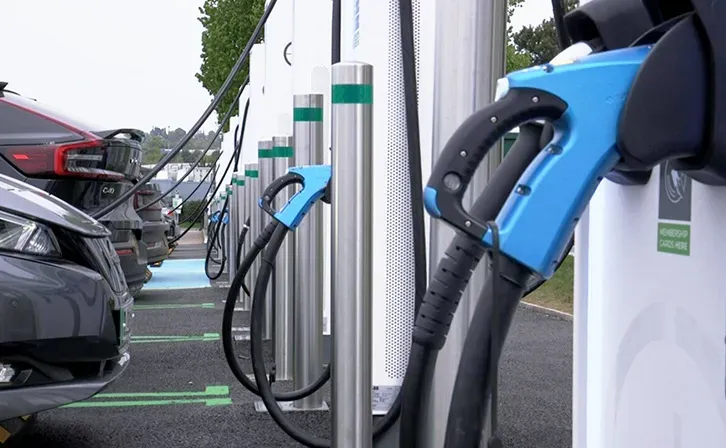
Level 3 EV charging is the fastest charging tier currently available to the public. While Level 1 and Level 2 chargers use alternating current (AC) and rely on the vehicle’s onboard systems to convert electricity to a usable form, Level 3 chargers bypass this limitation by delivering direct current (DC) power directly to the battery.
This difference in power delivery means a dramatic increase in charging speed. At high output levels, a Level 3 charger can replenish an EV battery to 80% capacity in just 15 to 60 minutes, depending on the vehicle and charger specifications. This makes Level 3 an ideal choice for:
Highway rest stops
Urban fast-charging hubs
Commercial gas stations
Ride-share and taxi fleets
Delivery and logistics companies
The ability to charge quickly allows for efficient short stops during trips and enables businesses to keep their vehicles on the road longer.
To appreciate the power of Level 3 charging, it's essential to understand two key concepts:
Power from the electrical grid is delivered as alternating current (AC).
EV batteries can only be charged using direct current (DC).
This means that for an electric vehicle to recharge, the electricity from the grid must be converted from AC to DC at some point.
Level 1 and Level 2 chargers perform this conversion inside the vehicle using the onboard AC-to-DC charger.
Level 3 chargers, on the other hand, handle this conversion within the charging station itself, allowing direct DC power to flow into the battery.
By removing the conversion step from the vehicle and placing it inside a much more powerful charging unit, Level 3 stations can deliver electricity at a much higher rate. This bypasses the vehicle’s slower onboard charger and sends DC energy straight to the battery, which minimizes energy loss and significantly reduces charging time.
When an EV is plugged into a Level 3 charging station, a sophisticated series of processes begins almost instantly:
Connection Establishment: The user connects the charger’s cable to the vehicle’s DC charging port using a compatible plug (CCS, CHAdeMO, GBT, or NACS).
Communication Protocols: The charger and the EV engage in a digital handshake to verify compatibility and battery status. The charger receives information about battery temperature, current charge level, and maximum allowable input.
DC Power Delivery: Once approved, the charger converts AC power from the grid into DC power using high-performance rectifiers and delivers it directly to the battery.
Dynamic Adjustments: Throughout the session, the charger adjusts voltage and current in real-time to ensure safe, efficient, and optimized charging.
Termination: Charging automatically stops when the battery reaches the target level or when the user ends the session.
Level 3 chargers are designed with advanced safety mechanisms, including surge protection, temperature monitoring, and emergency stop features, ensuring a secure and user-friendly charging experience.
The biggest advantage of Level 3 charging is—undoubtedly—its speed. Depending on the power rating and the EV’s charging capabilities, Level 3 chargers can deliver:
60 to 80 miles of range in just 20 minutes
Up to 298 miles of range in an hour at 350 kW output
To put this into context, here’s a comparison of typical charging times:
Charger Type | Power Output | Miles of Range Added in 20 Minutes | Use Case |
Level 1 (AC) | 1.3 – 2.4 kW | 1 – 3 miles | Home, overnight |
Level 2 (AC) | 3.3 – 22 kW | 10 – 25 miles | Homes, offices, public stations |
Level 3 (DC) | 50 – 350 kW | 60 – 200+ miles | Highways, commercial, fleet use |
One of the challenges of Level 3 charging is ensuring connector compatibility with various EV makes and models. The most commonly used DC fast-charging standards include:
CCS (Combined Charging System): The dominant standard in North America and Europe. Variants include CCS1 (US) and CCS2 (EU).
CHAdeMO: Used primarily by Japanese automakers like Nissan and Mitsubishi. While being phased out in some regions, it's still widely supported.
GBT: The Chinese national standard for EV charging, used across China’s massive EV charging infrastructure.
NACS (North American Charging Standard): Developed by Tesla, now increasingly being adopted by other automakers.
Many Level 3 charging stations offer multiple connectors to serve a wider range of vehicles, helping to reduce compatibility issues and expand access to fast charging.
Due to their high power requirements, Level 3 chargers are typically not suitable for home use. Instead, they are strategically deployed in areas that demand high throughput and fast turnaround times:
Highway service plazas for long-distance travel
Retail centers and shopping malls for short-term public charging
Urban centers where parking duration is limited
Fleet depots for delivery vehicles, buses, and taxis
Gas stations transitioning to include EV charging options
These strategic placements help reduce range anxiety and support broader EV adoption by making fast charging readily accessible during daily routines and road trips.
Level 3 stations drastically cut down the time required to recharge an EV, making it comparable to traditional refueling.
EV drivers can charge their vehicles while grabbing a coffee, eating a meal, or making a quick stop—without the need for extended downtime.
For taxi companies, logistics providers, and transit agencies, Level 3 charging ensures that vehicles spend more time on the road and less time plugged in.
The availability of Level 3 chargers at high-traffic locations helps reduce EV range anxiety and encourages more drivers to switch from gas-powered vehicles.
Many modern Level 3 chargers support software features such as load balancing, remote monitoring, dynamic pricing, and demand response, which help utility companies manage energy distribution and integrate renewable sources.
While Level 3 charging offers undeniable advantages, there are important considerations to keep in mind:
High Installation Costs: The hardware and electrical infrastructure upgrades required can be expensive.
Grid Impact: High-power charging can place additional stress on local electrical grids.
Not Universally Compatible: Some EVs, particularly older or economy models, may not support DC fast charging.
Battery Wear: Frequent fast charging can generate more heat and potentially accelerate battery degradation over time, especially in older EV models.
Nevertheless, manufacturers are developing more robust batteries and thermal management systems to mitigate these risks.
Whether or not you need access to Level 3 charging depends on your specific usage patterns and vehicle capabilities:
Ideal for:
Long-distance commuters
EV drivers traveling cross-country
Fleet operators with high daily mileage
Businesses offering public charging services
Not necessary for:
EV owners with access to overnight home charging
Drivers who only use their vehicles for short, daily trips
Still, even occasional access to a Level 3 charger can greatly enhance convenience and peace of mind during travel.
Level 3 charging stations are a cornerstone of the rapidly evolving electric vehicle ecosystem. By enabling fast, efficient, and convenient energy delivery, they help bridge the gap between traditional fueling methods and modern electrified transportation. Whether you’re a commuter, a fleet operator, or a business investing in sustainable infrastructure, Level 3 chargers provide the speed and performance needed to keep up with the future of mobility.
As more EVs hit the road and battery technologies continue to improve, Level 3 charging will play a pivotal role in building a cleaner, faster, and more connected world.
