Choosing the Best EV Charging Station: Wall-Mounted or Floor-Mounted?
As electric vehicles gain popularity worldwide, the demand for reliable and efficient EV charging infrastructure is rising rapidly. Homeowners, businesses, and developers are investing in charging solutions to support the shift toward sustainable transportation. One key decision in EV infrastructure deployment is choosing between wall-mounted and floor-mounted charging stations.
Wall-mounted EV chargers are compact, space-saving, and ideal for residential or small commercial applications. They offer convenient daily charging without occupying floor space and are often equipped with smart features like remote monitoring, scheduling, and energy management. Floor-mounted, or pedestal, chargers provide greater flexibility and visibility, making them suitable for public and commercial environments. They can support multiple vehicles simultaneously and accommodate higher-power charging systems, including DC fast chargers.
Choosing the right EV charger involves evaluating space, electrical infrastructure, user accessibility, installation costs, maintenance, charging speed, and future scalability. Whether installing a home charger or developing a commercial charging network, understanding the strengths and limitations of each type ensures efficient, reliable, and long-term value. This article explores these differences, covering applications, benefits, installation considerations, and emerging trends in EV charging infrastructure.
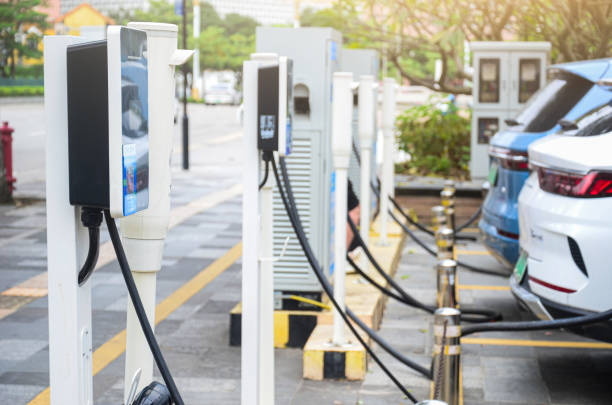
A wall-mounted EV charger is a charging unit designed to be fixed directly onto a wall or other vertical structure. These chargers are commonly installed in residential garages, apartment parking areas, private driveways, and smaller commercial facilities where wall access is available.
Wall-mounted chargers are especially popular for home charging because they provide a compact and organized charging solution without occupying valuable floor space. They are usually installed near the vehicle parking area and connected directly to the building's electrical supply.
Most wall-mounted chargers are available in Level 1 or Level 2 charging configurations. Level 1 chargers use standard household power outlets and offer slower charging speeds, while Level 2 chargers provide significantly faster charging through dedicated higher-voltage electrical circuits.
Modern wall-mounted EV chargers often include advanced smart charging features such as:
- Wi-Fi or Bluetooth connectivity
- Mobile application control
- Remote monitoring
- Energy usage tracking
- Scheduled charging
- RFID authentication
- Dynamic load balancing
- Solar energy integration
Because of their compact design and ease of installation, wall-mounted chargers have become the preferred solution for homeowners and small businesses seeking reliable daily charging.
One of the biggest advantages of wall-mounted chargers is their ability to save space. Since the charging unit is attached directly to a wall, no floor area is occupied. This is especially valuable in garages, underground parking lots, or urban residential areas where available space is limited.
The compact design also helps create a cleaner and more organized charging environment by reducing cable clutter and minimizing obstructions.
Wall-mounted EV chargers generally require less installation work compared to floor-mounted systems. Since the charger can connect directly to nearby electrical panels or wiring inside the building, trenching and extensive cabling are often unnecessary.
This can significantly reduce installation expenses, particularly in residential environments where the charger is installed close to the main electrical supply.
Homeowners benefit greatly from wall-mounted charging stations because they allow vehicles to charge overnight conveniently and consistently. Drivers can begin each day with a fully charged battery without needing to visit public charging stations.
This convenience is one of the primary reasons many EV owners choose home-based wall-mounted charging systems.
Most wall-mounted chargers include integrated cable holders or retractable cable systems that help keep charging cables neatly stored when not in use. Proper cable management improves safety, reduces wear and tear, and creates a more professional appearance.
Modern wall-mounted chargers increasingly support intelligent charging technologies. Users can monitor charging sessions remotely, optimize electricity usage during off-peak hours, and integrate renewable energy systems such as rooftop solar panels.
These features improve energy efficiency and reduce operating costs.
The biggest limitation of wall-mounted chargers is the need for a suitable mounting surface. Not all parking areas have accessible walls nearby, particularly open parking lots or outdoor commercial facilities.
In some locations, installing additional support structures may eliminate the cost advantages of wall-mounted systems.
Wall-mounted chargers are highly effective for single-user or small-scale charging applications, but they may be less practical for large commercial charging deployments that require multiple charging points.
Managing many wall-mounted chargers across a facility can become complicated if parking arrangements change frequently.
Wall-mounted chargers are often less visible than pedestal chargers, particularly in large parking areas. Public charging networks may prefer more prominent charging stations to improve user awareness and accessibility.
Floor-mounted EV charging stations are standalone charging units installed directly onto the ground using poles, pedestals, or dedicated support structures. Unlike wall-mounted systems, these chargers do not require nearby walls or building surfaces.
Floor-mounted chargers are commonly found in:
- Public parking lots
- Shopping centers
- Office complexes
- Highway service areas
- Fleet depots
- Apartment buildings
- Commercial charging hubs
These charging stations can support one or multiple charging connectors and are often designed for higher-power charging applications, including DC fast charging.
Floor-mounted charging stations are widely used in commercial and public infrastructure projects because they provide greater placement flexibility and enhanced visibility.
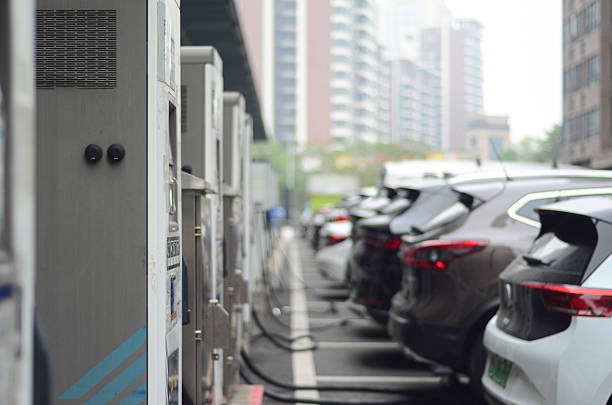
One of the primary advantages of floor-mounted charging stations is installation flexibility. Since they do not rely on wall structures, they can be placed almost anywhere with sufficient electrical access.
This makes them ideal for open parking lots, public spaces, and locations where wall access is limited or unavailable.
Floor-mounted charging stations are commonly used in commercial environments because they can support multiple vehicles simultaneously. Many pedestal chargers feature dual connectors or multi-port configurations that increase charging efficiency and maximize parking space utilization.
Commercial operators can install several pedestal chargers in organized charging rows to create scalable EV charging networks.
Floor-mounted chargers are easier for drivers to locate due to their elevated and standalone design. High visibility is especially important in public charging environments where users may be unfamiliar with the facility layout.
Additionally, pedestal chargers can often be positioned for easier access from multiple parking spaces.
Many DC fast charging systems are floor-mounted because higher charging power requires larger electrical components, cooling systems, and cable management equipment.
Floor-mounted chargers can accommodate these larger and heavier systems more effectively than compact wall-mounted units.
Commercial-grade pedestal chargers are designed to withstand harsh environmental conditions, including:
- Rain
- Snow
- Dust
- UV exposure
- Temperature fluctuations
- Heavy public usage
Their robust construction ensures long-term reliability in outdoor installations.
Floor-mounted charging stations often require more complex installation procedures. Electrical wiring may need underground trenching, concrete foundations, protective bollards, and additional structural support.
These installation requirements can significantly increase project costs.
Pedestal chargers occupy more physical space than wall-mounted units. This may reduce parking efficiency in compact locations or urban environments where maximizing vehicle capacity is essential.
Since floor-mounted chargers are exposed to outdoor conditions and public use, they may require more frequent inspections and maintenance. Potential issues include cable wear, vandalism, weather-related damage, and accidental vehicle impact.
Large pedestal charging stations may alter the visual appearance of parking areas or public streetscapes. In some residential or historic districts, local regulations may restrict large visible charging infrastructure.
The physical characteristics of the installation site are among the most important factors when selecting between wall-mounted and floor-mounted chargers.
Wall-mounted chargers are ideal when:
- Suitable wall access is available
- Space is limited
- Residential installation is required
- Indoor charging is preferred
Floor-mounted chargers are preferable when:
- Open parking areas are used
- Multiple charging spaces are required
- Public accessibility is important
- Large commercial deployment is planned
Charging frequency and vehicle volume strongly influence charger selection.
For individual households or small businesses, wall-mounted chargers usually provide sufficient charging capacity. However, commercial facilities with high traffic volumes may require floor-mounted multi-user charging systems.
Level 2 AC chargers are commonly available in both wall-mounted and pedestal configurations. However, ultra-fast DC charging stations are more commonly floor-mounted due to their larger size and higher power requirements.
Businesses serving long-distance travelers or fleet operations often prioritize fast-charging pedestal systems.
Existing electrical infrastructure can affect installation complexity and cost. Properties with nearby electrical panels may benefit from simple wall-mounted installations, while large parking facilities may require extensive underground electrical distribution systems for pedestal chargers.
Proper electrical planning is critical to ensure safe and reliable charger operation.
Scalability is increasingly important as EV adoption continues to grow. Businesses should consider future charging demand when selecting charging infrastructure.
Floor-mounted charging systems generally offer greater scalability for future expansion projects, especially in commercial environments.
Wall-mounted EV chargers dominate residential charging installations because they provide an affordable, compact, and convenient charging solution for homeowners.
Typical residential applications include:
- Single-family homes
- Private garages
- Driveways
- Small apartment complexes
- Townhouse parking areas
Homeowners usually prioritize ease of use, aesthetics, charging reliability, and low installation cost. Smart charging features are also becoming increasingly important for managing energy consumption and integrating renewable energy systems.
However, some residential communities with shared parking areas may choose floor-mounted chargers when wall access is unavailable.
Commercial charging infrastructure requires greater durability, scalability, and charging capacity. Floor-mounted charging stations are commonly used in:
- Shopping malls
- Office buildings
- Hotels
- Airports
- Public parking garages
- Fleet depots
- Highway charging stations
Businesses often view EV charging as both a customer service feature and a long-term investment. Public charging availability can attract customers, increase property value, and support sustainability initiatives.
Commercial operators may also integrate payment systems, network monitoring, advertising displays, and energy management software into charging stations.
Workplace EV charging is becoming increasingly popular as companies seek to support employee sustainability goals and encourage EV adoption.
Both wall-mounted and floor-mounted chargers are used in workplace environments depending on parking lot design and infrastructure availability.
Wall-mounted chargers are often installed in parking garages or covered structures, while floor-mounted chargers are preferred in open outdoor lots.
Employers benefit from workplace charging by:
- Enhancing employee satisfaction
- Supporting environmental initiatives
- Meeting sustainability targets
- Attracting environmentally conscious talent
Governments and utility companies worldwide are investing heavily in public EV charging networks to support transportation electrification.
Floor-mounted charging stations play a major role in public infrastructure because they provide:
- High visibility
- Flexible placement
- Multi-vehicle charging
- Fast charging capability
- Scalability for future expansion
Public charging infrastructure is essential for reducing range anxiety and encouraging widespread EV adoption.
Both wall-mounted and floor-mounted chargers increasingly incorporate smart technologies that improve efficiency and user experience.
Advanced smart charging features include:
- Cloud-based monitoring
- Remote diagnostics
- Mobile applications
- RFID authentication
- Load balancing
- Energy optimization
- Demand response integration
- Solar charging compatibility
These technologies help operators reduce electricity costs, improve system reliability, and manage charging demand more effectively.
Safety is a critical aspect of EV charging infrastructure design. Both wall-mounted and floor-mounted charging stations must comply with strict electrical and safety standards.
Important safety features include:
- Ground fault protection
- Overcurrent protection
- Waterproof enclosures
- Emergency shutdown systems
- Temperature monitoring
- Surge protection
- Cable management systems
Proper installation by certified professionals is essential to ensure safe and reliable charger operation.
The EV charging industry is evolving rapidly as electric vehicle adoption accelerates globally. Several emerging trends are shaping the future of both wall-mounted and floor-mounted charging stations.
Ultra-Fast Charging Expansion
High-power DC fast charging technology continues to advance, reducing charging times significantly. More floor-mounted ultra-fast charging hubs are expected to appear along highways and in urban centers.
Bidirectional Charging
Vehicle-to-grid (V2G) technology allows EVs to supply electricity back to homes or the power grid. Future charging stations may play an important role in energy storage and grid stabilization.
Renewable Energy Integration
Solar-powered EV charging systems are becoming more common as businesses and homeowners seek sustainable energy solutions.
Smart Energy Management
Artificial intelligence and advanced energy management software will improve charging efficiency, reduce peak electricity demand, and optimize charging schedules automatically.
Modular Charging Systems
Future commercial charging stations may use modular designs that simplify maintenance, upgrades, and scalability.
Wall-mounted and floor-mounted EV charging stations each offer unique advantages depending on the installation environment, charging requirements, and long-term operational goals.
Wall-mounted chargers provide a compact, cost-effective, and highly convenient solution for residential and small commercial applications. Their space-saving design, smart charging capabilities, and ease of installation make them an ideal choice for homeowners and businesses with available wall access.
Floor-mounted charging stations offer greater flexibility, visibility, scalability, and charging capacity, making them the preferred solution for public infrastructure, commercial facilities, and high-traffic charging environments. Their ability to support multiple vehicles and high-power charging systems positions them as a critical component of future EV charging networks.
As electric vehicle adoption continues to expand worldwide, both wall-mounted and floor-mounted charging stations will play essential roles in supporting the transition toward cleaner transportation and sustainable energy systems. Choosing the right charging solution requires careful evaluation of space availability, charging demand, infrastructure conditions, budget, and future expansion plans.
By understanding the strengths and limitations of each charging approach, homeowners, businesses, and infrastructure developers can build efficient, reliable, and future-ready EV charging systems that support the growing electric mobility industry.