EV Charging with Solar: Driving the Future of Sustainable Transportation
The rapid growth of electric vehicles (EVs) is transforming the global transportation landscape. As governments, businesses, and consumers seek cleaner alternatives to gasoline and diesel-powered vehicles, EV adoption continues to accelerate worldwide. However, while electric vehicles produce zero tailpipe emissions, the environmental impact of EV charging largely depends on the source of electricity used.
This has led to increasing interest in solar-powered EV charging systems. By combining solar photovoltaic (PV) technology with EV charging infrastructure, homeowners and businesses can generate clean electricity directly from sunlight and use it to power their vehicles. This approach not only reduces reliance on fossil fuels but also lowers energy costs and enhances energy independence.
As solar panel prices continue to decline and battery storage technologies improve, solar EV charging is becoming an increasingly practical and attractive solution. It represents a powerful synergy between renewable energy and electric mobility, helping create a more sustainable future.
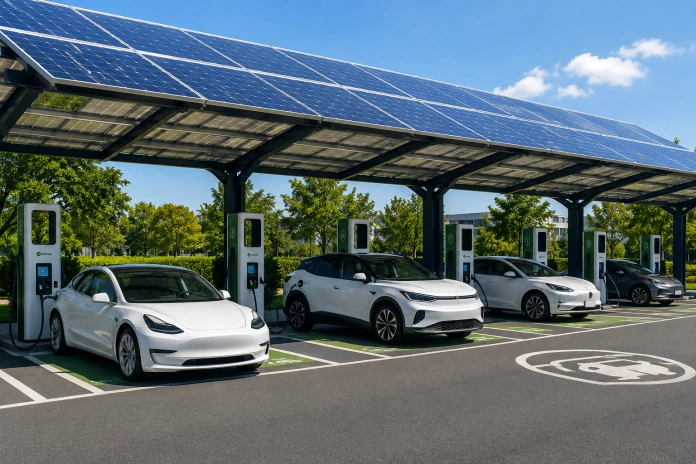
Solar EV charging refers to the process of charging an electric vehicle using electricity generated by solar panels. Instead of drawing power entirely from the utility grid, a solar charging system captures sunlight and converts it into usable electricity for EV charging.
A solar-powered EV charging system typically includes:
- Solar photovoltaic panels
- Solar inverter
- EV charging station
- Energy storage battery (optional)
- Smart energy management system
When sunlight strikes solar panels, photovoltaic cells generate direct current (DC) electricity. The inverter converts this DC power into alternating current (AC), which can be used by household appliances and EV chargers.
Depending on the system configuration, the generated electricity can:
- Be used immediately to charge the vehicle
- Power household electrical loads
- Be stored in batteries for later use
- Be exported to the utility grid
The combination of solar energy and electric transportation creates a closed-loop clean energy ecosystem that significantly reduces carbon emissions.
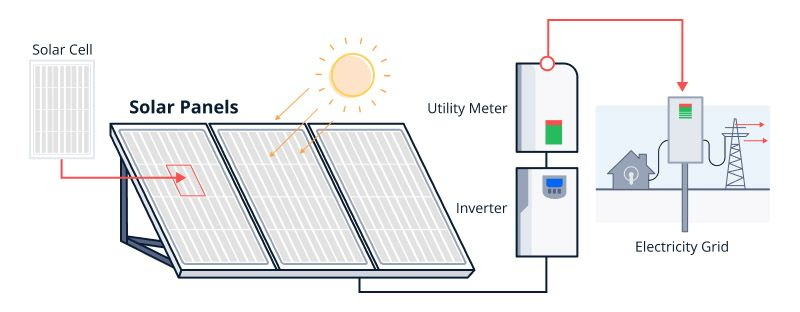
Solar panels installed on rooftops, carports, parking structures, or ground-mounted systems capture sunlight throughout the day.
Modern solar panels typically achieve efficiencies ranging from 20% to 25%, enabling substantial electricity production even in moderate sunlight conditions.
The DC electricity produced by solar panels is sent to a solar inverter.
The inverter converts DC electricity into AC electricity compatible with household electrical systems and most EV charging equipment.
The generated electricity enters the building's electrical distribution system and can be allocated to:
- Household appliances
- Commercial equipment
- EV charging stations
Smart energy management systems can prioritize EV charging during peak solar production hours.
Many homeowners install battery energy storage systems alongside solar arrays.
When solar production exceeds immediate consumption, surplus electricity is stored in batteries instead of being exported to the grid.
Stored energy can later be used for:
- Nighttime EV charging
- Emergency backup power
- Peak demand reduction
- Grid outage protection
The EV charger supplies electricity to the vehicle's onboard battery.
Depending on system size and charging requirements, solar energy may provide all or part of the electricity needed for charging.
Several market trends are driving increased adoption of solar-powered EV charging.
Utility electricity rates continue to increase in many regions due to infrastructure upgrades, fuel costs, and growing energy demand.
Solar energy allows EV owners to offset these rising costs by generating their own electricity.
As EV sales increase, vehicle charging becomes a larger portion of household energy consumption.
Many EV owners seek affordable long-term charging solutions, making solar systems increasingly attractive.
Many countries offer incentives such as:
- Solar installation tax credits
- Renewable energy grants
- EV charger rebates
- Net metering programs
- Battery storage incentives
These programs help reduce the initial investment cost of solar EV charging systems.
Businesses and homeowners are increasingly committed to reducing carbon emissions and achieving sustainability targets.
Solar-powered EV charging aligns perfectly with these environmental objectives.
Traditional electricity generation often relies on coal, natural gas, or oil-fired power plants.
When EVs are charged using electricity from fossil-fuel-based grids, indirect emissions still occur.
Solar energy generates electricity without combustion, producing virtually no greenhouse gas emissions during operation.
By charging EVs with solar power, drivers can significantly reduce their overall carbon footprint.
Every solar-powered EV charging installation contributes to broader renewable energy deployment.
Increased solar adoption helps:
- Reduce dependence on fossil fuels
- Lower national carbon emissions
- Improve energy security
- Accelerate clean energy transitions
Fossil fuel combustion releases pollutants such as:
- Nitrogen oxides (NOx)
- Sulfur dioxide (SO₂)
- Particulate matter
- Carbon monoxide
Solar-generated electricity eliminates these emissions during power generation, contributing to cleaner air and healthier communities.
Solar energy utilizes an abundant and renewable resource—the sun.
Unlike fossil fuels, solar power does not require continuous extraction, transportation, or combustion of finite natural resources.
One of the most compelling benefits of solar EV charging is cost savings.
After installation, solar panels generate electricity at little ongoing cost.
This allows EV owners to charge vehicles using self-generated energy rather than purchasing electricity from utilities.
Over the lifespan of the solar system, savings can be substantial.
Many solar system owners export excess electricity to the grid through net metering programs.
However, utility compensation rates for exported energy are often lower than retail electricity prices.
Using surplus solar electricity to charge an EV increases self-consumption and improves the overall return on investment.
Energy prices can fluctuate significantly due to market conditions, fuel costs, and regulatory changes.
Solar energy provides a predictable long-term source of electricity, reducing exposure to future utility rate increases.
For commercial fleet operators, solar EV charging can dramatically reduce fuel and energy expenses.
Organizations operating delivery vehicles, buses, service vehicles, and corporate fleets can realize significant long-term savings.
Solar EV charging enables homeowners and businesses to generate their own electricity.
This reduces reliance on utility providers and enhances energy independence.
When paired with battery storage systems, solar installations can provide backup power during grid outages.
This capability becomes increasingly important as extreme weather events and grid reliability concerns grow.
Commercial facilities can use solar energy and battery storage to reduce peak demand charges.
Smart charging systems can schedule EV charging during periods of maximum solar generation.
Most EV owners charge their vehicles at home.
Adding solar panels to a residential property creates a convenient and environmentally friendly charging solution.
Homeowners benefit from:
- Lower charging costs
- Increased property value
- Reduced environmental impact
- Energy security
A residential solar EV charging setup may include:
- Rooftop solar panels
- Grid-tied inverter
- Level 2 EV charger
- Battery storage system
- Smart energy monitoring software
The required solar system size depends on:
- Vehicle mileage
- EV battery capacity
- Daily charging needs
- Household electricity consumption
- Local solar resources
A properly designed system can often meet both household and transportation energy requirements.
Employers increasingly offer EV charging stations as an employee benefit.
Adding solar power enhances sustainability efforts while reducing operational costs.
Workplace solar charging provides:
- Employee convenience
- Sustainability branding
- Reduced utility expenses
- Support for corporate ESG initiatives
Shopping centers, hotels, restaurants, and entertainment venues are installing EV charging stations to attract customers.
Solar-powered charging stations demonstrate environmental leadership while generating additional revenue opportunities.
Commercial fleet electrification is expanding rapidly.
Solar-powered fleet charging infrastructure offers:
- Lower operating costs
- Reduced fuel dependence
- Improved sustainability performance
- Long-term financial benefits
One innovative application of solar EV charging is the solar carport.
Solar carports combine parking structures with integrated photovoltaic panels.
Benefits include:
- Electricity generation
- Vehicle shade and protection
- Efficient land use
- Enhanced property aesthetics
Solar parking canopies are increasingly common at:
- Airports
- Universities
- Corporate campuses
- Hospitals
- Shopping centers
These installations maximize solar generation while supporting large-scale EV charging infrastructure.
Battery storage plays an important role in optimizing solar EV charging systems.
Storing Excess Solar Energy
Solar generation peaks during midday hours, while many EV owners prefer charging during evenings.
Battery systems bridge this gap by storing daytime solar production for nighttime use.
Reducing Grid Dependence
Stored solar energy can reduce reliance on grid electricity during high-demand periods.
Enhancing Charging Reliability
Battery systems help maintain charging availability during:
- Cloudy weather
- Utility outages
- Peak demand events
As battery costs continue to decline, energy storage is becoming an increasingly valuable component of solar EV charging installations.
Modern EV charging systems incorporate intelligent energy management features.
Load Balancing
Smart chargers automatically adjust charging power based on available solar generation and building energy consumption.
Scheduled Charging
Users can schedule charging sessions to coincide with peak solar production periods.
Mobile Monitoring
Many charging systems provide smartphone applications that allow users to:
- Monitor charging status
- Track energy consumption
- View solar generation
- Optimize charging schedules
Vehicle-to-Home and Vehicle-to-Grid Technology
Emerging technologies enable EV batteries to serve as energy storage resources.
Future systems may allow vehicles to:
- Power homes during outages
- Supply electricity back to the grid
- Participate in demand response programs
These innovations further strengthen the integration between solar energy and electric mobility.
Despite its advantages, solar EV charging faces several challenges.
Installing solar panels, batteries, and EV charging equipment requires significant upfront capital.
Although long-term savings often justify the investment, initial costs may deter some consumers.
Solar energy production varies based on:
- Weather conditions
- Seasonal changes
- Geographic location
Backup grid connections remain important for ensuring reliable charging availability.
Adequate roof or ground space is necessary for solar panel installation.
Urban environments may face limitations due to restricted installation areas.
Large EV batteries may require substantial energy.
Meeting high charging demands solely through solar generation may necessitate larger systems and battery storage capacity.
Faster EV Charging Integration
As ultra-fast DC charging technology advances, solar energy systems will increasingly integrate with battery storage to support high-power charging applications.
Artificial Intelligence and Energy Management
AI-powered energy management platforms will optimize:
- Solar generation
- Battery storage utilization
- EV charging schedules
- Grid interaction
This will maximize efficiency and reduce operating costs.
Community Solar Charging Networks
Shared solar projects may allow EV owners without rooftop space to access renewable charging options through community energy programs.
Expansion of Public Solar Charging Infrastructure
Governments and private investors are expected to expand solar-powered charging networks along highways, urban centers, and transportation corridors.
Improved Solar Technologies
Next-generation solar technologies, including:
- High-efficiency panels
- Bifacial modules
- Perovskite solar cells
- Building-integrated photovoltaics
will further improve solar charging performance and affordability.
The combination of solar power and electric vehicle charging represents one of the most promising developments in sustainable transportation. By harnessing clean, renewable energy from the sun, EV owners can dramatically reduce charging costs, lower carbon emissions, and gain greater energy independence.
For homeowners, solar EV charging offers an environmentally responsible way to power daily transportation while maximizing the value of residential solar investments. For businesses, it creates opportunities to reduce operating expenses, strengthen sustainability initiatives, and support the growing demand for electric mobility.
Although challenges such as upfront costs, weather variability, and infrastructure requirements remain, ongoing advances in solar technology, battery storage, smart charging systems, and energy management software continue to improve the feasibility and attractiveness of solar-powered EV charging.
As nations pursue ambitious climate goals and transportation electrification accelerates, solar EV charging is expected to play a central role in building a cleaner, more resilient, and more sustainable energy future. By connecting renewable energy generation directly with electric transportation, solar-powered charging systems are helping shape the next generation of environmentally responsible mobility.