Complete Guide to EV Charging Connectors and Global Charging Standards
The rapid growth of electric vehicles (EVs) is transforming the global transportation industry. Governments, automakers, energy companies, and consumers are increasingly embracing electric mobility as a sustainable alternative to conventional internal combustion engine vehicles. As EV adoption accelerates worldwide, one of the most important factors supporting this transition is the development and implementation of standardized charging systems.
EV charging standards refer to the specifications, protocols, connectors, and communication methods used to transfer electrical energy from a charging station to an electric vehicle. These standards ensure compatibility, safety, efficiency, and interoperability between vehicles and charging infrastructure. Without common charging standards, EV owners would face significant challenges when attempting to charge their vehicles at different locations, creating barriers to widespread adoption.
Today, multiple charging standards exist across various regions of the world. North America, Europe, China, Japan, and other markets have developed their own charging technologies based on local infrastructure requirements, government regulations, and automotive industry preferences. Understanding these standards is essential for EV owners, charging station operators, fleet managers, and businesses investing in charging infrastructure.
This article explores the major EV charging standards, the differences between AC and DC EV charging technologies, regional charging practices, emerging trends, and the future of global EV charging interoperability.
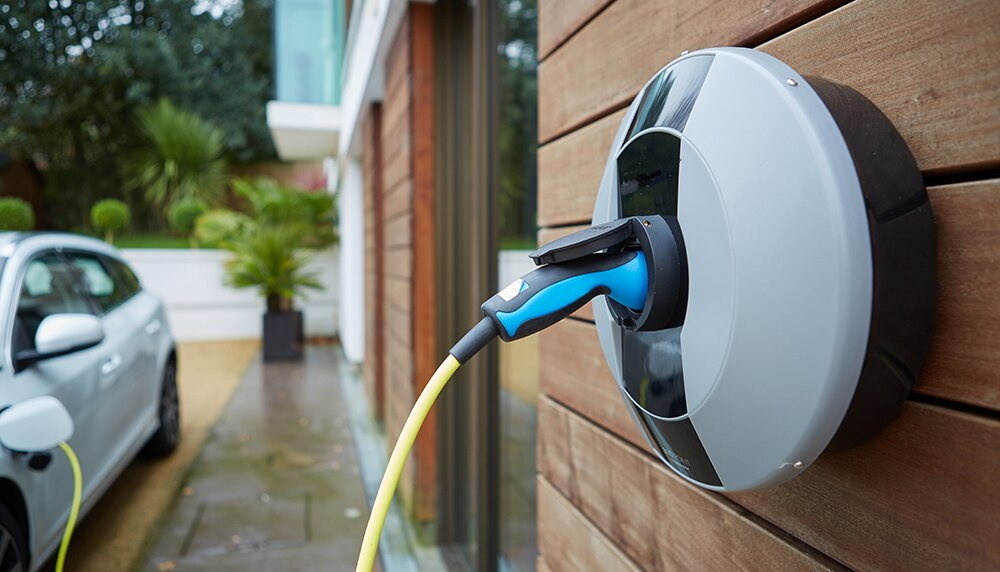
At their core, EV charging standards define how electricity flows from a charging station to an electric vehicle. They encompass several critical aspects:
- Physical connector designs
- Charging voltage and current specifications
- Communication protocols
- Safety requirements
- Authentication methods
- Smart charging capabilities
- Vehicle-to-charger communication
When a charging cable is connected to an EV, the vehicle and charging station exchange information before electricity begins flowing. This communication ensures that the correct voltage, current, and charging parameters are applied to protect both the battery and the charging equipment.
Charging standards also determine maximum charging speeds, connector compatibility, and future upgrade capabilities. As battery capacities continue to increase and charging technology advances, charging standards must evolve to support higher power delivery while maintaining safety and reliability.
Standardization plays a crucial role in the success of the EV industry.
Charging standards allow drivers to use a wide range of charging stations without requiring multiple adapters or specialized equipment.
Standardized charging protocols incorporate numerous safety mechanisms that prevent electrical faults, overheating, and equipment damage.
A common charging framework encourages investment in charging networks by reducing technical uncertainties and ensuring compatibility with future vehicle models.
Drivers are more likely to purchase EVs when they know charging infrastructure is widely available and compatible with their vehicles.
Automakers can streamline vehicle production by adopting widely accepted charging technologies rather than developing proprietary solutions.
As governments around the world push toward transportation electrification, standardization remains one of the most important factors enabling seamless EV charging experiences.
Electric vehicle charging generally falls into two categories:
- Alternating Current (AC) Charging
- Direct Current (DC) Charging
Understanding the difference between these charging methods is essential when evaluating charging standards.
Alternating Current is the type of electricity supplied by power grids and household outlets. AC charging relies on the vehicle's onboard charger to convert alternating current into direct current suitable for battery storage.
Because onboard chargers have limited power capacities, AC charging is typically slower than DC charging.
- Lower installation costs
- Suitable for home charging
- Reduced stress on batteries
- Ideal for overnight charging
- Widely available
AC charging speeds generally range from:
- 3.7 kW
- 7.4 kW
- 11 kW
- 22 kW
In some commercial applications, charging power can reach 43 kW.
AC charging is commonly used for:
- Residential charging
- Workplace charging
- Apartment complexes
- Shopping centers
- Hotels
- Parking facilities
Most EV owners perform the majority of their charging through AC systems because vehicles often remain parked for extended periods.
Direct Current charging bypasses the vehicle's onboard charger and supplies electricity directly to the battery pack.
This approach significantly increases charging speed because the conversion process occurs within the charging station rather than inside the vehicle.
- Extremely fast charging times
- Ideal for long-distance travel
- Supports high-power charging
- Reduces downtime
- Essential for commercial fleets
Modern DC fast chargers can deliver:
- 50 kW
- 100 kW
- 150 kW
- 250 kW
- 350 kW
- Up to 500 kW in advanced systems
Many modern EVs can charge from 10% to 80% battery capacity within 15 to 30 minutes using high-power DC charging.
DC charging is typically installed at:
- Highway service areas
- Public charging hubs
- Fleet depots
- Urban fast-charging stations
- Commercial transportation centers
Type 1, commonly known as SAE J1772, is one of the earliest EV charging standards and remains widely used in North America and Japan.
Key Features
- Single-phase charging
- Five-pin connector
- Reliable and easy-to-use design
- Extensive support among older EV models
Charging Power
Type 1 charging generally supports:
- Up to 7.4 kW
- 230V AC systems
- Current ratings up to 32A
Applications
Type 1 connectors are commonly found in:
- Home charging stations
- Public Level 2 chargers
- Early-generation EVs
Although newer standards are gaining popularity, Type 1 remains an important component of the North American charging ecosystem.
Type 2 charging, often called the Mennekes connector, has become the dominant AC charging standard throughout Europe and many international markets.
Key Features
- Seven-pin connector
- Supports single-phase and three-phase charging
- Excellent flexibility
- High charging capacity
Charging Power
Type 2 systems support:
- Up to 22 kW in residential settings
- Up to 43 kW in some public installations
Advantages
Type 2 connectors provide:
- Faster charging
- Broader compatibility
- Enhanced communication capabilities
- Future-proof infrastructure
Today, nearly every modern European EV incorporates a Type 2 charging inlet for AC charging.
China developed the GB/T charging standard specifically for its domestic EV market.
Key Characteristics
- Unique connector design
- Nationally standardized infrastructure
- Supports both single-phase and three-phase charging
Charging Performance
GB/T AC charging supports:
- Up to 22 kW
- Various voltage configurations
- Smart communication functions
Market Importance
China represents the world's largest EV market, making GB/T one of the most widely deployed charging standards globally despite its limited adoption outside China.
The extensive deployment of GB/T chargers has played a major role in China's rapid EV expansion.
CCS1 is the dominant DC fast-charging standard in North America.
The system combines the Type 1 AC connector with two additional DC power pins, enabling both AC and DC charging through a single vehicle inlet.
Advantages
- Dual-function charging capability
- Simplified vehicle design
- Broad industry support
- High charging power
Charging Capacity
CCS1 chargers can deliver:
- Up to 350 kW
- High-voltage charging
- Ultra-fast charging performance
Supported Vehicles
Most major automakers in North America have adopted CCS1, including numerous models from Ford, General Motors, Volkswagen, BMW, Mercedes-Benz, Hyundai, and Kia.
CCS2 serves as the primary fast-charging standard throughout Europe and many international markets.
It combines the Type 2 AC connector with two additional DC charging pins.
Benefits
- Unified AC and DC charging
- Excellent scalability
- High power delivery
- Broad compatibility
Charging Speed
CCS2 stations commonly support:
- 50 kW
- 150 kW
- 350 kW
Future upgrades are expected to exceed current charging limits as battery technology evolves.
Global Expansion
Many countries outside Europe are increasingly adopting CCS2 because of its versatility and international support.
As a result, CCS2 is often viewed as one of the strongest candidates for broader global harmonization.
China's DC charging infrastructure relies heavily on the GB/T standard.
Characteristics
- Separate DC connector design
- Extensive deployment across China
- Government-backed implementation
Charging Capability
Modern GB/T DC chargers can deliver:
- 250 kW
- 360 kW
- Higher outputs in advanced systems
Future Development
China continues investing heavily in next-generation charging technologies, including ultra-fast charging systems capable of supporting higher battery voltages and megawatt-level charging for commercial vehicles.
CHAdeMO originated in Japan and was one of the first widely adopted DC fast-charging standards.
Advantages
- Proven reliability
- Early market leadership
- Vehicle-to-grid capability
Charging Performance
Current CHAdeMO systems support:
- 50 kW
- 100 kW
- Up to 400 kW in advanced versions
Current Status
Although CHAdeMO played a major role in the early development of EV infrastructure, its market share has gradually declined as CCS systems gain broader global support.
However, many existing vehicles still rely on CHAdeMO charging stations.
Tesla has significantly influenced global charging infrastructure through its proprietary charging technologies.
Tesla Supercharger Network
Tesla's Supercharger network is one of the largest and most advanced EV charging networks in the world.
Key Benefits
- Extensive coverage
- High reliability
- Seamless user experience
- Integrated navigation support
Charging Speeds
Modern Tesla Superchargers provide:
- 250 kW through V3 systems
- Up to 500 kW potential in V4 systems for compatible 800V vehicles
Regional Connector Variations
North America:
NACS (North American Charging Standard)
Europe:
CCS2 connector compatibility
This regional flexibility has allowed Tesla to expand rapidly while maintaining compatibility with local charging ecosystems.
One of the most significant developments in the EV industry has been the growing adoption of the North American Charging Standard (NACS).
Originally developed by Tesla, NACS offers:
- Compact connector design
- AC and DC charging support
- High power capability
- User-friendly operation
Major automakers have announced plans to integrate NACS charging ports into future EV models, including Ford, GM, Rivian, Mercedes-Benz, Volvo, Honda, Nissan, Hyundai, Kia, and others.
This shift is expected to reshape the North American charging landscape over the coming years.
Modern charging standards involve more than just connectors.
Advanced communication protocols enable intelligent charging features such as:
- Load balancing
- Remote monitoring
- Billing integration
- Smart energy management
- Dynamic pricing
- Vehicle authentication
ISO 15118
One of the most important protocols is ISO 15118.
This standard enables:
- Plug-and-charge functionality
- Secure communication
- Automatic payment processing
- Vehicle-to-grid integration
As smart grid technologies expand, communication standards will become increasingly important for managing energy demand and improving grid stability.
The EV charging industry continues evolving rapidly.
Manufacturers are developing systems capable of delivering:
- 500 kW
- 600 kW
- 1 MW and beyond
These technologies aim to reduce charging times to levels approaching traditional fuel refueling.
Wireless charging systems use inductive power transfer to charge vehicles without physical cables.
Potential benefits include:
- Improved convenience
- Automated charging
- Reduced wear on connectors
V2G technology allows EVs to return electricity to the grid when needed.
Benefits include:
- Grid stabilization
- Renewable energy integration
- Additional revenue opportunities for vehicle owners
Commercial trucks and heavy-duty vehicles require significantly higher charging power.
Megawatt Charging Systems (MCS) are being developed to support:
- Electric freight transportation
- Long-haul trucking
- Industrial fleets
- Public transit vehicles
Despite significant progress, several challenges remain.
Regional Differences
Different countries continue supporting different charging systems, creating interoperability challenges.
Infrastructure Investment
Building large-scale charging networks requires substantial financial investment.
Rapid Technological Change
Charging technologies continue evolving, requiring frequent infrastructure upgrades.
Grid Capacity
The increasing number of high-power chargers places greater demands on electrical grids.
Consumer Education
Many new EV owners remain unfamiliar with charging standards and connector compatibility.
Addressing these challenges will be essential for supporting continued EV growth worldwide.
EV charging standards form the foundation of modern electric mobility. They ensure that vehicles and charging stations can communicate effectively, safely transfer power, and deliver reliable charging experiences across diverse markets. From AC standards such as Type 1, Type 2, and GB/T to DC fast-charging technologies including CCS1, CCS2, GB/T, CHAdeMO, and Tesla's Supercharger ecosystem, each standard has played a critical role in advancing electric transportation.
As EV adoption accelerates globally, the industry is moving toward higher charging speeds, smarter communication protocols, broader interoperability, and improved user convenience. Emerging technologies such as NACS, ultra-fast charging, vehicle-to-grid integration, and megawatt charging systems are shaping the next generation of charging infrastructure.
The future of electric mobility depends not only on better vehicles but also on efficient, accessible, and standardized charging networks. By understanding EV charging standards and their ongoing evolution, consumers, businesses, and policymakers can make informed decisions that support the transition toward a cleaner, more sustainable transportation future.