
Convenience Store EV Charging Stations Reshape On-the-Go Electric Mobility
As electric vehicles (EVs) continue their rapid rise across global markets, the demand for accessible, reliable, and convenient charging infrastructure has never been greater. While home charging and public fast-charging networks remain essential pillars of EV adoption, a new and highly practical charging model is gaining momentum: EV charging stations at convenience stores.
Convenience stores have long been associated with quick stops—for fuel, snacks, coffee, and essentials. Now, they are evolving into multi-purpose energy hubs, offering EV drivers a seamless charging experience while they shop, dine, or take a short break. This convergence of retail convenience and clean transportation is reshaping how drivers think about charging and how store operators unlock new revenue streams.
This article explores the rise of convenience store EV charging stations, examining why they are strategically positioned for success, how they benefit drivers and retailers alike, what technologies are involved, and how they are shaping the future of sustainable mobility.
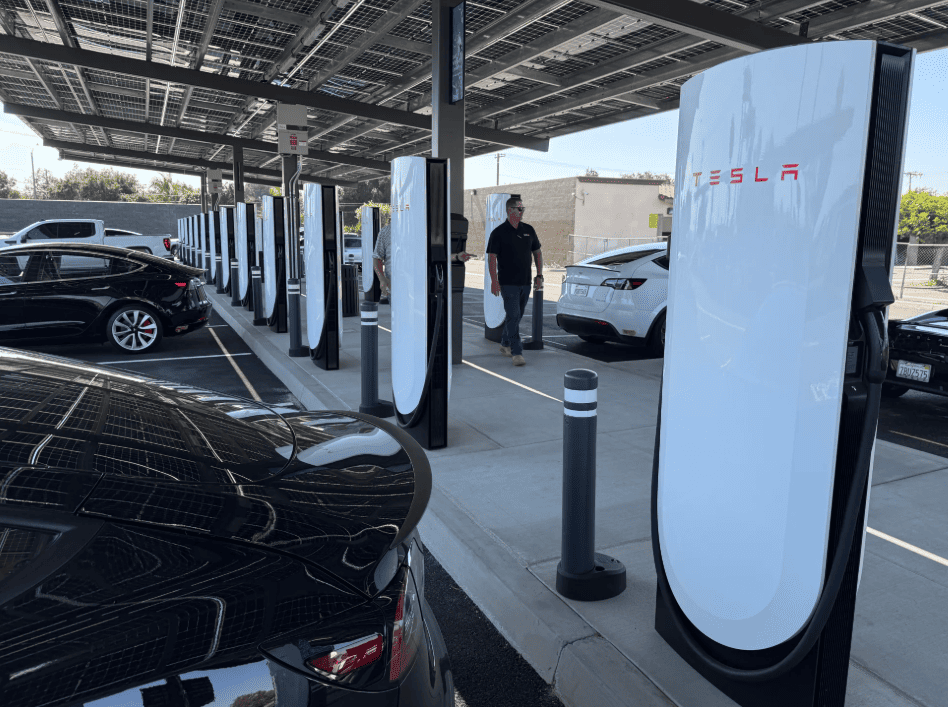
Convenience stores are typically located along busy urban roads, highways, suburban neighborhoods, and transportation corridors. These locations already serve drivers who stop briefly and frequently, making them natural charging points for EVs.
Unlike destination chargers at workplaces or residential complexes, convenience store chargers cater to on-the-go charging needs, particularly for drivers who want to top up during errands or road trips.
Most convenience store visits last between 5 and 30 minutes, aligning perfectly with DC fast charging or high-power Level 2 charging sessions. While the vehicle charges, drivers can:
Buy food and beverages
Use restrooms
Grab coffee
Purchase daily necessities
This creates a win-win scenario: drivers use time efficiently, and stores benefit from increased in-store spending.
Many convenience stores already have:
- Parking spaces
- Electrical connections
- Lighting and security systems
- 24/7 operations
These features reduce the complexity and cost of installing EV chargers compared to entirely new charging sites.
Governments worldwide are promoting electric mobility through subsidies, emissions regulations, and zero-emission vehicle mandates. As EV ownership grows, so does the pressure on charging infrastructure—especially for drivers who:
Live in apartments
Lack private garages
Travel long distances
Convenience store charging helps close this infrastructure gap.
Although EV ranges continue to improve, range anxiety remains a concern for many drivers, particularly during long trips. Seeing reliable chargers at familiar convenience store brands reassures drivers that charging is always within reach.
One of the biggest barriers to EV charging adoption is inconvenience. Drivers do not want to go out of their way to charge. Convenience store charging eliminates this friction by integrating charging into existing daily routines.
- Power range: 7–22 kW
- Charging time: 1–3 hours for significant range
- Best for urban or suburban convenience stores
Level 2 chargers are cost-effective and ideal where drivers may spend more time, such as combined convenience store and café locations.
- Power range: 50 kW to 350 kW
- Charging time: 15–40 minutes
- Ideal for highway and travel corridor locations
DC fast chargers are increasingly popular at convenience stores because they match short dwell times and attract long-distance travelers.
As EV technology evolves, ultra-fast chargers capable of delivering 300 kW or more are being installed at select convenience store locations, particularly along major highways.
- Unmatched Convenience: Charging while buying coffee or snacks feels natural and effortless. Drivers no longer need to plan special charging stops or wait idly in parking lots.
- Time Efficiency: Instead of “waiting to charge,” drivers charge while doing something else, making EV ownership more practical for busy lifestyles.
- Increased Accessibility: Convenience store chargers are often available 24/7, which is critical for night-time travelers, shift workers, and emergency situations.
- Improved Road Trip Experience: On long journeys, convenience store charging turns charging stops into pleasant breaks rather than delays.
EV charging opens multiple income opportunities:
Direct charging fees
Revenue sharing with charging network operators
Increased in-store purchases during charging sessions
Studies show that EV drivers typically spend more time and money in stores while charging.
EV drivers often have higher-than-average household incomes and are more likely to purchase premium products such as:
Fresh food
Specialty beverages
Ready-to-eat meals
This aligns well with modern convenience store retail strategies.
Offering EV charging encourages repeat visits and strengthens customer loyalty. Drivers are more likely to choose a convenience store brand they trust for both charging and shopping.
As gasoline demand gradually declines, EV charging helps convenience stores stay relevant in a low-carbon transportation future.
Networked Charging Systems
Most convenience store chargers are connected to smart charging platforms that enable:
Mobile app payments
Real-time charger availability
Dynamic pricing
Usage analytics
These systems enhance user experience and operational efficiency.
Payment Flexibility
Modern EV chargers support:
Credit and debit cards
Mobile wallets
RFID cards
App-based subscriptions
This flexibility is essential for serving both local and transient drivers.
Energy Management and Load Balancing
Smart energy management systems help stores avoid overloading their electrical capacity by dynamically distributing power among chargers and other store equipment.
Supporting Decarbonization
By hosting EV chargers, convenience stores actively contribute to reducing greenhouse gas emissions and promoting cleaner transportation.
Renewable Energy Integration
Some convenience stores integrate EV charging with:
On-site solar panels
Battery energy storage systems (BESS)
This reduces grid dependence and enhances sustainability credentials.
Corporate Social Responsibility
Offering EV charging demonstrates a commitment to environmental responsibility, which resonates strongly with modern consumers.
Installing EV chargers—especially DC fast chargers—requires significant investment in:
Equipment
Electrical upgrades
Grid connections
However, government incentives and utility programs often help offset these costs.
Older locations may need electrical infrastructure upgrades to support high-power charging.
Some convenience stores have limited parking, making charger placement challenging without disrupting existing traffic flow.
In early adoption phases, utilization rates may be inconsistent. Strategic location selection and proper marketing are key to success.
Many governments actively support EV charging deployment through:
Grants and subsidies
Tax credits
Utility incentives
Public-private partnerships
These programs significantly reduce financial barriers for convenience store operators.
Large travel centers with convenience stores, restaurants, and restrooms are becoming major fast-charging hubs, offering multiple high-power chargers for long-distance EV travel.
City-based convenience store chains are installing Level 2 and DC chargers to serve residents without home charging access.
In less densely populated areas, convenience stores often become the only reliable public charging option, playing a critical role in regional EV adoption.
Many convenience stores partner with established EV charging networks to:
Reduce operational complexity
Leverage existing user bases
Ensure reliable maintenance
Utility partnerships help optimize grid integration and secure favorable electricity pricing.
Some automakers collaborate with convenience stores to expand branded charging networks or support fleet charging needs.
Charging as a Core Service
In the future, EV charging will be as essential to convenience stores as fuel pumps once were.
Enhanced Customer Experiences
Expect to see:
Lounges and seating areas
Improved food offerings
Digital displays with charging status updates
Integration with Autonomous and Connected Vehicles
As vehicles become more connected, drivers may automatically receive recommendations for nearby convenience store chargers.
Decline of Traditional Fuel, Rise of Energy Retail
Convenience stores are transitioning from fuel retailers to energy retailers, offering electricity alongside traditional products.
Feature | Convenience Store Charging | Standalone Charging Stations |
Amenities | High | Low to moderate |
Dwell Time Value | Excellent | Limited |
Revenue Diversification | Strong | Charging-only |
Brand Recognition | High | Varies |
Research shows that EV drivers prefer charging locations where they can multitask. Convenience store charging fits this preference perfectly, making it one of the most user-friendly charging models available today.
The global convenience store EV charging market is expected to grow rapidly over the next decade, driven by:
Rising EV sales
Urbanization
Government infrastructure targets
Retail innovation
Asia-Pacific, North America, and Europe are all seeing strong investment in this segment.
Convenience store EV charging stations represent one of the most practical, scalable, and consumer-friendly solutions for expanding EV infrastructure. By combining everyday retail experiences with fast, accessible charging, convenience stores are redefining the role they play in the transportation ecosystem.
For EV drivers, convenience store charging means less waiting, more flexibility, and greater confidence in electric mobility. For store operators, it offers new revenue streams, increased foot traffic, and a future-proof business model. For society as a whole, it accelerates the transition to cleaner, more sustainable transportation.
As the world moves toward electrification, convenience stores are no longer just pit stops—they are becoming power stops, fueling the next generation of mobility.
