EV Charging in Parking Facilities: Supporting Sustainable Transportation
As electric vehicles (EVs) continue their rapid rise across global markets, parking facilities are undergoing a fundamental transformation. No longer viewed as passive spaces for vehicle storage, parking lots, garages, and airport parking facilities are increasingly becoming critical nodes in the EV charging ecosystem. For parking operators, property managers, and facility owners, EV charging represents both a strategic opportunity and a growing necessity.
The availability and type of EV charging infrastructure in parking facilities vary widely. Differences often exist not only between facilities but even within the same parking lot, depending on available electrical capacity, site layout, and customer dwell time. While some locations prioritize short-term, high-power charging, others focus on slower, overnight charging solutions that align better with long-term parking needs.
At many airport and long-stay parking facilities, for example, Level 3 DC fast charging is often unnecessary. Guests typically park their vehicles for several days rather than just a few hours, making slower charging solutions more practical and cost-effective. However, as electric shuttle fleets and commercial EVs become more common, many operators are actively evaluating the future addition of high-power charging options.
Today, Level 2 and Level 1 charging solutions dominate the parking facility landscape, providing reliable, convenient, and economical charging for travelers, commuters, and long-term parkers. By understanding how these charging levels fit into parking operations—and why EV charging matters more than ever—parking facilities can position themselves for long-term success in an electrified transportation future.
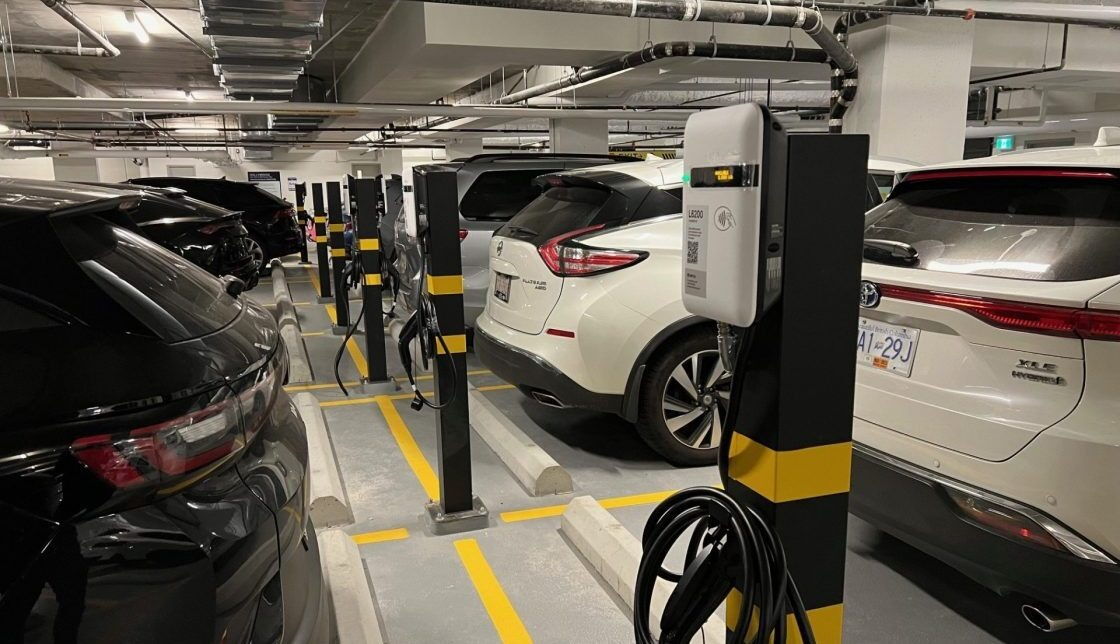
Level 1 charging uses a standard 120-volt household outlet, making it the most accessible and easiest form of EV charging to deploy. Although it provides the slowest charging speed, it is particularly well-suited for parking facilities where vehicles remain parked for extended periods.
On average, Level 1 charging can fully charge an electric vehicle within approximately 24 hours, depending on battery size. For travelers heading out on business trips or vacations, this means they can leave their EV plugged in and return to a fully charged vehicle without any inconvenience.
From an operational perspective, Level 1 charging offers several advantages:
- Low installation costs, as it requires minimal electrical upgrades
- Simple maintenance, with fewer technical components
- Predictable energy demand, reducing strain on existing electrical systems
For long-term airport parking, cruise terminal parking, and corporate campus lots, Level 1 charging provides a practical entry point into EV infrastructure without significant capital investment.
Level 2 charging operates on a 240-volt electrical supply and is widely regarded as the ideal solution for most parking facilities. It offers a strong balance between charging speed, installation cost, and operational efficiency.
Typically, Level 2 chargers can bring an EV to a full charge within 10 to 12 hours. This makes them perfectly suited for overnight parking, multi-day stays, hotel parking, office garages, and off-site airport parking facilities.
Key benefits of Level 2 charging include:
- Faster charging speeds, accommodating a wider range of EV users
- High compatibility, as nearly all modern EVs support Level 2 charging
- Flexible pricing models, including per-hour, per-session, or bundled parking rates
Because of its versatility, Level 2 charging is the most widely deployed option across parking facilities worldwide. It meets customer expectations while remaining manageable in terms of electrical infrastructure and operating costs.
Level 3 charging, also known as DC fast charging, delivers high-power direct current to EV batteries, often exceeding 100 kW. These chargers are designed for rapid top-ups, allowing drivers to gain significant range in 20 to 40 minutes.
While Level 3 charging plays a vital role in highway corridors, retail centers, and fleet depots, it is generally less suitable for long-term parking facilities. Most guests at airport or long-stay parking locations leave their vehicles for days rather than hours, reducing the need for fast charging.
That said, the role of Level 3 charging in parking facilities may grow in the future. As operators introduce electric shuttle buses, service vehicles, and commercial EV fleets, fast charging infrastructure could become an operational necessity rather than a customer amenity.
EV charging is no longer a niche feature reserved for premium properties. It is quickly becoming a core component of modern parking infrastructure. Facilities that fail to adapt risk losing relevance in an increasingly electrified transportation landscape.
EV drivers actively seek out parking facilities that offer convenient and reliable charging. For many, the presence of EV chargers directly influences where they choose to park, especially during long trips or overnight stays.
Providing EV charging creates a powerful competitive advantage by:
- Increasing customer satisfaction and convenience
- Encouraging repeat usage and long-term loyalty
- Differentiating your facility in crowded urban or airport markets
- As EV adoption accelerates, charging availability will become as expected as lighting, security, or payment systems in parking facilities.
EV charging transforms parking spaces into revenue-generating assets. When managed effectively, charging services can create multiple income streams beyond traditional parking fees.
Common monetization models include:
- Energy-based pricing, charging per kilowatt-hour
- Time-based fees, encouraging efficient charger usage
- Premium parking rates, bundling charging with reserved spaces
- Membership or subscription plans, targeting frequent travelers or commuters
In addition, EV charging can increase overall facility utilization by attracting customers who might otherwise choose competing parking options.
Installing EV charging infrastructure signals innovation, sustainability, and forward-thinking management. For property owners and operators, this can significantly enhance brand reputation and perceived value.
Facilities with EV charging are often viewed as:
Environmentally responsible
Technologically advanced
Aligned with future transportation trends
This positive perception benefits not only customers but also investors, partners, and regulatory stakeholders.
EV charging is rapidly transitioning from a luxury amenity to essential infrastructure. Governments worldwide are introducing stricter emissions regulations, EV mandates, and incentives that favor electrification.
Early adoption of EV charging helps parking facilities:
- Avoid costly retrofits later
- Stay ahead of regulatory requirements
- Protect long-term asset value
- Remain competitive as EV ownership becomes mainstream
Future-proofing is not just about installing chargers—it’s about building flexible infrastructure that can scale as demand grows.
Understanding the opportunity is only the first step. Successful EV charging implementation requires careful evaluation of your facility’s readiness.
Key considerations include:
Assess whether your existing electrical system can support EV chargers and identify any required upgrades. Load management systems can help balance demand and reduce peak energy costs.
Analyze how long vehicles typically remain parked. Long dwell times favor Level 1 or Level 2 charging, while short stays may justify faster solutions.
Designated EV charging spaces should be conveniently located, clearly marked, and compliant with accessibility standards.
Consider how charging will be monitored, maintained, and priced. Smart charging platforms can provide real-time data, billing automation, and usage analytics.
Modern EV charging solutions go far beyond simple power delivery. Smart charging systems allow parking operators to optimize performance, manage costs, and enhance the user experience.
Features often include:
- Remote monitoring and diagnostics
- Dynamic load balancing
- User authentication and payment processing
- Usage reporting and analytics
These tools enable parking facilities to scale charging services efficiently while maintaining reliability and profitability.
EV charging aligns closely with broader sustainability goals. By supporting electric mobility, parking facilities contribute to reduced greenhouse gas emissions, improved air quality, and lower dependence on fossil fuels.
Many facilities also integrate EV charging with renewable energy sources such as solar panels or energy storage systems, further enhancing environmental benefits.
The evolution of EV charging in parking facilities is far from complete. Emerging trends include wireless charging, vehicle-to-grid (V2G) integration, and AI-driven energy management systems.
As technology advances and EV adoption grows, parking facilities will increasingly function as integrated mobility hubs—supporting not only private vehicles but also shared fleets, autonomous shuttles, and commercial EVs.
EV charging for parking facilities represents a powerful convergence of mobility, technology, and business opportunity. From Level 1 and Level 2 charging solutions tailored to long-term parking needs, to future-ready strategies that anticipate fleet electrification, EV charging is reshaping how parking assets are designed and monetized.
By investing in EV charging today, parking facility operators can attract new customers, generate additional revenue, enhance sustainability credentials, and future-proof their properties for the next generation of transportation.
Understanding the opportunity is just the beginning. With the right planning, infrastructure, and technology partners, EV charging can transform parking facilities into essential pillars of the electric mobility ecosystem.