
As the global electric vehicle (EV) industry continues its rapid expansion, the development of charging infrastructure has emerged as one of the most decisive factors shaping adoption rates. While ultra-fast chargers exceeding 150 kW often dominate headlines, a quieter yet equally significant transformation is underway: the widespread deployment of 30 kW Level 3 DC fast chargers. Positioned between conventional AC charging and high-power DC stations, 30 kW Level 3 chargers are increasingly recognized as a cost-effective, grid-friendly, and versatile solution for urban environments, fleet operations, workplaces, and public destinations.
This news article explores the growing relevance of 30 kW Level 3 EV chargers, examining their technical characteristics, market drivers, infrastructure economics, deployment scenarios, regulatory support, and long-term role in the evolving EV charging ecosystem.
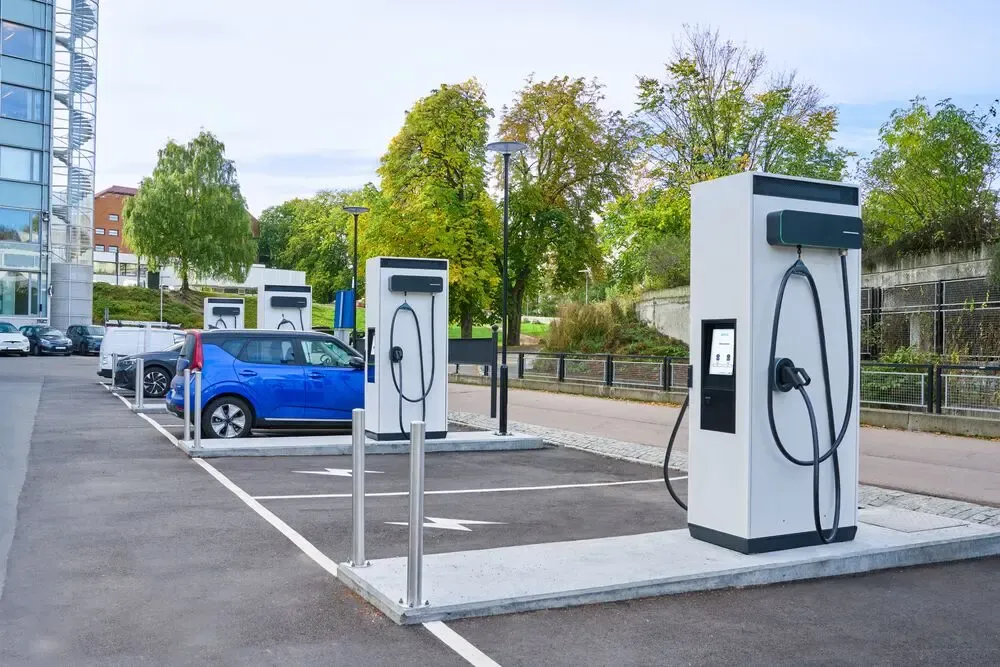
EV charging is generally categorized into three levels based on power output and charging speed:
30 kW chargers fall within the lower range of Level 3 DC fast charging, offering a meaningful speed upgrade over Level 2 AC chargers without the infrastructure complexity and cost associated with ultra-high-power systems.
A Strategic Middle Ground
The growing attention on 30 kW DC chargers stems from their ability to balance several competing priorities:
In many real-world applications, charging speed beyond 30–50 kW offers diminishing returns, especially when vehicles are parked for extended periods such as during work hours, shopping visits, or fleet downtime.
A 30 kW Level 3 charger can typically deliver up to 30 kilowatt-hours of energy per hour, subject to vehicle acceptance rates and battery conditions. While charging curves vary by vehicle, typical results include:
Small EVs (30–40 kWh batteries): 20–80% charge in 40–60 minutes
Mid-size EVs (50–70 kWh batteries): 20–80% charge in 70–100 minutes
Large battery EVs (80–100 kWh): Partial fast charging during longer stops
These charging times align well with real-world dwell times in urban and commercial settings, making 30 kW chargers particularly practical for opportunity charging.
Unlike Level 2 chargers, which rely on the vehicle's onboard charger to convert AC power to DC, 30 kW Level 3 chargers perform this conversion internally, delivering DC power directly to the battery. This approach improves efficiency and enables higher charging rates.
Key technical components include:
Many modern systems use modular power architectures, allowing easier maintenance and scalability.
Most 30 kW DC chargers support multiple charging standards to maximize vehicle compatibility:
Communication protocols such as DIN 70121 and ISO 15118 enable smart charging, authentication, diagnostics, and — increasingly — Plug & Charge functionality, simplifying the user experience.
In dense urban environments, deploying ultra-fast chargers is often impractical due to:
30 kW chargers require less electrical capacity and smaller footprints, making them suitable for urban streets, parking garages, and mixed-use developments.
Fleet operators represent one of the strongest growth drivers for 30 kW Level 3 chargers. Commercial fleets prioritize:
Delivery vans, municipal vehicles, ride-hailing fleets, and service vehicles frequently return to depots or hubs where 30 kW charging aligns perfectly with operational downtime.
Fleet managers report that moderate-power DC charging reduces demand charges and avoids expensive grid upgrades while maintaining vehicle availability.
Employers and commercial property owners are increasingly investing in fast charging to:
30 kW chargers allow vehicles to gain substantial range during a workday or shopping visit, offering a premium experience compared to slower AC charging.
Compared to 150 kW or 350 kW stations, 30 kW chargers typically involve:
This cost advantage enables broader deployment across multiple sites rather than concentrating investment in a few high-power hubs.
Ongoing operational benefits include:
For many operators, these savings significantly improve the total cost of ownership (TCO).
From a utility perspective, 30 kW chargers are easier to integrate into existing distribution networks:
When combined with smart energy management systems, charging sessions can be scheduled or throttled to avoid peak demand periods.
An increasing number of charging sites are pairing 30 kW chargers with:
This approach allows operators to smooth demand peaks, reduce energy costs, and improve sustainability metrics.
Governments worldwide are accelerating EV infrastructure deployment through grants, rebates, and tax incentives. Many programs specifically support DC fast chargers below 50 kW, recognizing their suitability for urban and regional applications.
Examples include:
These programs are significantly lowering barriers to adoption for 30 kW Level 3 chargers.
Transportation remains a major source of greenhouse gas emissions. By enabling faster and more accessible charging, 30 kW chargers help:
They play a critical role in bridging the gap between slow AC charging and expensive ultra-fast infrastructure.
Ease of Use
Modern 30 kW chargers are designed with user-friendly interfaces, featuring:
The introduction of Plug & Charge further simplifies the charging process by automating authentication and billing.
Reliability and Maintenance
Because 30 kW chargers operate at lower power levels than ultra-fast systems, they often experience:
Remote monitoring and predictive maintenance tools further enhance uptime and reliability.
Despite their advantages, 30 kW Level 3 chargers are not without challenges:
As a result, they are best deployed as part of a diversified charging network rather than a standalone solution.
Proper maintenance is essential to ensure the long-term reliability, safety, and performance of 30 kW Level 3 EV chargers, particularly as utilization rates increase. Although these chargers operate at lower power levels than ultra-fast systems, they still rely on advanced power electronics and communication systems that require regular attention.
Routine visual inspections should be conducted to check charging cables, connectors, and enclosures for signs of wear, corrosion, or physical damage. Connectors should be kept clean and free of debris to ensure secure electrical contact and prevent overheating. Cable strain relief points must also be inspected regularly, as repeated handling can lead to mechanical fatigue.
Thermal management systems, including air filters, cooling fans, or liquid cooling components (if equipped), should be cleaned and serviced according to manufacturer guidelines. Blocked airflow or degraded cooling performance can reduce charging efficiency and shorten component lifespan.
Periodic software and firmware updates are equally important. These updates enhance compatibility with new EV models, improve cybersecurity, and optimize charging algorithms. Operators should also leverage remote monitoring platforms to track charger performance, error codes, and usage patterns in real time.
Finally, scheduled preventive maintenance — combined with predictive diagnostics — helps minimize downtime, reduce unexpected repair costs, and ensure a consistent charging experience for users.
Industry experts increasingly agree that the future of EV charging will be multi-tiered, with different power levels serving different use cases:
Within this structure, 30 kW Level 3 chargers will remain highly relevant.
Advances in charging software will continue to enhance the value of 30 kW stations through:
These capabilities allow operators to maximize utilization and revenue.
As electric mobility continues to reshape transportation, 30 kW Level 3 EV chargers are emerging as a pragmatic and scalable solution. Their combination of moderate fast-charging capability, manageable infrastructure requirements, and economic efficiency makes them ideally suited for urban environments, fleets, workplaces, and public destinations.
While ultra-fast charging will continue to expand for long-distance travel, the widespread deployment of 30 kW chargers will play a critical role in making EV charging more accessible, reliable, and sustainable worldwide.
