As electric vehicles (EVs) continue their rapid expansion across global markets, charging speed has become one of the most decisive factors influencing adoption. While early EV users were willing to plan routes carefully and wait hours for a full charge, today's drivers expect a refueling experience that rivals—or even surpasses—that of conventional gasoline vehicles. This expectation has pushed charging technology forward, placing Level 3 charging, also known as DC fast charging, at the center of the EV infrastructure revolution.
Level 3 charging is no longer a niche solution reserved for highway rest stops. It has become a cornerstone of modern EV ecosystems, supporting long-distance travel, commercial fleets, ride-hailing services, and urban fast-turnover charging hubs. With power outputs now ranging from 50 kW to as high as 500 kW, Level 3 charging represents the fastest and most technologically advanced way to replenish an electric vehicle battery.
This article explores what Level 3 charging is, how it works, how fast it really is in real-world conditions, and why it plays a critical role in the future of electric mobility.
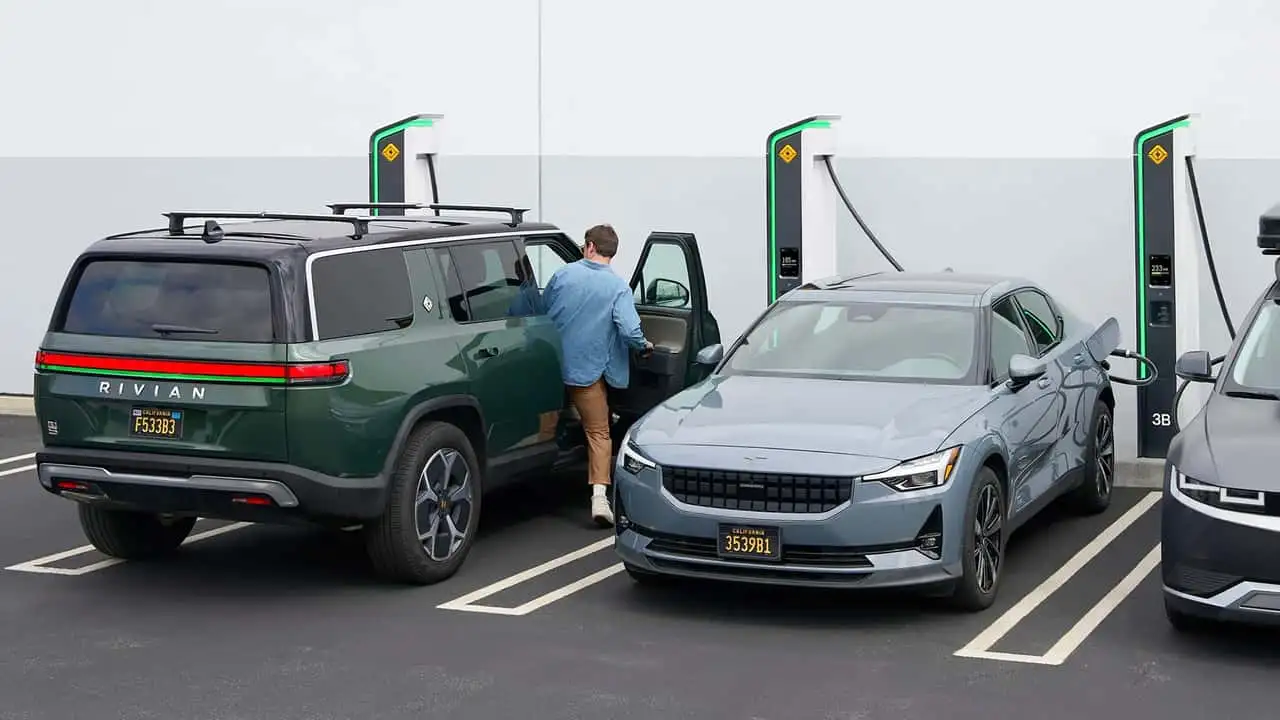
Level 3 charging, commonly referred to as DC fast charging or rapid charging, is a high-powered EV charging method designed to dramatically reduce charging time. Unlike Level 1 or Level 2 chargers, which supply alternating current (AC) that must be converted inside the vehicle, Level 3 chargers deliver direct current (DC) straight to the battery pack.
By bypassing the vehicle's onboard charger—which is typically limited in power capacity—Level 3 chargers enable significantly higher energy transfer rates. This allows EV batteries to be charged in minutes rather than hours, making fast charging suitable for long-distance travel and high-utilization scenarios.
Key characteristics of Level 3 charging include:
Level 3 charging stations are commonly found along highways, at public fast-charging hubs, fleet depots, and increasingly in urban centers where quick turnaround is essential.
To understand why Level 3 charging is so fast, it's important to look at how it differs from Level 1 and Level 2 charging systems.
Level 1 and Level 2 chargers supply AC power from the electrical grid. The vehicle's onboard charger must convert this AC power into DC before it can be stored in the battery.
Level 3 chargers, on the other hand, perform the AC-to-DC conversion inside the charging station itself and deliver DC power directly to the battery.
This distinction is critical because onboard chargers are usually limited to 7–22 kW, while external DC chargers can handle hundreds of kilowatts.
A Level 3 DC fast charging system typically includes:
When an EV is plugged in, the charger and vehicle communicate in real time. The charger continuously adjusts output based on:
This intelligent control ensures both safety and efficiency during high-speed charging.
Level 3 chargers are the fastest EV charging option available today. Under optimal conditions, they can add 100 to 250 miles of driving range in just 30 to 45 minutes, depending on the vehicle and charger power.
Typical performance benchmarks include:
This speed makes Level 3 charging especially valuable for:
Level 3 charging systems operate at much higher voltages than AC chargers, typically 400V or 800V. Vehicles with 800V architectures—such as many modern premium and performance EVs—can take full advantage of ultra-fast chargers, drawing higher power with less heat generation.
The connectors used for Level 3 charging include additional pins to handle high voltage and current safely, along with advanced locking and cooling mechanisms.
One of the most common misconceptions about Level 3 charging is that a higher charger rating always means faster charging. In reality, charging speed is a two-way relationship between the charger and the vehicle.
While Level 3 chargers may be rated at 150 kW, 300 kW, or even 500 kW, the actual charging speed depends on:
For example, if an EV can only accept 100 kW, plugging it into a 350 kW charger will not increase charging speed beyond that limit.
Today's Level 3 chargers typically fall into these categories:
As EV technology advances, higher power levels are becoming more relevant, particularly for long-range vehicles and heavy-duty EVs.
Another defining characteristic of Level 3 charging is the charging curve. Unlike filling a fuel tank, EV batteries do not charge at a constant rate.
When a battery is at a low state of charge—typically between 10% and 60%—it can accept high power safely. As the battery approaches 80%, the charging system gradually reduces power to prevent:
This means that charging from 10% to 80% may take the same amount of time as charging from 80% to 100%.
Because of this behavior, many EV drivers optimize their time by:
Level 3 charging is therefore best suited for rapid energy replenishment rather than full battery charging.
Battery capacity plays a major role in determining how long Level 3 charging takes.
Small Battery Packs (Around 40 kWh)
EVs with smaller battery packs can charge very quickly on Level 3 chargers:
Medium Battery Packs (60–70 kWh)
This is one of the most common battery sizes in today's EV market:
Large Battery Packs (80–100 kWh and Above)
Larger batteries offer extended range but require more time:
As battery technology improves, newer cells are designed to accept higher power for longer periods, reducing charging times even for large packs.
While ultra-high-power chargers promise dramatic reductions in charging time, real-world results can vary significantly.
Even at 300 kW or 350 kW stations, many EVs only receive 70–120 kW due to:
As a result, charging performance depends as much on vehicle design as on charger specifications.
Many modern EVs now feature battery preconditioning, which warms or cools the battery before arriving at a fast charger. This allows the vehicle to accept higher power immediately, improving real-world charging speeds.
Level 3 charging is a critical pillar of global EV infrastructure development. Governments, utilities, and private companies are investing heavily in DC fast charging networks to support mass adoption.
Key Use Cases
Supporting Commercial and Heavy-Duty EVs
As electric trucks and buses enter the market, Level 3 and ultra-fast charging will be essential to keep downtime low and operations efficient.
The future of Level 3 charging is moving toward even faster, smarter, and more efficient systems.
Emerging trends include:
These innovations will further close the gap between EV charging and traditional refueling experiences.
Level 3 charging speed has fundamentally reshaped what it means to own and operate an electric vehicle. By delivering high-power DC energy directly to the battery, Level 3 chargers reduce charging times from hours to minutes, enabling long-distance travel, commercial operations, and convenient public charging.
While real-world charging speed depends on factors such as vehicle capability, battery size, and state of charge, ongoing advancements in charging infrastructure and EV technology continue to push boundaries. As power levels rise and batteries become more resilient, Level 3 charging will remain a driving force behind the global transition to electric mobility.
In the years ahead, faster, smarter, and more widely available DC fast charging will not only improve convenience—it will redefine how drivers think about energy, travel, and the future of transportation.