The electric vehicle (EV) market is experiencing an unprecedented surge in growth, fueled by advancements in battery technology, increasing environmental awareness, and government incentives aimed at reducing carbon emissions. However, one challenge continues to persist: the availability and efficiency of charging infrastructure. High-power DC fast charging stations, capable of recharging EVs at record speeds, are emerging as the solution to this pressing issue. These stations promise to enhance the overall EV experience, reduce charging times, and accelerate the global adoption of electric vehicles.
As the number of electric vehicles on the road increases, the need for fast, reliable, and accessible charging options becomes even more critical. High-power DC fast charging, with charging capacities ranging from 150 kW to 350 kW, represents a pivotal innovation in this space. By dramatically reducing charging times from hours to mere minutes, high-power DC charging is positioning itself as a game-changer for the EV ecosystem, offering long-range, high-speed refueling solutions for the mass adoption of electric mobility.
In this article, we explore the technology, benefits, and potential challenges of high-power DC fast charging and examine its critical role in shaping the future of electric vehicles.
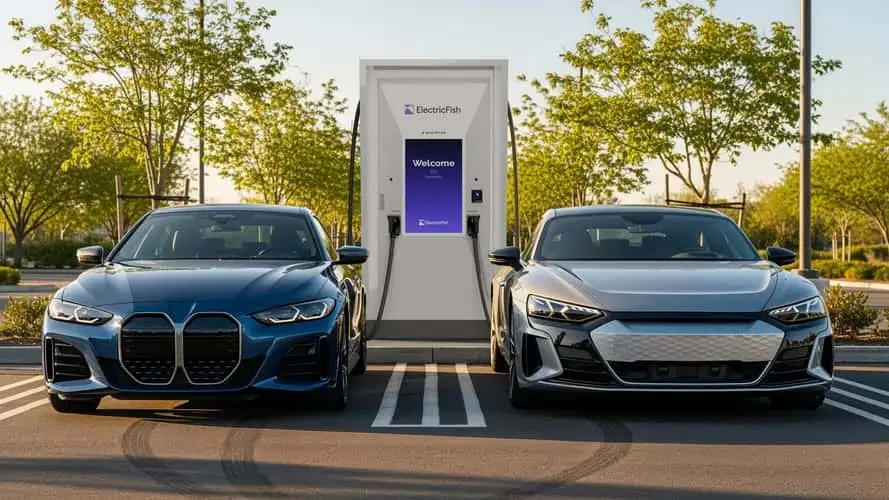
High-power DC fast charging is a type of electric vehicle charging that delivers significantly faster charging speeds compared to traditional AC or lower-power DC chargers. The primary advantage of DC fast charging lies in its ability to send power directly to the vehicle's battery without relying on the vehicle's onboard charger to convert AC power into DC. This enables the EV to charge at a much higher rate, minimizing the wait time for drivers.
- High Power Output: High-power DC chargers typically operate at power levels between 150 kW and 350 kW. In some cases, charging systems are being developed that can exceed 500 kW, paving the way for ultra-fast charging in the near future.
- Faster Charging Time: One of the most significant benefits of high-power DC chargers is their ability to recharge EV batteries quickly. An EV with a 100 kWh battery can be charged to 80% capacity in just 20-30 minutes with a 350 kW charger. This is a significant improvement over the several hours it would take using traditional AC chargers.
- Direct Current (DC): Unlike AC chargers, which first convert electricity from the grid into a form that the vehicle can accept, DC chargers supply power directly to the battery. This results in much higher efficiency and faster charging.
- Versatility and Compatibility: High-power DC chargers are designed to be compatible with a wide range of vehicles. The most common standard for high-power charging in Europe and North America is the Combined Charging System (CCS2), which is widely adopted by manufacturers like BMW, Volkswagen, and Ford. Tesla has also developed its proprietary charging network, though it is working towards integrating CCS2 compatibility.
- Charging Units: These are the main components that supply power to the EV, often comprising multiple power conversion systems and protection mechanisms to ensure safe and stable charging.
- Power Distribution Systems: To manage the flow of electricity efficiently, DC fast chargers require advanced power distribution systems capable of handling large amounts of power.
- Cooling Systems: To prevent overheating, high-power DC chargers employ liquid or air-cooling mechanisms, ensuring that the equipment operates within safe temperature ranges.
- Charging Cables and Connectors: For ultra-fast charging, charging cables must be able to handle high currents and provide a secure connection with the vehicle. Modern charging cables are designed to be robust, with advanced thermal protection to prevent wear and tear.
The most obvious advantage of high-power DC fast charging is the ability to significantly reduce charging time. But the benefits extend far beyond that, making this technology a crucial component of the EV revolution.
- Reduced Charging Time: High-power DC chargers can recharge an EV to 80% in just 20-30 minutes, which is a huge improvement over older AC chargers that could take hours for a full charge. This rapid turnaround makes electric vehicles much more practical for users who rely on their cars for both short and long journeys.
- Extended Range for Long-Distance Travel: With high-power DC charging, the concept of range anxiety—the fear that an EV might run out of power before reaching the next charging station—becomes less of an issue. For EV drivers on long trips, the ability to quickly recharge makes electric vehicles a viable alternative to gasoline-powered cars.
- Availability of Charging Locations: High-power DC chargers are being rolled out globally, with charging networks such as Tesla Supercharger, Ionity, and Electrify America aggressively expanding to meet the increasing demand for fast charging. Many of these chargers are located along highways and in urban centers, making it easier for users to find a charging point when they need it most.
- Compatibility with Multiple Vehicle Models: High-power DC chargers are compatible with a wide range of electric vehicles. As more automakers adopt the CCS2 standard, the availability of universal charging infrastructure increases, making EV ownership more convenient and accessible to a broader market.
- Lower Cost per Charge: Although high-power DC fast chargers may cost more to use than slower chargers, they are more efficient in transferring energy to the battery. This means that over time, users can spend less on charging, especially as EV battery costs continue to decrease.
- Revenue Generation for Operators: Charging networks that offer high-power DC charging stations can expect high throughput, meaning more vehicles can be served per day. This results in higher revenue potential for charging operators.
For the electric vehicle industry to reach mass adoption, fast and accessible charging infrastructure is essential. High-power DC chargers play a central role in ensuring that EVs can be recharged quickly and reliably, addressing the charging concerns that have traditionally deterred consumers from purchasing electric vehicles.
- Scaling the Charging Network: Governments and private companies are investing heavily in the expansion of high-power DC charging networks to keep pace with the rapid growth of EVs. The widespread availability of fast chargers is making EVs more practical for everyday use, including long-distance travel.
- Fostering Public and Private Partnerships: Collaborations between automakers, energy providers, and governments are accelerating the growth of charging infrastructure. Public-private partnerships help subsidize the installation of high-power DC chargers, making them more accessible to consumers while also helping to integrate renewable energy sources.
- Grid Management and Energy Distribution: High-power DC chargers are not only fast but also smart. They are designed to be integrated with the grid, allowing for real-time monitoring of energy consumption and demand. This helps grid operators optimize energy distribution and prevent overloading during peak times.
- Renewable Energy Integration: As the renewable energy sector grows, high-power DC chargers are being increasingly powered by solar, wind, and other clean energy sources. This makes the entire EV ecosystem more sustainable and less reliant on fossil fuels.
High-power DC fast charging is not only an innovation in terms of speed but also a critical development in the effort to reduce the environmental impact of transportation. As more EVs hit the road, the environmental benefits of high-power charging grow exponentially.
- Reduction of Carbon Emissions: As the number of electric vehicles increases and more chargers are deployed, fewer gas-powered cars will be on the road. This will lead to a decrease in greenhouse gas emissions, improving air quality and supporting global climate change mitigation efforts.
- Sustainability through Clean Energy: Many high-power DC fast chargers are being integrated with solar and wind energy sources. This helps reduce the reliance on the grid, which is still primarily powered by fossil fuels in many regions.
- Job Creation: The growing demand for high-power DC chargers has created numerous jobs, from the installation and maintenance of charging stations to the manufacturing of the equipment itself.
- Boosting the EV Market: Faster charging capabilities make EVs more appealing to consumers, stimulating sales in the EV market. The increased demand for electric vehicles supports innovation in vehicle technology, battery improvements, and infrastructure development.
Despite its benefits, high-power DC fast charging faces several challenges that must be addressed to fully realize its potential.
- High Installation Costs: The upfront costs for installing high-power DC chargers are significant, making it difficult for smaller operators to enter the market. Public-private partnerships and government incentives are key to overcoming this hurdle.
- Grid Strain: The large amounts of power required by high-speed charging stations can place stress on the local grid, especially in areas where the infrastructure is not yet upgraded to handle the increased demand.
Impact on Battery Life: While high-power DC chargers offer fast charging times, they can also increase the wear on EV batteries if used too frequently. Battery degradation may occur faster when vehicles are charged at maximum speed regularly, although advances in battery technology are helping mitigate these effects.
Looking ahead, the future of high-power DC fast charging appears incredibly promising. The next generation of charging technology will continue to evolve, reducing charging times even further and expanding the global network of fast chargers.
500 kW and Beyond: Research is underway for ultra-high-power charging systems that can handle charging rates above 500 kW, reducing charging times to under 10 minutes for most vehicles.
Wireless Charging: Wireless charging, though still in the experimental stages, could soon become a reality, allowing vehicles to charge without physical connectors.
High-power DC fast charging is reshaping the future of electric vehicles, providing faster, more efficient charging options that enable widespread adoption. While there are challenges to overcome, the benefits of high-speed charging—such as reduced wait times, greater EV accessibility, and improved infrastructure—position it as a central component of the global transition to electric mobility. With continued advancements in technology and infrastructure, high-power DC fast charging will play a key role in the sustainable future of transportation.