As electric vehicles continue to gain popularity worldwide, the demand for convenient and flexible charging solutions is increasing rapidly. While fixed charging infrastructure remains the backbone of EV adoption, portable EV charging stations are becoming an important part of the charging ecosystem. These compact and mobile charging solutions provide drivers, businesses, fleet operators, and emergency services with greater flexibility and accessibility.
Portable EV charging stations are designed to deliver charging capabilities wherever they are needed. They can support home charging, emergency roadside assistance, temporary events, construction sites, commercial fleets, rural areas, and locations where permanent charging infrastructure is unavailable or impractical. Their portability, convenience, and expanding technological capabilities make them a valuable solution for modern electric mobility.
As EV ownership grows across residential, commercial, and industrial sectors, portable charging technology is evolving to meet changing user requirements. From lightweight Level 1 charging cables to advanced mobile DC fast charging systems, portable chargers now offer a wide range of charging speeds, power capacities, and applications.
This article explores portable EV charging stations in detail, including their types, features, benefits, applications, technological developments, challenges, and future market trends.
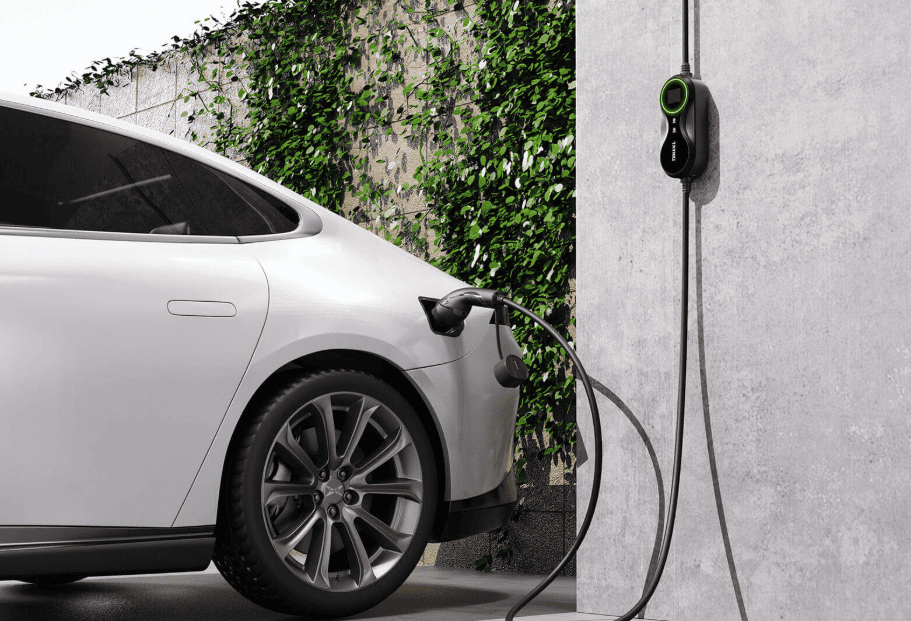
Portable EV charging stations are mobile electric vehicle charging devices designed for easy transportation and flexible deployment. Unlike permanently installed charging stations, portable chargers can be moved between locations and connected to existing electrical power sources when needed.
When people refer to portable EV charging stations, they are usually describing one of the following categories:
Compact Level 1 or Level 2 charging units that connect to standard household or industrial outlets
Battery-integrated portable power stations capable of charging EVs without direct grid connection
Trailer-mounted or skid-mounted DC fast chargers for temporary or mobile commercial charging operations
These chargers are designed to provide practical charging solutions in situations where fixed charging infrastructure is unavailable, inaccessible, or economically impractical.
Portable charging systems can support various charging standards, including:
The flexibility of portable EV charging systems makes them increasingly important for the expanding global EV market.
Level 1 portable charging cords are the simplest and most widely available portable EV chargers. Many electric vehicles include these chargers as standard equipment.
These chargers typically operate using a standard 120V household outlet and provide slow but reliable charging.
Main Features
Charging Performance
Level 1 chargers usually provide:
Advantages
Limitations
Common Applications
Despite slower charging performance, Level 1 portable chargers remain an essential charging option for many EV owners due to their simplicity and universal accessibility.
Portable Level 2 chargers provide significantly faster charging speeds compared to Level 1 systems. These units typically operate on 240V power sources such as dryer outlets, RV outlets, or dedicated charging circuits.
Portable Level 2 charging stations represent the balance between charging performance, portability, and affordability.
Main Features
Charging Performance
Typical charging speeds include:
Advantages
Limitations
Common Applications
Portable Level 2 chargers have become increasingly popular among EV owners seeking flexibility without sacrificing charging performance.
Portable DC charging systems represent the most advanced category of portable EV charging technology. These systems can provide rapid charging capabilities and are commonly used for commercial, fleet, emergency, and remote charging applications.
Some portable DC chargers integrate battery energy storage systems, enabling charging without direct grid power.
Main Features
Charging Performance
Portable DC chargers may deliver:
Advantages
Limitations
Common Applications
Portable DC charging technology is becoming increasingly important as EV fleets and commercial transportation electrification continue to expand.
Portable EV charging stations contain several critical components that ensure safe and efficient operation.
The charging connector interfaces directly with the vehicle.
Common connector standards include:
The control module manages charging communication, current regulation, and safety monitoring.
Functions include:
High-quality insulated cables ensure safe power transmission while maintaining flexibility and durability.
Modern portable chargers often include:
Safety features may include:
Portable EV charging stations provide numerous advantages for EV owners and businesses.
One of the biggest advantages is emergency charging support.
Drivers can recharge vehicles in situations where:
Portable chargers provide peace of mind and reduce range anxiety.
Portable chargers can be used in multiple environments:
This flexibility expands EV usability.
Portable charging systems help reduce infrastructure investment requirements.
Instead of installing multiple fixed charging stations, organizations can deploy portable units where needed.
Benefits include:
Portable chargers allow users to transport charging capability directly to the vehicle.
This is especially beneficial for:
Many portable chargers can operate using single-phase power supplies.
Advantages include:
Modern portable chargers are designed for portability.
Manufacturers focus on:
This improves usability and transportation convenience.
Portable EV charging stations support a wide range of industries and use cases.
Portable Level 1 and Level 2 chargers are widely used for home charging.
Benefits include:
Commercial fleets increasingly rely on portable charging systems.
Applications include:
Portable chargers allow fleets to optimize charging schedules and locations.
Emergency roadside charging services are expanding rapidly.
Portable charging units help stranded EV drivers reach nearby charging stations safely.
This service is becoming an important part of automotive assistance programs.
Portable chargers are commonly deployed at:
These solutions provide temporary charging infrastructure without permanent installation.
Portable EV chargers support electric equipment and vehicle charging at temporary worksites.
Applications include:
Portable charging systems are valuable in areas lacking fixed charging infrastructure.
These include:
Battery-integrated portable charging systems are especially useful in these environments.
Technological advancements have significantly improved portable EV charging systems.
Many chargers now support smartphone applications.
Users can:
Wireless communication improves user convenience and system monitoring.
Features include:
Commercial portable chargers may support secure access systems.
Benefits include:
Smart chargers can distribute available power efficiently across multiple charging devices.
This helps prevent electrical overloads and improves energy management.
Advanced systems provide real-time energy consumption tracking.
This supports:
Safety is critical for portable EV charging equipment.
Portable chargers must comply with strict safety standards.
Key protections include:
Outdoor charging requires durable environmental protection.
Common ratings include:
These ratings protect against dust and water exposure.
Charging systems generate heat during operation.
Modern chargers use:
Proper thermal management improves safety and equipment lifespan.
Charging cables must withstand:
Manufacturers use reinforced materials to improve reliability.
Despite their advantages, portable EV chargers also face several challenges.
Portable systems often provide lower charging speeds compared to fixed commercial fast chargers.
This can be problematic for:
Portable chargers depend on available electrical infrastructure.
Challenges include:
Higher power systems require:
Balancing portability and performance remains a design challenge.
Portable DC fast chargers and battery-integrated systems can be expensive.
Costs include:
Different vehicles use different charging standards.
Manufacturers must support multiple connectors and communication protocols.
The portable charging industry continues to evolve rapidly.
Future portable power stations may use solid-state batteries offering:
Portable charging systems increasingly integrate renewable energy sources such as:
This supports sustainable off-grid charging.
Advanced portable chargers may support bidirectional energy flow.
Benefits include:
Artificial intelligence can optimize charging performance through:
Manufacturers are developing more compact ultra-fast charging technologies capable of delivering high power in mobile formats.
This may revolutionize temporary and emergency charging services.
The global portable EV charging market is growing rapidly due to increasing EV adoption.
As more consumers purchase EVs, demand for flexible charging solutions continues to expand.
Fleet electrification is driving demand for mobile charging infrastructure.
Industries include:
Mobile EV charging businesses are emerging in many countries.
These services provide:
Governments worldwide are supporting EV infrastructure development through:
Portable charging solutions benefit from these initiatives.
In dense urban environments, fixed charging installation can be difficult.
Portable chargers provide practical alternatives for:
Several factors should be considered when selecting a portable EV charger.
Charging Speed Requirements
Users should evaluate daily driving needs and charging expectations.
Power Source Availability
Consider:
Vehicle Compatibility
Ensure the charger supports the vehicle's connector type and charging standard.
Portability Requirements
Evaluate:
Safety Certifications
Choose products certified to recognized standards such as:
Smart Features
Users may benefit from:
Portable EV charging stations will play a growing role in future transportation infrastructure.
As EV adoption accelerates globally, flexible charging solutions will become increasingly important for both consumers and businesses.
Future developments may include:
Portable charging systems will help bridge infrastructure gaps while supporting the continued expansion of electric mobility.
Portable EV charging stations provide flexible, practical, and increasingly advanced charging solutions for electric vehicle users. From simple Level 1 charging cords to sophisticated mobile DC fast charging systems, portable chargers serve a wide range of residential, commercial, industrial, and emergency applications.
Their advantages include mobility, convenience, emergency charging capability, reduced infrastructure costs, and broader charging accessibility. As charging technology advances, portable EV chargers are becoming smarter, faster, safer, and more efficient.
Although challenges such as charging speed limitations, power availability, and higher costs for advanced systems still exist, ongoing innovation continues to improve performance and affordability.
With the global transition toward electric transportation accelerating, portable EV charging stations are expected to become an essential component of the future EV charging ecosystem. Manufacturers, fleet operators, businesses, and consumers will increasingly rely on these flexible charging solutions to support sustainable, efficient, and convenient electric mobility worldwide.