The Rise of Ultra-Fast EV Charging: Powering the Future of Electric Mobility
The global transportation industry is undergoing a profound transformation driven by electrification, digitalization, and decarbonization goals. Electric vehicles (EVs) are rapidly shifting from early adoption to mainstream deployment across passenger cars, commercial fleets, public transport systems, and even heavy-duty logistics. As EV numbers continue to grow worldwide, the demand for faster, more reliable, and more scalable charging infrastructure has become a critical priority.
While traditional charging solutions such as Level 1 and Level 2 chargers have supported early market growth, they are increasingly insufficient for today's high-utilization, long-distance, and commercial EV applications. In response, ultra-fast EV charging has emerged as a breakthrough technology that is redefining how electric energy is delivered to vehicles.
Ultra-fast charging is not just an incremental improvement in speed—it represents a structural shift in energy infrastructure, enabling EVs to operate with a level of convenience and efficiency that closely mirrors conventional refueling systems.
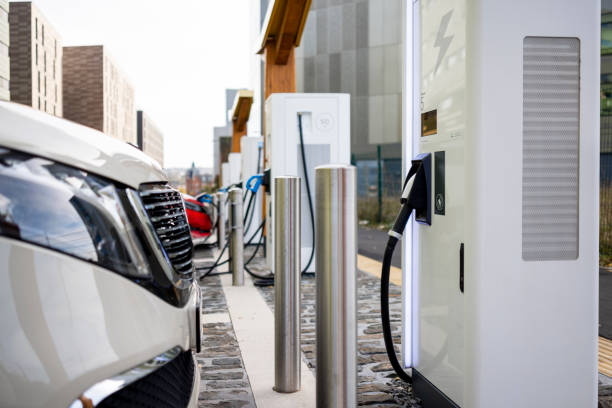
Ultra-fast EV charging, commonly referred to as High-Power Charging (HPC), generally describes charging systems capable of delivering 150 kW or higher, with modern deployments typically ranging from 300 kW to 350 kW, and advanced systems reaching 400 kW, 500 kW, or even 600 kW+.
Unlike AC-based charging systems, ultra-fast charging relies exclusively on direct current (DC) delivery. This allows electricity to bypass the vehicle's onboard converter and flow directly into the battery at extremely high rates.
In real-world applications, ultra-fast charging can:
- Deliver up to 80% battery charge in 10 to 30 minutes
- Enable rapid top-ups during short stops
- Support continuous high-mileage vehicle operation
This level of performance is especially important for highway networks, fleet depots, and urban fast-turnover charging hubs.
Ultra-fast charging systems are built on advanced electrical engineering principles that enable safe and efficient high-power energy transfer.
Electricity from the grid is supplied as alternating current (AC), which must be converted into direct current (DC) before being delivered to the EV battery. Ultra-fast charging stations use high-efficiency power conversion modules to perform this transformation while minimizing energy loss.
These systems are designed to:
- Handle extreme voltage levels
- Maintain stable output under fluctuating demand
- Reduce heat generation during conversion
Most ultra-fast charging stations use a modular design composed of multiple independent power units. This architecture allows operators to:
- Scale charging capacity based on demand
- Reduce downtime through redundancy
- Optimize maintenance efficiency
Ultra-fast chargers constantly communicate with vehicles through standardized protocols. This enables:
- Dynamic adjustment of charging speed
- Real-time battery monitoring
- Thermal protection and voltage regulation
- Adaptive energy delivery based on battery state
This intelligent interaction ensures both performance and safety during high-power operation.
The evolution of EV charging technology highlights the disruptive nature of ultra-fast systems:
- Level 1 Charging (120V AC): 3–5 miles of range per hour
- Level 2 Charging (240V AC): 12–40 miles of range per hour
- DC Fast Charging (50–150 kW): 30–60 minutes for 80% charge
- Ultra-Fast Charging (150–600 kW+): 10–30 minutes for 80% charge
This dramatic reduction in charging time fundamentally changes EV usability. Instead of long waiting periods, drivers can now recharge during short breaks, making EVs significantly more practical for high-frequency use.
For commercial fleets, time spent charging directly impacts profitability. Ultra-fast charging minimizes downtime, allowing vehicles to remain in service for longer periods each day.
One of the key limitations of early EV infrastructure was the lack of fast charging along highways. Ultra-fast charging networks solve this issue by enabling:
- Quick highway rest-stop charging
- Seamless intercity travel
- Reduced trip planning complexity
As EV penetration increases, charging infrastructure must scale accordingly. Ultra-fast charging helps bridge the gap between growing demand and limited charging time availability.
Despite its advantages, ultra-fast charging places significant demands on electrical infrastructure.
A single ultra-fast charging station can require as much electricity as a small industrial facility. When multiple chargers operate simultaneously, the demand on local grids increases substantially.
To support large-scale deployment, utilities must invest in:
- Substation expansion
- Transformer upgrades
- High-capacity distribution lines
- Advanced grid management systems
To prevent grid instability, modern charging networks use:
- Intelligent load balancing systems
- Peak demand management strategies
- Real-time energy distribution optimization
These systems ensure that high-power charging does not compromise overall grid stability.
Energy storage has become a critical component of ultra-fast charging infrastructure.
Battery Energy Storage Systems (BESS)
BESS units store electricity during low-demand periods and release it during peak charging sessions. This helps:
- Reduce strain on the grid
- Stabilize power output
- Enable consistent charging speeds
Renewable Energy Integration
Many ultra-fast charging hubs are now integrated with renewable energy sources such as:
- Solar photovoltaic systems
- Wind energy installations
- Hybrid renewable-grid configurations
This integration reduces carbon emissions and improves energy resilience.
One of the most critical engineering challenges in ultra-fast charging is heat generation.
Liquid-Cooled Charging Systems
High-power cables and connectors generate significant heat. Liquid cooling systems are used to:
- Maintain safe operating temperatures
- Prevent cable degradation
- Enable sustained high-power delivery
Battery Thermal Regulation
EV batteries also require precise temperature control to:
- Prevent overheating
- Maintain optimal charging curves
- Extend battery lifespan
Without advanced thermal management, ultra-fast charging would not be technically feasible.
Ultra-fast charging infrastructure is increasingly integrated with digital technologies.
Key Smart Features
Modern systems include:
- Remote monitoring and diagnostics
- Real-time charging analytics
- Dynamic pricing mechanisms
- Mobile app-based user control
- RFID or automated authentication
Data-Driven Optimization
Charging stations collect and analyze large volumes of data to:
- Predict demand patterns
- Optimize station utilization
- Improve maintenance scheduling
- Enhance user experience
Ultra-fast charging is being adopted across multiple sectors beyond private vehicles.
Passenger EV Infrastructure
Highway charging corridors enable efficient long-distance travel with minimal delays.
Logistics and Delivery Fleets
Fast charging allows delivery vehicles to maintain continuous operation, improving logistics efficiency.
Public Transportation Systems
Electric buses require high-power charging to meet strict operational schedules.
Heavy-Duty Electric Trucks
Freight and logistics industries depend on ultra-fast charging to support long-haul transport operations.
The ultra-fast EV charging sector is experiencing rapid global expansion, driven by:
- Increasing EV adoption rates
- Government infrastructure funding
- Private sector investment competition
- Technological advancements in power electronics
Energy companies, automotive manufacturers, and infrastructure providers are all competing to establish dominant charging networks.
Governments worldwide are actively accelerating ultra-fast charging deployment through:
- National EV corridor development programs
- Public-private infrastructure partnerships
- Tax incentives for charging operators
- Renewable energy integration policies
- Urban electrification initiatives
These policies are significantly reducing deployment barriers and accelerating infrastructure rollout.
Ultra-fast charging is closely linked to the development of next-generation smart grids.
Grid Intelligence Systems
Smart grids enable:
- Real-time energy monitoring
- Automated load distribution
- Predictive demand forecasting
- Integration of distributed energy resources
Vehicle-to-Grid Potential
Future systems may allow EVs to:
- Store excess renewable energy
- Feed electricity back into the grid
- Stabilize peak demand fluctuations
This bidirectional energy flow transforms EVs into mobile energy assets.
Safety is a foundational requirement in ultra-fast charging system design.
Electrical Protection Systems
Stations incorporate:
- Overcurrent protection
- Voltage regulation systems
- Emergency shutdown mechanisms
Environmental Protection
Charging infrastructure is designed to withstand:
- Extreme temperatures
- Heavy rainfall
- Dust and corrosion exposure
Continuous Monitoring
Real-time diagnostics ensure early detection of faults, reducing downtime and improving reliability.
Ultra-fast charging is reshaping the EV user experience by making charging behavior more similar to traditional fueling.
Drivers benefit from:
- Shorter waiting times
- Predictable charging durations
- Improved travel flexibility
- Reduced planning complexity
This transformation is essential for mainstream EV acceptance.
The growth of ultra-fast charging depends on collaboration between multiple stakeholders, including:
- Automotive manufacturers
- Energy providers
- Infrastructure developers
- Technology companies
- Government agencies
This ecosystem approach ensures compatibility, scalability, and long-term sustainability.
Ultra-fast EV charging represents one of the most important infrastructure advancements in the transition toward electric mobility. By dramatically reducing charging times, improving energy efficiency, and enabling high-utilization vehicle operations, it addresses many of the remaining barriers to large-scale EV adoption.
Although challenges remain in terms of grid capacity, investment costs, and infrastructure complexity, continuous innovation in power electronics, energy storage, thermal management, and smart grid integration is rapidly accelerating deployment.
As global transportation systems continue to electrify, ultra-fast charging is becoming a foundational pillar of modern mobility infrastructure—supporting cleaner, faster, and more efficient transportation networks across the world.