RCD Safety in EV Chargers: What Installers and Operators Need to Know
As electric vehicles (EVs) continue to gain momentum worldwide, charging infrastructure has become a vital part of the global energy and transportation transition. From residential garages and apartment complexes to commercial parking facilities and highway fast-charging hubs, EV chargers are now an everyday presence. While much attention is often given to charging speed, power levels, and connectivity features, electrical safety remains the foundation of reliable EV charging systems.
One of the most critical safety components integrated into EV chargers is the Residual Current Device (RCD). Often overlooked by end users, the RCD plays a decisive role in preventing electric shock, reducing fire risks, and ensuring compliance with international electrical safety standards. As charging systems operate with high power levels and prolonged connection times, the importance of robust residual current protection cannot be overstated.
This article provides an in-depth overview of what an RCD is, how it works, why it is essential in EV chargers, the different RCD types used in EV charging applications, relevant international standards, and future trends. Understanding the role of RCDs not only helps installers and operators design safer charging systems but also helps EV owners make informed decisions when selecting home or commercial chargers.
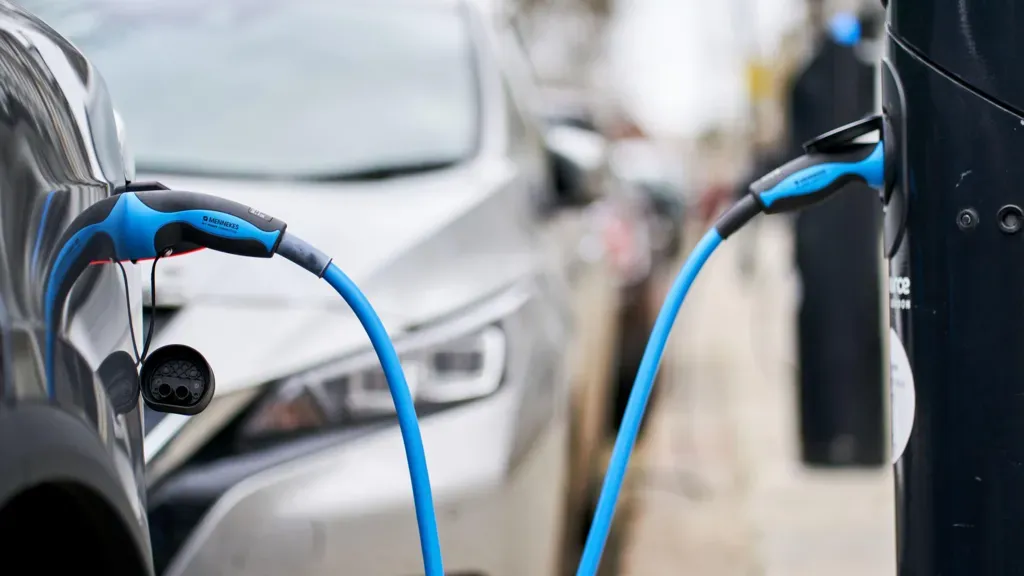
A Residual Current Device (RCD) is an electrical safety device designed to detect leakage currents and disconnect the power supply when an imbalance occurs between the live (phase) and neutral conductors. Under normal operating conditions, the current flowing into a circuit is equal to the current flowing out. If a fault occurs—such as current leaking through a damaged cable, faulty insulation, or a human body—the RCD detects this difference and trips the circuit almost instantaneously.
Unlike traditional circuit breakers that protect against overloads and short circuits, RCDs are specifically designed to protect people and property from electric shock and fire hazards caused by earth leakage currents. In EV charging applications, where vehicles are connected for long durations and exposed to outdoor conditions, residual current protection becomes particularly critical.
EV chargers operate at significantly higher power levels than most household appliances. Even AC Level 2 chargers commonly deliver 7 kW to 22 kW, while DC fast chargers can exceed 150 kW. These high currents increase the potential severity of electrical faults.
Additionally, EVs are often charged for several hours at a time, increasing the likelihood that insulation degradation, moisture ingress, or connector wear could lead to leakage currents. RCDs provide a vital layer of protection by disconnecting power immediately when abnormal conditions are detected.
EV charging involves frequent human interaction—plugging in cables, handling connectors, and operating charging stations. If a person comes into contact with live parts due to insulation failure or damaged cables, even small leakage currents can be life-threatening. RCDs are designed to trip at very low residual current thresholds, significantly reducing the risk of serious injury or fatal electric shock.
Many EV chargers are installed outdoors or in semi-exposed environments such as parking garages. Rain, humidity, dust, temperature fluctuations, and mechanical stress can all degrade electrical components over time. RCDs act as a fail-safe mechanism to mitigate risks arising from environmental exposure.
Most electrical codes and EV charging standards worldwide mandate residual current protection. Failure to comply not only exposes users to safety risks but may also invalidate insurance coverage, lead to regulatory penalties, or result in failed inspections.
The operating principle of an RCD is based on current balance monitoring. Inside the device is a differential current transformer that continuously compares the current flowing through the live and neutral conductors.
Normal operation: The currents are equal, and the RCD remains closed.
Fault condition: If current leaks to earth—through a person, vehicle chassis, or damaged insulation—the balance is disturbed.
Trip mechanism: When the residual current exceeds a preset threshold (typically 30 mA for personal protection), the RCD trips and disconnects the circuit within milliseconds.
In EV chargers, RCDs may be installed:
Externally, in the building’s distribution board
Internally, integrated into the EV charger itself
Modern smart chargers increasingly incorporate built-in RCD or RDC-DD (Residual Direct Current Detecting Device) functionality, reducing installation complexity and ensuring consistent protection.
Type AC RCDs are designed to detect pure alternating current (AC) residual currents. They are commonly used in traditional household circuits but are generally not recommended for EV chargers.
Modern EVs use power electronics, onboard chargers, and rectifiers that can generate DC leakage currents. These DC components can interfere with Type AC RCD operation, potentially preventing it from tripping correctly.
Type A RCDs can detect:
Alternating current (AC) residual currents
Pulsating direct current (DC) residual currents
Type A devices offer improved protection compared to Type AC and are widely used in EV charging applications. However, they cannot detect smooth DC leakage currents above certain levels, which may occur in some EV fault scenarios.
Type B RCDs provide the highest level of protection by detecting:
AC residual currents
Pulsating DC residual currents
Smooth DC residual currents
Because EV chargers and vehicles can generate smooth DC leakage currents, Type B RCDs are often required by standards for EV charging installations. They are particularly common in commercial and high-power charging systems.
However, Type B RCDs are more complex and expensive, which has driven the development of alternative solutions.
An RDC-DD is a DC leakage detection device typically integrated into EV chargers. It continuously monitors for smooth DC residual currents and disconnects the charger when a DC leakage above a defined threshold (commonly 6 mA) is detected.
When an RDC-DD is used, it allows the upstream protection to be a Type A RCD instead of a Type B, reducing installation costs while maintaining safety compliance. Many modern EV chargers adopt this approach.
IEC 61851 is one of the most important international standards governing conductive charging systems for electric vehicles. It specifies safety requirements, including residual current protection, for both AC and DC charging systems.
The standard requires protection against DC residual currents and recognizes the use of RDC-DD devices in combination with Type A RCDs.
This standard addresses electrical installations for EV charging specifically. It outlines:
Mandatory residual current protection
Acceptable RCD types
Installation requirements for different charging scenarios
It explicitly prohibits the use of Type AC RCDs for EV charging and defines conditions under which Type A or Type B RCDs may be used.
In Europe, EV chargers must comply with harmonized EN standards derived from IEC requirements. Many countries further enforce national wiring regulations that specify RCD requirements for EV charging circuits.
In North America, while terminology differs, similar ground-fault protection concepts are applied through GFCI requirements and UL standards.
For residential EV charging, safety, simplicity, and cost-effectiveness are key considerations. Most modern home EV chargers include built-in RCD or RDC-DD protection, eliminating the need for expensive external Type B RCDs.
Key benefits include:
Simplified installation
Reduced upfront costs
Consistent protection regardless of upstream wiring quality
Homeowners should always verify whether their EV charger includes integrated residual current protection and ensure that the installation complies with local electrical codes.
Commercial and public EV charging installations face additional challenges:
Higher utilization rates
Multiple users with varying vehicles
Increased exposure to vandalism and environmental stress
As a result, robust residual current protection is essential. Many operators choose Type B RCDs or advanced RDC-DD systems combined with remote monitoring.
Smart charging stations may also integrate:
Fault diagnostics
Event logging
Remote reset and alerts
These features improve operational reliability while maintaining high safety standards.
RCDs protect against a wide range of real-world fault conditions, including:
- Damaged charging cables
- Water ingress into connectors
- Insulation breakdown inside the vehicle or charger
- Faulty onboard chargers generating DC leakage
- Improper grounding or installation errors
By rapidly disconnecting power, RCDs prevent escalation into more serious incidents such as fires or severe electric shocks.
Residual current devices must function reliably throughout the lifespan of an EV charger. Regular testing and inspection are therefore essential.
Most RCDs feature a test button that simulates a leakage current. This should be tested periodically according to manufacturer recommendations and local regulations.
Advanced EV chargers may include automatic self-testing routines that periodically verify RCD functionality without user intervention.
Replace RCDs that trip repeatedly without identifiable cause
Investigate frequent tripping, as it may indicate underlying faults
Ensure firmware updates do not compromise safety functions in smart chargers
While RCDs are primarily associated with electric shock protection, they also play an important role in fire prevention. Leakage currents can generate heat at fault points, especially in damaged cables or connectors. By disconnecting power early, RCDs reduce the risk of overheating and ignition.
This is particularly important in enclosed environments such as residential garages and underground parking facilities.
As EV technology evolves, residual current protection is also advancing. Key trends include:
Smarter Detection Algorithms
Next-generation RCD systems can distinguish between nuisance leakage and genuine fault conditions, reducing false trips while maintaining safety.
Integration with Energy Management Systems
Residual current protection is increasingly integrated with smart energy management platforms, allowing remote monitoring, diagnostics, and predictive maintenance.
Compact and Cost-Effective Designs
Manufacturers are continuously optimizing RCD components to reduce size and cost, making advanced protection accessible across all charger categories.
The Residual Current Device is a fundamental safety element in EV charging systems, protecting users, vehicles, and infrastructure from electrical hazards. As EV chargers operate with high power levels and prolonged connection times, reliable residual current protection is not optional—it is essential.
From understanding the differences between RCD types to complying with international standards and selecting the right protection strategy, stakeholders across the EV charging ecosystem must prioritize safety alongside performance and convenience.
As EV adoption accelerates and charging infrastructure expands, RCD technology will continue to play a critical role in ensuring safe, reliable, and sustainable electric mobility.