Understanding Amps in Car Battery Charging: How Current Shapes Charging Speed and Safety
When drivers talk about charging a car battery—especially in the age of electric vehicles (EVs)—the conversation often revolves around charging time. How fast can the battery be charged? Why does one charger fill a battery in hours while another takes an entire night? Behind these everyday questions lies a fundamental electrical concept: amps, or amperage.
Amps play a critical role in determining how quickly and efficiently a car battery charges. While voltage often gets more attention, amperage is just as important—if not more—when it comes to charging speed, heat generation, battery lifespan, and overall system safety. Whether you are charging a traditional 12V car battery, a hybrid vehicle, or a modern EV with a high-capacity lithium-ion battery pack, understanding how amps work can help you make smarter charging decisions.
This article explores what amps are, how they affect car battery charging, the relationship between amps, volts, and watts, and why choosing the right charging current matters for both performance and battery health.
Amps, short for amperes, measure the flow of electric current. If voltage is the pressure pushing electricity through a circuit, amps represent the volume of electricity actually flowing.
A common analogy compares electricity to water:
- Voltage (V) is the water pressure
- Amps (A) are the flow rate of water
- Wattage (W) is the total power delivered
In electrical terms, power is calculated using a simple formula:
Power (W) = Voltage (V) × Current (A)
This equation explains why amperage is so important in charging. Even at the same voltage, a charger delivering more amps can transfer more energy to the battery in a shorter time—up to the limits of the battery and charging system.
Amperage directly affects how fast a battery charges. Higher amps mean more current flowing into the battery, which generally results in faster charging. However, faster is not always better.
Charging a battery at too high an amperage can cause:
- Excessive heat
- Increased internal resistance
- Accelerated battery degradation
- Safety risks, including thermal runaway in extreme cases
This is why every battery has a recommended charging current range, defined by the manufacturer.
Battery capacity is measured in amp-hours (Ah) or kilowatt-hours (kWh) for EVs.
A 60Ah 12V car battery can theoretically deliver 60 amps for one hour
A 60 kWh EV battery can deliver 60 kilowatts for one hour
Larger batteries can safely accept higher charging currents, but only within design limits. Smart charging systems carefully regulate amps throughout the charging process to balance speed and safety.
Both voltage and amperage matter, but they play different roles.
Voltage determines compatibility (the charger must match the battery system voltage)
Amperage determines charging speed
For example:
A 12V car battery charger may deliver 2A, 10A, or 50A
All operate at roughly the same voltage, but charging time varies dramatically
In EV charging:
Level 1 charging uses low voltage and low amps
Level 2 charging increases both voltage and amperage
DC fast charging dramatically increases amperage to achieve rapid charging
Ultimately, charging speed depends on total power, but amperage is the variable that changes most during real-world charging scenarios.
Trickle chargers deliver very low current and are ideal for:
Maintaining battery charge during long storage
Preventing battery sulfation
Motorcycles, classic cars, and seasonal vehicles
While extremely safe, trickle charging is slow and not suitable for quickly recharging a depleted battery.
This is the most common range for consumer car battery chargers.
Benefits include:
Reasonable charging times
Low risk of overheating
Suitable for overnight charging
For most passenger vehicles, 5–10 amps strike a good balance between speed and battery health.
High-amp chargers are often used in:
Automotive workshops
Emergency jump-start scenarios
Fleet maintenance facilities
While effective for rapid charging, frequent high-amp charging can shorten battery life if not carefully controlled.
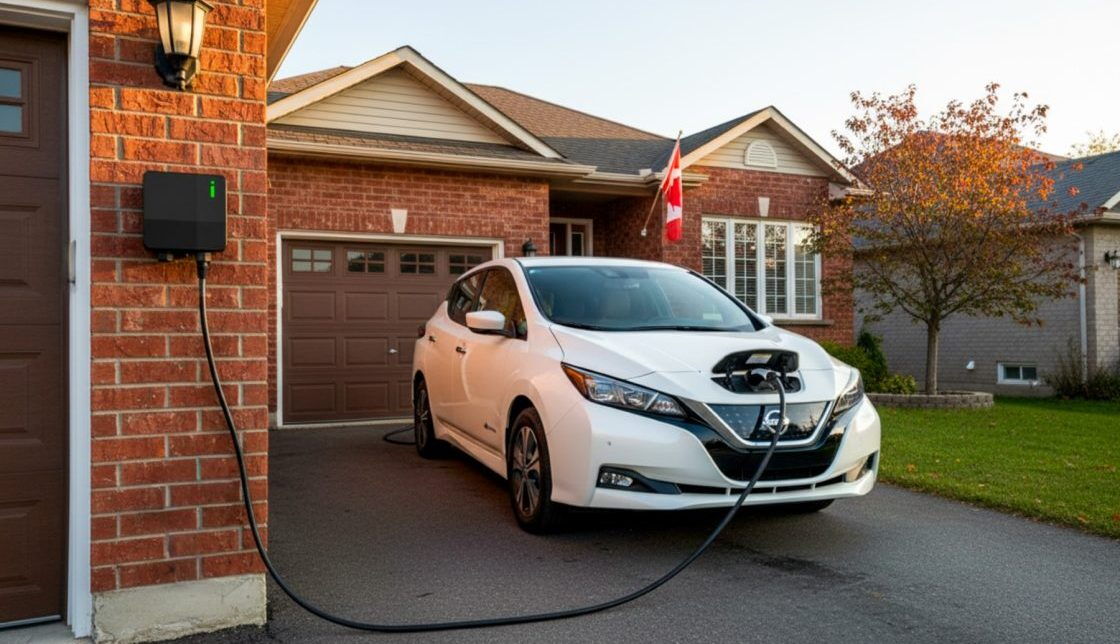
Level 1 EV charging typically uses a standard household outlet.
Voltage: ~120V
Current: 12–16A
Power: ~1.4–1.9 kW
At this amperage, charging is slow but convenient. It may add only a few miles of range per hour, making it best suited for overnight charging or plug-in hybrids.
Level 2 chargers significantly increase amperage.
Voltage: ~240V
Current: 16–80A
Power: 3.7–19.2 kW
Most residential EV chargers operate between 32A and 48A, offering a practical balance between installation cost, charging speed, and electrical safety.
DC fast chargers bypass the vehicle’s onboard charger and deliver direct current at very high amperage.
Voltage: 400–800V (or higher)
Current: Hundreds of amps
Power: 50–350+ kW
This allows EVs to charge from 10% to 80% in 20–40 minutes. However, charging systems carefully taper the amperage as the battery fills to protect battery cells.
Many people assume a charger delivers a fixed amperage throughout the charging process. In reality, modern chargers use dynamic current control.
Charging Stages
- Bulk Stage: High amps are delivered to quickly raise battery charge
- Absorption Stage: Amps gradually decrease while voltage remains stable
- Float or Maintenance Stage: Very low current maintains full charge
This approach maximizes charging efficiency while minimizing stress on the battery.
One of the biggest challenges of high-amperage charging is heat.
Electrical resistance causes energy loss in the form of heat, and heat increases exponentially with current. This is why cables, connectors, and charging ports must be properly rated for the amperage they carry.
Excessive heat can:
Damage charging equipment
Degrade battery cells
Trigger safety shutdowns
Reduce overall charging efficiency
Advanced charging systems monitor temperature in real time and adjust amperage accordingly.
While higher amps reduce charging time, they are not always the best choice for daily use.
Frequent high-amp charging accelerates chemical wear inside the battery. Over time, this can reduce:
Total capacity
Charge retention
Overall lifespan
This is why many EV manufacturers recommend routine Level 2 charging at moderate amperage and reserving DC fast charging for long trips.
Home electrical panels, wiring, and circuit breakers have strict amp limits. Exceeding these limits can cause:
Tripped breakers
Overheated wiring
Fire hazards
Proper load calculation and professional installation are essential when selecting a high-amp charger.
For Gasoline Vehicle Batteries
Maintenance charging: 1–2A
Regular charging: 5–10A
Emergency use: 20A+ (occasional only)
For Home EV Charging
Apartments or limited power: 16–24A
Standard residential use: 32–40A
High-capacity systems: 48–80A (with proper infrastructure)
Matching amperage to your vehicle, lifestyle, and electrical system ensures safe and efficient charging.
Modern chargers are increasingly “smart,” using software to optimize amperage in real time.
Smart charging features include:
Automatic current adjustment
Load balancing with other appliances
Scheduled off-peak charging
Temperature and fault monitoring
These systems not only protect batteries but also reduce energy costs and strain on the power grid.
As battery technology improves, charging systems are evolving to safely handle higher currents.
Future trends include:
Advanced battery chemistries with higher current tolerance
Liquid-cooled charging cables
Ultra-high-voltage architectures that reduce required amperage
Smarter grid integration and adaptive current management
These innovations aim to deliver faster charging without sacrificing safety or battery longevity.
Myth 1: Higher amps always damage batteries
Reality: Properly managed high-amp charging is safe within manufacturer limits.
Myth 2: A charger “pushes” amps into the battery
Reality: The battery draws the current it can safely accept.
Myth 3: Slow charging is always better
Reality: Moderate charging balances efficiency, convenience, and battery health.
Amps are a fundamental yet often misunderstood aspect of car battery charging. From traditional 12V batteries to high-capacity EV packs, amperage determines how quickly energy flows, how much heat is generated, and how long a battery will last.
Understanding the relationship between amps, voltage, and power empowers drivers, fleet operators, and charging infrastructure planners to make better decisions. The goal is not simply to charge faster, but to charge smarter—balancing speed, safety, efficiency, and long-term performance.
As vehicles and charging technologies continue to advance, intelligent amperage control will remain at the heart of reliable and sustainable car battery charging.