How CCS to CHAdeMO Adapters Enable Safe and Efficient Cross-Standard DC Charging
As electric vehicles (EVs) become a central pillar of global transportation, the charging infrastructure that supports them has expanded at an unprecedented pace. Yet, behind the impressive growth in charging stations lies a persistent technical challenge: incompatible charging standards. Among the most discussed of these is the difference between CCS (Combined Charging System) and CHAdeMO, two fast-charging protocols that were developed in different regions and adopted by different manufacturers.
For EV owners, this incompatibility can translate into inconvenience, reduced route flexibility, and higher infrastructure costs. For charging network operators and fleet managers, it creates fragmentation and operational complexity. In this context, the emergence of the CCS to CHAdeMO adapter has drawn significant attention. Designed to enable CCS-equipped charging stations to deliver power to vehicles that use CHAdeMO, this device represents a practical bridge between two worlds.
This article explores what a CCS to CHAdeMO adapter is, how it works, why it matters, and what it means for the future of EV charging.
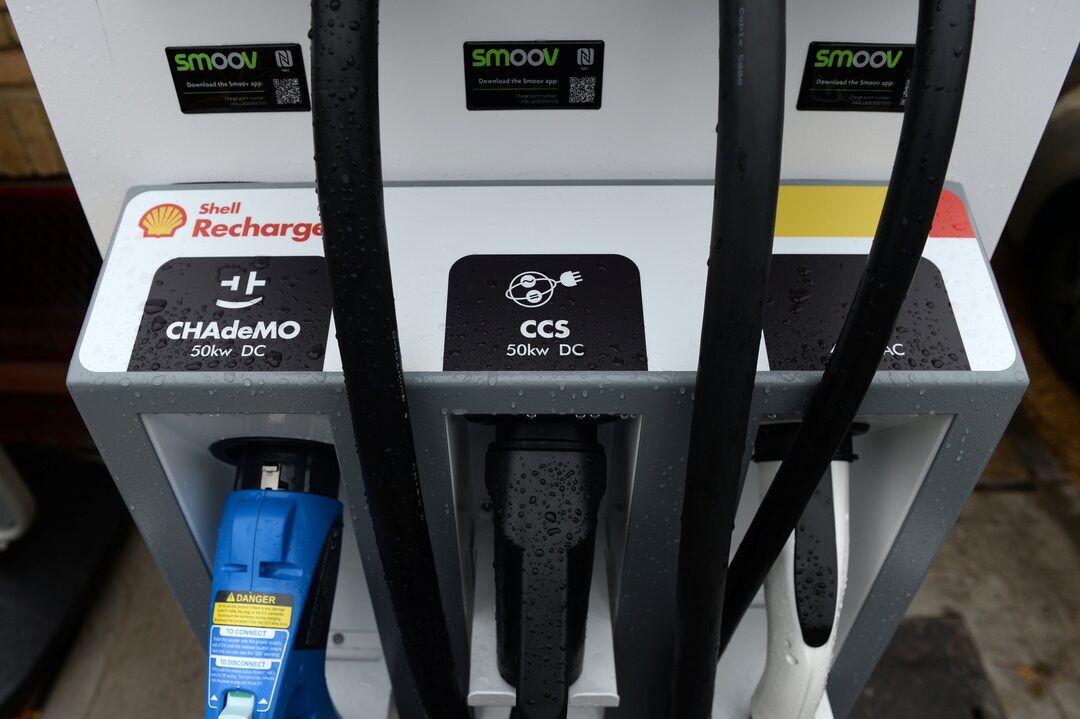
The Combined Charging System (CCS) is currently the dominant fast-charging standard in Europe and North America. It integrates AC and DC charging into a single vehicle inlet by adding two high-power DC pins beneath the existing AC connector.
Key characteristics of CCS include:
Wide adoption by European and American automakers such as Volkswagen, BMW, Ford, General Motors, Hyundai, and Tesla (in most global markets).
High power capability, with CCS2 supporting up to 350 kW on ultra-fast DC chargers.
Compatibility with modern infrastructure, making it the default standard for new public fast-charging installations in many countries.
CHAdeMO originated in Japan and was among the first DC fast-charging standards to be commercially deployed. It has been widely used by Japanese manufacturers such as Nissan, Mitsubishi, and some early Kia models.
Key features of CHAdeMO include:
Bidirectional charging, which supports vehicle-to-grid (V2G) and vehicle-to-home (V2H) applications.
Robust safety architecture, with dedicated communication pins for precise control.
Strong presence in Asia and in early global EV networks, especially for first-generation EVs like the Nissan Leaf.
However, CHAdeMO has gradually lost market share outside Japan as CCS became the preferred standard for new vehicles and charging infrastructure.
In many regions, particularly in Europe and North America, newly installed DC fast chargers are increasingly CCS-only. At the same time, hundreds of thousands of CHAdeMO-equipped vehicles remain on the road. As charging networks modernize, CHAdeMO connectors are often removed or offered in limited numbers.
This creates a real-world problem:
CHAdeMO drivers may find fewer compatible fast chargers on long routes.
Public stations may prioritize CCS due to higher demand and power capability.
Fleet operators with older CHAdeMO vehicles face higher operational constraints.
Retrofitting vehicles to support CCS is generally impractical and expensive. Similarly, replacing or adding CHAdeMO connectors to modern charging stations increases costs for operators who must already balance grid capacity, site development, and maintenance.
This environment has created demand for a hardware-based compatibility solution—enter the CCS to CHAdeMO adapter.
A CCS to CHAdeMO adapter is an electronic device that enables a vehicle equipped with a CHAdeMO inlet to charge from a CCS DC fast-charging station.
In essence, it:
- Physically connects a CCS plug from the charging station to the CHAdeMO inlet of the vehicle.
- Electronically translates communication protocols between the CCS charger and the CHAdeMO vehicle.
- Manages power delivery, safety monitoring, and handshake procedures required for DC fast charging.
Rather than modifying the vehicle or the charging station, the adapter acts as an intelligent intermediary.
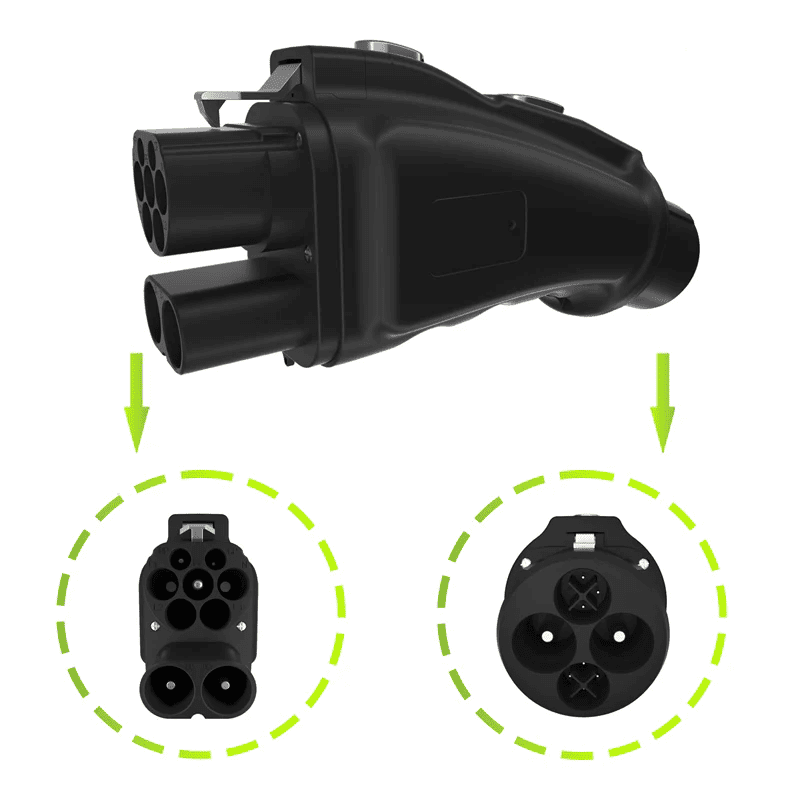
CCS and CHAdeMO do not “speak” the same digital language. Each standard uses its own communication protocol to control voltage, current, temperature, and safety interlocks. A CCS to CHAdeMO adapter contains an embedded control unit that:
Receives charging commands from the CCS charger.
Translates these commands into CHAdeMO-compatible signals.
Sends them to the vehicle in real time.
Relays feedback from the vehicle back to the charger.
This bidirectional communication is essential for safe operation, especially during rapid DC charging.
DC fast charging involves high voltage and current, often exceeding 400 V and 100 A. The adapter must:
Regulate voltage to match the vehicle’s battery specifications.
Monitor current flow to prevent overheating.
Detect faults such as ground leakage, overcurrent, or abnormal temperature.
High-quality adapters incorporate multiple layers of protection, including overvoltage, short-circuit, and thermal cut-off mechanisms.
On the physical side:
One end of the adapter features a CCS inlet that accepts the charging cable from the station.
The other end features a CHAdeMO connector that plugs directly into the vehicle.
The enclosure is typically made from flame-retardant, impact-resistant materials suitable for outdoor environments.
Many CHAdeMO-equipped vehicles, such as early Nissan Leaf models, still have years of usable life. Without widespread CHAdeMO support, owners may face diminishing access to fast charging, reducing the practical value of their vehicles.
An adapter:
Preserves fast-charging capability.
Improves resale value.
Allows drivers to continue using expanding CCS networks.
For charging operators, installing separate CHAdeMO connectors is becoming less economically attractive. By enabling CHAdeMO vehicles to use CCS chargers, adapters help:
Increase utilization of existing CCS infrastructure.
Reduce the need for additional hardware investment.
Support a broader customer base without modifying station equipment.
Logistics companies, municipal fleets, and service providers often operate vehicles with longer replacement cycles. If a fleet includes CHAdeMO-based EVs, adapters offer:
Route flexibility.
Simplified depot charging strategies.
Lower capital expenditure compared to fleet-wide vehicle replacement.
Most CCS to CHAdeMO adapters are limited by the CHAdeMO protocol and the vehicle’s onboard systems. Typical performance characteristics include:
Maximum power: 40–50 kW for most first-generation CHAdeMO vehicles.
Voltage range: Commonly 200–500 V.
Current limits: Determined by both the adapter and vehicle.
This means that while CCS chargers may be capable of 150–350 kW, CHAdeMO vehicles using an adapter will not reach those speeds.
Not all CHAdeMO vehicles are guaranteed to work with every adapter. Factors affecting compatibility include:
- Vehicle firmware versions.
- Battery management system behavior.
- Charging station software.
- Regional standards and certification requirements.
Users should always verify compatibility with their specific vehicle model and charging network.
Because the adapter handles high-power DC electricity, compliance with safety standards such as CE, UL, IEC, and local electrical codes is critical. In some jurisdictions, the use of third-party adapters may be restricted on public charging networks.
Major automakers outside Japan have largely transitioned to CCS as their default DC charging standard. Even Nissan, one of CHAdeMO’s primary proponents, has introduced CCS-based models in Europe and North America.
As a result:
- New CHAdeMO vehicle production is decreasing.
- Infrastructure investment increasingly favors CCS.
- CHAdeMO is becoming a legacy standard in many regions.
Paradoxically, as CHAdeMO declines, demand for adapters has grown. Owners of existing vehicles seek ways to remain compatible with the expanding CCS network. This has led to:
- Increased development of intelligent protocol-conversion hardware.
- Greater focus on safety and certification.
- Emergence of specialized manufacturers producing high-reliability adapters.
CHAdeMO remains strong in one area: bidirectional charging. While CCS is beginning to adopt similar features, CHAdeMO has a more mature ecosystem for V2G applications. Adapters may eventually play a role in hybrid infrastructure environments where both charging and discharging functions are required.
City drivers with CHAdeMO vehicles often rely on public fast chargers for occasional top-ups. With fewer CHAdeMO ports available, an adapter ensures continued access to central charging hubs.
For highway travel, fast-charging compatibility is critical. An adapter can expand available charging locations, reducing range anxiety and enabling more flexible route planning.
Delivery vehicles, taxis, and service fleets that still operate CHAdeMO EVs benefit from being able to use newer CCS depot chargers without costly infrastructure changes.
In regions where charging infrastructure is still developing, CCS is often chosen as the primary standard. Adapters allow early CHAdeMO vehicles to remain viable as these markets expand.
DC charging generates heat in both the connector and internal electronics. Quality adapters include:
Temperature sensors at critical contact points.
Automatic power reduction if thresholds are exceeded.
Heat-resistant housings and conductors.
Safety mechanisms typically include:
Overcurrent protection.
Insulation monitoring.
Ground fault detection.
Emergency shutdown in case of abnormal operation.
To ensure safe and effective use:
Always inspect connectors for damage before use.
Avoid using adapters in heavy rain unless explicitly rated for such conditions.
Follow manufacturer guidelines regarding maximum current and duty cycle.
Keep firmware updated if the adapter supports software upgrades.
While a CCS to CHAdeMO adapter represents an upfront investment, it is significantly cheaper than:
- Replacing a vehicle.
- Retrofitting charging infrastructure.
- Installing additional CHAdeMO stations.
For individual owners and fleet operators alike, the adapter can deliver strong return on investment by extending asset life.
From the perspective of network operators:
- Broader compatibility can increase station usage.
- Reduced hardware diversity simplifies maintenance.
- Supporting adapters can improve customer satisfaction and brand perception.
As CHAdeMO vehicles gradually phase out, the long-term demand for CCS to CHAdeMO adapters may decline. However, given the large number of existing vehicles, adapters are likely to remain relevant for many years.
The broader EV industry is moving toward standardization to reduce fragmentation. CCS has emerged as the dominant global standard for DC fast charging, while regional variants continue to coexist. Adapters represent a transitional technology, enabling interoperability during this period of change.
Future adapters may incorporate:
- Smart metering.
- Dynamic load management.
- Integration with renewable energy systems.
- Enhanced support for bidirectional power flow.
These features could further extend their usefulness beyond simple compatibility.
The CCS to CHAdeMO adapter is more than just a connector—it is a practical solution to one of the EV industry’s most persistent challenges: incompatible charging standards. By enabling CHAdeMO-equipped vehicles to access the rapidly expanding CCS charging network, the adapter preserves mobility, protects investment, and promotes a more inclusive charging ecosystem.
As the market continues to evolve, such interoperability tools play a critical role in ensuring that early adopters of electric mobility are not left behind. While CCS is shaping the future of fast charging, the CCS to CHAdeMO adapter ensures that the past and present remain connected to that future—safely, efficiently, and economically.