
Smart Commercial DC EV Chargers for Efficient Electric Vehicle Charging
The rapid growth of the electric vehicle industry is increasing demand for reliable and efficient charging infrastructure worldwide. Governments are implementing stricter emissions regulations, automakers are investing heavily in electric mobility, and businesses are accelerating sustainability initiatives. As EV adoption continues to rise, Commercial DC EV Chargers have become essential for supporting fast and convenient charging.
Commercial DC EV chargers provide high-speed charging by delivering direct current directly to vehicle batteries, significantly reducing charging time compared to traditional AC charging systems. These chargers are widely installed at shopping centers, fleet depots, hotels, gas stations, airports, public parking facilities, and highway service areas.
Unlike residential chargers, commercial systems are designed for continuous operation, shared access, payment integration, and advanced monitoring. Modern charging solutions also incorporate smart energy management, cloud connectivity, renewable energy integration, and intelligent fleet charging technologies. As electric transportation continues expanding, commercial DC EV chargers are becoming a key part of modern transportation infrastructure.
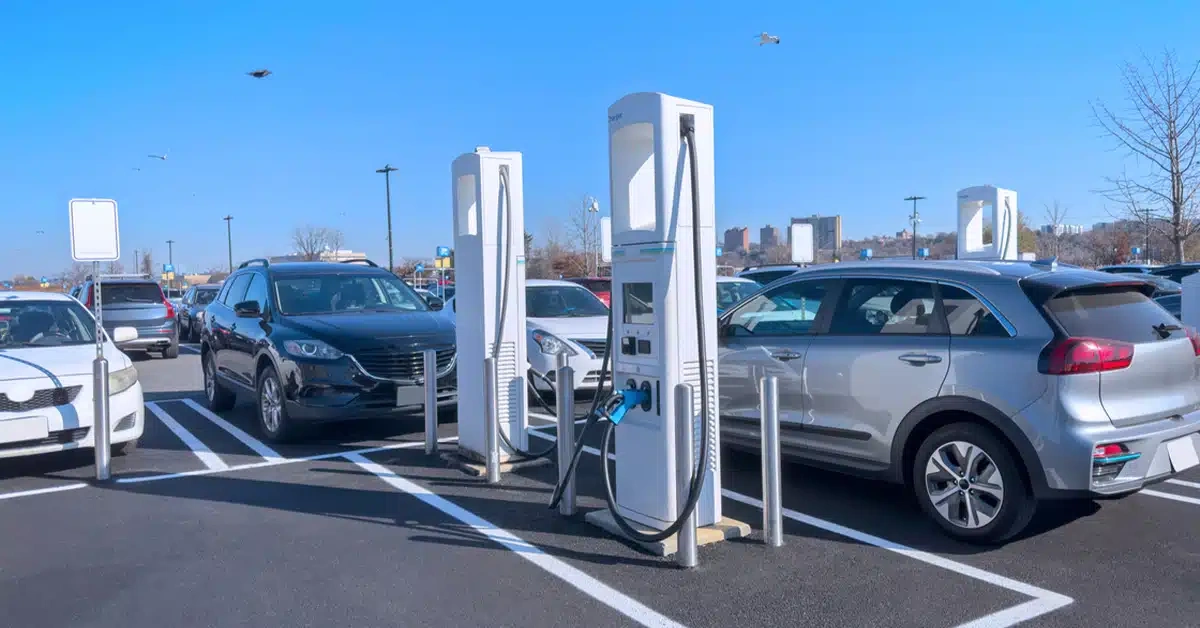
Commercial EV charging refers to electric vehicle charging systems installed at business, industrial, public, or shared-use locations rather than private residences. These charging stations are intended to support customers, employees, visitors, tenants, or commercial fleet vehicles.
Commercial charging infrastructure is commonly found at:
- Retail shopping centers
- Hotels and resorts
- Restaurants
- Public parking garages
- Airports
- Office buildings
- Fleet depots
- Bus terminals
- Logistics centers
- Highway travel corridors
- Apartment complexes
- Gas stations
Unlike home charging systems, commercial charging solutions often include advanced operational and management capabilities such as:
- User authentication
- Network communication
- Billing and payment systems
- Usage monitoring
- Energy management
- Remote diagnostics
- Access control
- Fleet integration
- Dynamic power allocation
- Data analytics
Commercial charging can include both AC and DC charging technologies. However, DC fast chargers are increasingly preferred in locations where rapid charging and high charger utilization are essential.
Commercial DC EV chargers are high-power charging systems designed to deliver direct current electricity directly to electric vehicle batteries. Because the AC-to-DC power conversion occurs inside the charging station instead of the vehicle, charging speeds can be significantly increased.
DC fast chargers typically operate at power outputs ranging from:
- 30 kW
- 60 kW
- 90 kW
- 120 kW
- 150 kW
- 180 kW
- 240 kW
- 350 kW or higher
Higher charging power allows vehicles to recharge more quickly, improving convenience for drivers and operational efficiency for businesses.
Many modern EVs equipped with fast-charging capability can charge from 20% to 80% battery capacity within approximately 20 to 40 minutes using high-power DC chargers.
Commercial DC charging systems are especially important for:
- Public charging networks
- Long-distance travel
- Highway charging stations
- Fleet electrification
- Ride-sharing services
- Electric buses
- Commercial delivery fleets
- Emergency charging applications
Commercial DC fast charging operates differently from standard AC charging.
In AC charging systems:
- Alternating current power is supplied from the electrical grid.
- The EV's onboard charger converts AC power into DC power.
- The battery receives DC electricity for charging.
The charging speed is limited by the vehicle's onboard charger capacity.
In DC charging systems:
- AC electricity enters the charging station.
- The charging station converts AC into DC internally.
- DC electricity flows directly into the EV battery.
By bypassing the vehicle's onboard charger, DC fast charging enables much higher charging speeds.
Commercial DC chargers also communicate continuously with the vehicle's battery management system to regulate:
- Voltage
- Current
- Charging rate
- Battery temperature
- Safety protection
- Charging efficiency
This communication ensures safe and optimized charging performance.
Wall-mounted DC chargers are compact systems commonly used for:
- Small businesses
- Car dealerships
- Hotels
- Parking garages
- Small fleet operations
These chargers usually provide power levels between 20 kW and 60 kW.
Advantages include:
- Reduced installation space
- Lower equipment cost
- Simplified maintenance
- Flexible deployment
Standalone floor-mounted chargers are the most common commercial DC charging systems.
These chargers are designed for:
- Public charging locations
- Highway service stations
- Retail centers
- Large parking facilities
- Fleet depots
Many standalone systems support dual-vehicle charging and simultaneous charging sessions.
Ultra-fast charging systems provide charging power above 250 kW.
These systems are primarily used for:
- Highway charging corridors
- Heavy-duty transportation
- Electric trucks
- Commercial bus operations
- High-volume charging hubs
Ultra-fast charging significantly reduces vehicle downtime and increases charging station throughput.
Power modules convert incoming AC electricity into controlled DC power for EV charging.
Modern commercial chargers often use modular power architecture that allows flexible power distribution and easier maintenance.
High-efficiency power conversion helps reduce energy losses and improve charging performance.
Commercial DC chargers use several connector standards depending on regional requirements and vehicle compatibility.
Common connector types include:
- CCS1
- CCS2
- CHAdeMO
- GB/T
- NACS
Many modern chargers support multiple connector types to serve a wider range of vehicles.
High-power charging generates substantial heat within cables, connectors, and internal electronic components.
Commercial chargers use cooling systems such as:
- Forced-air cooling
- Liquid cooling
- Intelligent thermal control systems
Efficient cooling improves charger reliability and operational lifespan.
Modern DC chargers rely on advanced communication technologies to connect with:
- Electric vehicles
- Cloud management platforms
- Mobile applications
- Utility networks
- Fleet management systems
Communication protocols may include:
- OCPP
- ISO 15118
- CAN bus communication
These systems support remote management and smart charging functionality.
Commercial charging stations often include interactive user interfaces featuring:
- Touchscreen displays
- RFID card access
- QR code payment
- Mobile app integration
- Real-time charging information
- Digital advertising displays
User-friendly interfaces improve customer convenience and operational efficiency.
The biggest advantage of DC fast charging is rapid charging capability.
Faster charging allows:
- Reduced waiting times
- Improved customer experience
- Greater charger utilization
- Increased fleet productivity
For commercial fleets, reduced charging downtime directly improves operational efficiency.
Commercial DC charging networks are essential for enabling long-distance electric vehicle travel.
Highway charging infrastructure helps drivers recharge quickly during trips, reducing range anxiety and increasing confidence in EV ownership.
Fast charging stations along transportation corridors are becoming increasingly important as EV adoption expands.
Businesses that provide EV charging services can attract additional visitors and customers.
EV drivers often spend time at nearby businesses while charging, benefiting locations such as:
- Restaurants
- Shopping malls
- Hotels
- Coffee shops
- Entertainment venues
Commercial charging infrastructure can enhance customer experience and improve property competitiveness.
Commercial DC charging stations can generate revenue through multiple business models, including:
- Pay-per-use charging
- Subscription memberships
- Fleet charging contracts
- Parking integration
- Advertising services
As EV adoption grows, charging services are becoming an increasingly valuable business opportunity.
Commercial fleets require efficient and reliable charging infrastructure.
DC fast charging supports:
- Delivery fleets
- Ride-sharing services
- Public transportation
- Municipal vehicles
- Logistics operations
Fast charging helps fleets maintain high utilization rates and operational flexibility.
Public charging operators deploy commercial DC chargers to provide fast charging access for EV owners.
These charging stations are commonly located at:
- Urban centers
- Highway corridors
- Retail properties
- Transportation hubs
Reliable public charging networks are critical for widespread EV adoption.
Fleet charging depots rely heavily on DC fast charging infrastructure to support daily operations.
Fleet charging solutions often include:
- Smart charging schedules
- Energy management systems
- Load balancing
- Fleet software integration
Fleet operators use these systems to maximize vehicle uptime and reduce operating costs.
Hotels, shopping centers, and entertainment facilities increasingly install DC charging stations to improve customer services.
Charging infrastructure enhances property value and supports sustainability goals while attracting EV-driving customers.
Electric buses and municipal transportation systems require high-capacity charging solutions.
Commercial DC charging supports:
Overnight depot charging
Opportunity charging
Fast turnaround charging
Reliable charging infrastructure is essential for maintaining transit schedules and fleet availability.
Airports and transportation centers are ideal locations for commercial EV charging infrastructure.
These facilities support:
- Rental EV fleets
- Ride-sharing services
- Passenger vehicles
- Commercial transportation
High traffic volume creates strong demand for rapid charging services.
Modern charging networks use cloud-based management platforms that allow operators to monitor stations remotely.
Features include:
- Charger status tracking
- Fault detection
- Usage analysis
- Remote software updates
- Predictive maintenance
Remote monitoring improves charger uptime and reduces maintenance costs.
Dynamic load balancing allows charging stations to distribute available electrical power efficiently among multiple chargers.
Benefits include:
- Reduced infrastructure stress
- Lower utility demand charges
- Improved energy efficiency
- Better system scalability
Commercial charging stations support various payment technologies such as:
- Credit card payment
- Mobile wallet integration
- RFID authentication
- QR code payment
- Fleet account billing
Flexible payment systems improve customer accessibility.
Many modern charging stations integrate with renewable energy technologies such as:
- Solar power systems
- Battery energy storage
- Smart grid systems
Renewable integration reduces environmental impact and can lower operational costs.
Plug and Charge technology enables automatic vehicle authentication and charging authorization.
Drivers simply connect the charging cable, and the charging session starts automatically without manual payment or authentication.
This technology significantly improves user convenience.
Commercial DC chargers require substantial electrical capacity.
Site evaluation should consider:
- Transformer availability
- Utility connection limits
- Distribution panel capacity
- Peak power demand
- Future expansion potential
In some cases, major utility upgrades may be necessary.
Proper charging station layout is important for efficient operation.
Design considerations include:
- Vehicle maneuverability
- Traffic flow
- Parking space dimensions
- Accessibility compliance
- Pedestrian safety
Well-designed charging sites improve customer experience and operational efficiency.
High-power charging equipment generates heat that must be properly managed.
Installation planning should address:
- Ventilation requirements
- Cooling system efficiency
- Environmental protection
- Equipment spacing
Proper thermal management improves equipment lifespan and reliability.
Commercial chargers rely heavily on network communication.
Connectivity options may include:
- Ethernet
- Wi-Fi
- Cellular networks
- Fiber communication
Reliable communication is essential for payment systems, remote monitoring, and software management.
Commercial charging installations must comply with local electrical and safety standards.
Requirements may involve:
- Electrical codes
- Fire safety regulations
- Accessibility standards
- Utility interconnection requirements
- Environmental compliance
Regulatory compliance ensures safe and reliable operation.
Commercial DC fast charging projects require substantial investment.
Costs may include:
- Charging equipment
- Utility upgrades
- Civil construction
- Electrical installation
- Permitting
- Software systems
Installation costs vary significantly depending on site conditions and charger power levels.
High-power charging stations place heavy demands on local electrical infrastructure.
Challenges include:
- Transformer limitations
- Grid congestion
- Utility upgrade delays
- Peak demand management
As EV adoption grows, grid modernization becomes increasingly important.
Commercial electricity pricing often includes demand charges based on peak power usage.
DC fast charging can create large power spikes that increase operational expenses.
Energy management systems are often implemented to control electricity costs.
Commercial chargers operate continuously and require ongoing maintenance.
Maintenance activities may include:
- Connector replacement
- Cooling system servicing
- Software updates
- Power module inspection
- Cable maintenance
Reliable maintenance programs are essential for maximizing charger uptime.
Different vehicle manufacturers support different charging standards.
Commercial charging operators must consider compatibility with:
- CCS
- CHAdeMO
- NACS
- GB/T
Multi-standard charging systems are becoming increasingly common to support broader vehicle compatibility.
Charging technology continues evolving toward higher power output.
Future charging systems may support:
- 500 kW charging
- Megawatt charging systems
- Heavy-duty truck charging
Higher charging power will further reduce charging times and improve transportation efficiency.
Electric trucks, buses, and industrial vehicles are creating demand for specialized high-capacity charging infrastructure.
Heavy-duty charging systems require:
- Larger electrical capacity
- Advanced cooling systems
- Megawatt-scale charging technology
This sector is expected to become a major driver of commercial charging infrastructure growth.
Artificial intelligence technologies are being integrated into charging management systems.
AI can optimize:
- Charging schedules
- Energy distribution
- Maintenance planning
- User demand forecasting
- Grid interaction
AI-based management improves operational efficiency and reduces costs.
Vehicle-to-grid technology enables EVs to send electricity back to the grid.
Future commercial chargers may support:
- Grid balancing
- Emergency backup power
- Demand response programs
- Energy trading
V2G systems could transform EV charging infrastructure into an active part of energy management systems.
Commercial charging stations are increasingly integrating with renewable energy and energy storage technologies.
Battery storage systems can help:
- Reduce peak demand charges
- Improve grid stability
- Support renewable energy utilization
- Provide backup power
The combination of charging infrastructure and renewable energy is becoming an important part of sustainable transportation development.
Reliable charging infrastructure is essential for long-term EV industry success.
Drivers and fleet operators expect charging stations to provide:
- High uptime
- Fast charging performance
- Easy payment systems
- Safe operation
- Convenient accessibility
Charging reliability directly affects customer confidence in electric transportation.
Commercial DC EV chargers play a crucial role in enabling large-scale EV adoption by providing dependable and efficient charging solutions for modern transportation systems.
Commercial DC EV chargers are a key technology driving the rapid expansion of electric mobility. Their high-speed charging capability improves vehicle turnaround, supports fleet electrification, reduces downtime, and enhances overall user convenience.
Commercial DC charging infrastructure is growing across public networks, retail sites, logistics centers, and transport hubs. Innovations such as ultra-fast charging, smart energy management, renewable integration, remote monitoring, and AI optimization continue to improve efficiency and reliability.
Despite challenges like high installation costs, grid limitations, and maintenance demands, ongoing technological progress and investment are accelerating global deployment.
As electric vehicles replace traditional combustion engines, commercial DC EV chargers will remain essential to modern transportation systems, supporting a cleaner, more efficient, and sustainable mobility future.
