As the global electric vehicle (EV) market continues its exponential growth, the demand for accessible, reliable charging infrastructure has never been higher. According to industry research, the global EV charging station market is projected to expand from $30.99 billion in 2026 to $41.46 billion in 2027, with a compound annual growth rate (CAGR) of 33.77% through 2035. Among the various charging solutions, outdoor EV chargers have emerged as a critical component, addressing the practical needs of millions of EV owners who lack garage access or prefer driveway parking. This industry news explores the definition, benefits, key considerations, market trends, and future outlook of outdoor EV chargers, shedding light on how this segment is shaping the future of e-mobility.
An outdoor EV charger is a specialized charging device designed to operate in open-air environments, providing power to electric vehicles in driveways, carports, public parking lots, recreational areas, and other outdoor locations. Unlike indoor EV chargers, which are typically installed in garages or enclosed spaces, outdoor models are engineered to withstand harsh weather conditions, varying temperatures, and environmental stressors while ensuring safe and efficient charging. These chargers connect to a property's electrical grid or independent power sources (such as solar energy) and are compatible with all major EV makes and models, supporting different charging speeds and connector standards tailored to regional requirements.
Modern outdoor EV chargers are more than just power delivery devices—they often integrate smart features such as remote monitoring, app connectivity, dynamic load management, and compatibility with vehicle-to-grid (V2G) technology, aligning with the industry's shift toward intelligent, sustainable energy systems. From residential driveway units to commercial fast-charging stations in public parks, outdoor EV chargers come in a range of sizes and configurations to meet diverse user needs.
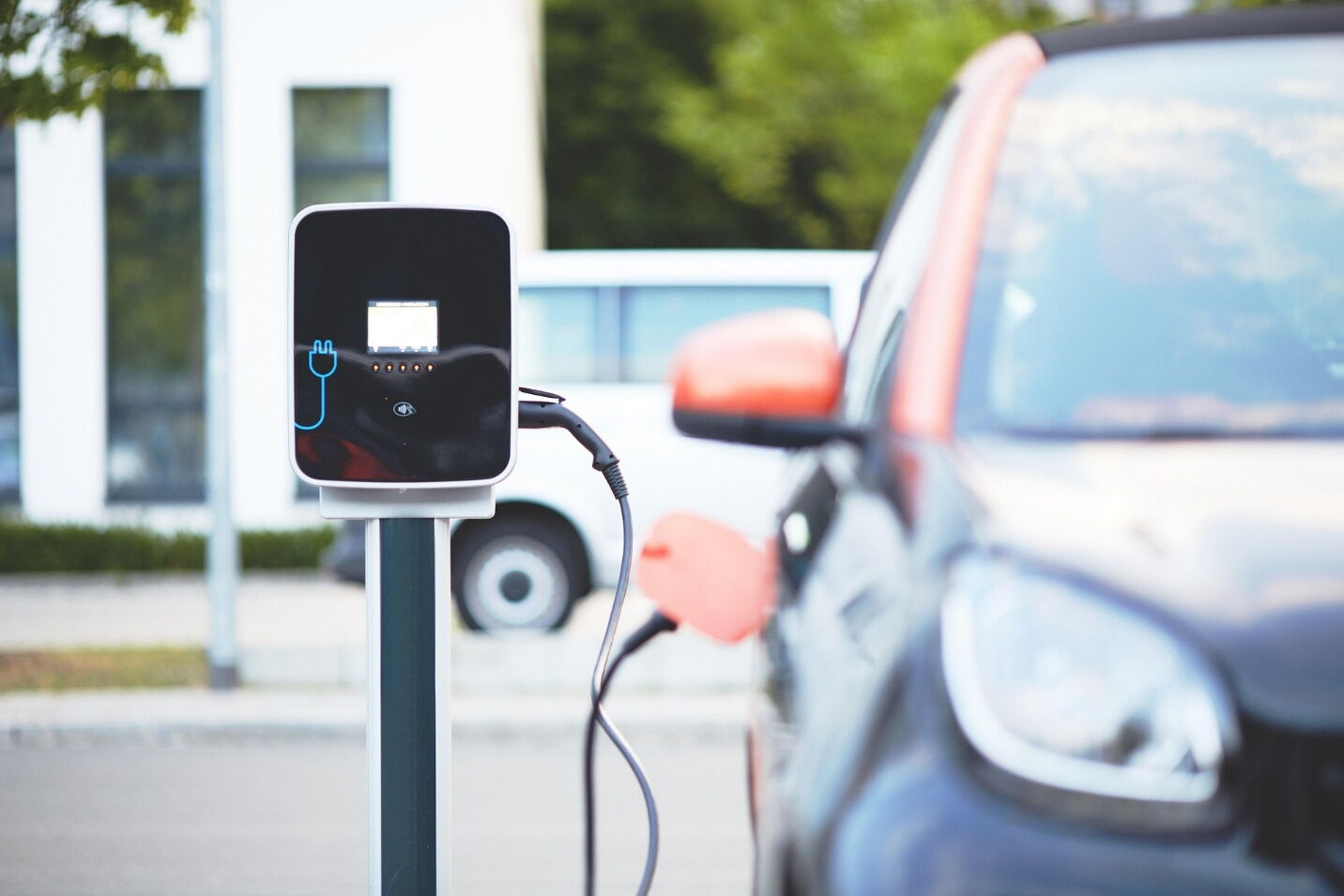
The rising adoption of outdoor EV chargers is driven by a confluence of lifestyle changes, infrastructure gaps, and cost-saving opportunities, making them a practical choice for both residential and commercial users.
For many EV owners, outdoor charging eliminates the hassle of navigating tight garage spaces or running cables under garage doors. A significant number of homeowners with garages use these spaces for storage rather than vehicle parking, making outdoor chargers a seamless fit for their daily routines. The convenience of pulling into the driveway and plugging in—without any additional steps—has become a key selling point, especially for busy professionals and families who value time efficiency.
This convenience extends to commercial and public settings as well. For example, Dubai Municipality recently launched an initiative to install EV supercharging stations across 600 public parking spaces in parks, beaches, and recreational facilities, investing 150 million AED to make sustainable mobility more accessible for residents and visitors. By integrating charging facilities into high-footfall outdoor locations, cities are reducing range anxiety and encouraging EV adoption.
Contrary to popular belief, outdoor EV charger installations can often be more cost-effective than indoor setups, particularly when the driveway or parking area is closer to the home's electrical panel. Running wiring from the panel to an outdoor location eliminates the need for lengthy cable runs through walls or garages, reducing labor and material costs. According to 2026 data, the average cost of a complete Level 2 home charger installation ranges from $800 to $2,500, with outdoor installations sometimes falling at the lower end of this spectrum if wiring distances are minimal.
Additionally, hardwired outdoor chargers— a popular choice for residential users—are typically $50 to $100 cheaper to install than plug-in models, as they do not require a dedicated 240-volt outlet. For commercial operators, the cost savings of outdoor installations are even more pronounced, as they can avoid the expenses associated with retrofitting indoor spaces to accommodate charging equipment.
Outdoor EV chargers offer unparalleled flexibility in installation location, adapting to a wide range of parking scenarios. They can be mounted on the side of a home, on a freestanding post, near a carport, or even directly on the ground with a concrete pad, allowing users to choose the most convenient spot for their parking habits. This flexibility is particularly valuable for those who park on the street, have a detached garage, or need to charge multiple vehicles simultaneously.
For apartment complexes and commercial properties, outdoor chargers can be installed in shared parking lots, providing charging access to multiple users without disrupting existing infrastructure. This adaptability has made outdoor chargers a cornerstone of e-mobility infrastructure in urban and suburban areas alike, where space constraints often limit indoor charging options.
While outdoor EV chargers offer numerous benefits, their installation requires careful planning to ensure safety, durability, and compliance with local regulations. Below are the critical factors to consider:
The primary goal of outdoor charger placement is to ensure easy access for EVs while minimizing safety risks. Chargers should be positioned close to the parking space to allow for convenient cable reach, reducing the need for long, exposed cables that could become trip hazards. It is also important to avoid obstructions such as trees, bushes, or other structures that could block access to the charger or hinder maintenance.
Clearance is another key consideration—installers should ensure there is enough space around the charger for future servicing, including access to internal components and wiring. For commercial installations, accessibility for people with disabilities is also a priority, with many regions requiring chargers to be positioned in compliance with accessibility standards.
Outdoor chargers face constant exposure to the elements, making weatherproofing and durability non-negotiable. The minimum recommended protection rating for outdoor EV chargers is IP65, which provides protection against dust and high-pressure water jets—essential for withstanding rain, snow, humidity, and even coastal salt spray. In extreme environments, such as the Middle East's high temperatures (up to 55°C) or Europe's cold winters (-30°C), chargers may require higher protection ratings (IP67/IP68) and specialized materials to resist corrosion and UV damage.
Manufacturers are placing greater emphasis on durability testing to ensure EV charging equipment can reliably perform under real-world conditions. For instance, UL and Power implements comprehensive testing protocols that include vibration resistance, drop impact evaluation, and anti-yellowing tests. These assessments help confirm that outdoor chargers maintain structural integrity and operational stability even after transportation, installation, and prolonged exposure to harsh environmental conditions such as intense sunlight.
To further improve long-term durability, manufacturers are also adopting advanced materials and protective finishes. Stainless steel, aluminum alloy, and high-performance powder coating technologies are widely used to enhance corrosion resistance. These material upgrades are particularly important for installations in coastal regions with high salt exposure and industrial environments where pollution and humidity can accelerate equipment degradation.
A safe and reliable power supply is critical for outdoor EV charger installations. Chargers must be connected to a dedicated circuit with residual current device (RCD) protection to prevent electrical faults, short circuits, and electric shock. Outdoor-rated wiring and conduits are essential to protect cables from moisture, physical damage, and environmental stress, ensuring long-term reliability.
Compliance with regional electrical standards is also mandatory. For example, in Europe, chargers must meet IEC 61851 and IEC 62196 standards, while in North America, UL 2202/UL 2594 and UL 2231 certifications are required. These standards cover everything from electrical safety to network security, ensuring that outdoor chargers operate safely and efficiently in all conditions.
Outdoor EV chargers are categorized by their charging speed, with three main types dominating the market. Each type is suited to different use cases, from residential overnight charging to commercial fast-charging for high-volume locations.
Level 1 chargers are the slowest option, using a standard 120-volt household outlet (in North America) or 230-volt outlet (in Europe). They typically deliver 1-2 kW of power, taking 12-24 hours to fully charge a standard EV battery. While Level 1 chargers are the most affordable and require no professional installation, they are considered outdated for most outdoor applications, as they cannot meet the fast-charging needs of modern EV owners.
Level 1 chargers are still used in some residential settings where charging speed is not a priority, but their market share is declining as Level 2 chargers become more accessible and affordable.
Level 2 chargers are the workhorse of outdoor EV charging, using a 240-volt (North America) or 230-volt (Europe) power supply to deliver 3.7-22 kW of power. They can fully charge most EVs in 4-8 hours, making them ideal for residential driveways, carports, and commercial parking lots where users can leave their vehicles for a few hours or overnight.
Level 2 chargers dominate the outdoor market, accounting for approximately 57% of global charging installations due to their cost-effectiveness and infrastructure compatibility. They are available in both hardwired and plug-in models, with prices ranging from $300 to $900 for the hardware alone. Mid-range models offer smart features such as scheduled charging (to take advantage of off-peak electricity rates) and app connectivity, while premium models integrate with home solar systems for sustainable charging.
Level 3, or DC Fast Charging (DCFC), is the fastest charging option, delivering 50-400 kW of power and capable of charging an EV to 80% in 15-30 minutes. These chargers are primarily used in commercial outdoor locations, such as highway rest stops, shopping centers, and public parks, where high-volume charging is required.
Although DC fast chargers are still less widespread than Level 2 charging systems, their adoption is accelerating quickly and is expected to account for more than 50% of public charging installations by 2030. This growth is being driven by continuous technological improvements and expanding infrastructure investments.
One of the most notable innovations in this space is the development of solar-integrated DC fast charging stations. For example, California-based startup PowerStation has introduced a fully off-grid solution powered by 1,080 solar panels and a 3.4 MWh energy storage system. This setup enables continuous operation without relying on the traditional power grid, making it particularly suitable for remote regions and areas with weak or unstable electricity supply.
In addition, major charging networks such as Tesla's Supercharger system are playing a leading role in accelerating DC fast charging deployment. With approximately 17,000 high-power charging ports globally, Tesla continues to expand its infrastructure, significantly improving long-distance EV travel convenience and reinforcing the shift toward fast-charging ecosystems.
Outdoor EV charger installation is more complex than indoor setups due to the need for weatherproofing, trenching, and compliance with local regulations. The process typically involves several key steps, each requiring careful planning and professional expertise.
First, a site assessment is conducted to determine the optimal location, power supply requirements, and any potential obstacles (such as underground utilities). This assessment helps identify the need for trenching to run wiring from the electrical panel to the charger location, which often involves additional labor costs. In some cases, a concrete pad is required to mount the charger pedestal securely, particularly for freestanding models.
Trenching can also require repairs to concrete or asphalt surfaces, adding to the overall installation cost. For residential users, the average installation cost ranges from $500 to $1,600, depending on factors such as wiring distance, permit requirements, and the need for additional electrical upgrades (such as panel capacity increases). Commercial installations are more expensive, particularly for DC fast chargers, which require higher power capacity and more complex wiring.
Working with a qualified EV charger installer is critical to ensuring compliance with local building codes and electrical standards. Installers can also provide guidance on rebates and incentives that can reduce installation costs—many regions offer financial incentives for residential and commercial EV charger installations to promote e-mobility adoption.
Outdoor EV chargers are not a one-size-fits-all solution, but they are the practical choice for millions of EV owners. An outdoor charger makes sense if you:
Park your vehicle in a driveway, on the street, or in a carport (uncovered or covered).
Do not have a garage, or your garage is used for storage rather than vehicle parking.
Need to charge multiple vehicles, as outdoor chargers can be installed in configurations that support simultaneous charging.
Have a detached garage, where running wiring to an outdoor charger is more cost-effective than installing an indoor unit.
Live in an area with mild to extreme weather conditions, where a weatherproof outdoor charger can withstand the elements.
While outdoor charger installations generally cost more than indoor setups due to additional weatherproofing and labor, they are often the only practical option for many users. With professional installation and high-quality equipment, an outdoor EV charger can last 10+ years, providing a long-term, reliable charging solution.
The outdoor EV charger market is poised for significant growth in the coming years, driven by several key trends:
First, the global push toward sustainability is accelerating the adoption of outdoor EV chargers, particularly those integrated with renewable energy sources. Solar-powered charging stations, like the ones developed by PowerStation and Tesla, are becoming more common, offering a zero-carbon charging solution that reduces reliance on the grid. V2G technology is also gaining traction, allowing EVs to feed power back into the grid from outdoor chargers, creating a more resilient and efficient energy system.
Second, regulatory changes are shaping the market. In 2026, new standards such as China's GB 46519-2025 (mandating higher energy efficiency) and the U.S. federal goal of 500,000 public charging stations by 2030 are driving demand for high-quality, compliant outdoor chargers. In the EU, NIS2 and GDPR regulations are requiring outdoor chargers to meet strict network security and data privacy standards, pushing manufacturers to integrate advanced cybersecurity features.
Third, the industry is undergoing a period of consolidation, with 80% of small and medium-sized charger manufacturers expected to exit the market by the end of 2026 due to rising compliance costs and technical barriers. This consolidation is leading to a focus on quality and innovation, with surviving manufacturers investing in durable, smart, and efficient outdoor chargers that meet the evolving needs of users.
Outdoor EV chargers are no longer a niche solution—they are a critical component of the global e-mobility infrastructure, addressing the practical needs of EV owners and supporting the transition to sustainable transportation. With their convenience, flexibility, and growing compatibility with renewable energy and smart technology, outdoor chargers are driving the next wave of EV adoption.
As the market continues to grow, fueled by regulatory support, technological innovation, and increasing EV sales, outdoor EV chargers will play an increasingly important role in creating a seamless, accessible charging network. Whether for residential driveways, commercial parking lots, or public spaces, outdoor EV chargers are empowering users to embrace electric mobility without compromise—proving that convenience, safety, and sustainability can go hand in hand.