The Rise of Wall-Mounted DC EV Chargers in Modern Charging Networks
As electric vehicles (EVs) quickly move from niche to mainstream, charging infrastructure is evolving at an unprecedented pace. Among the most striking advancements is the adoption of wall-mounted DC EV chargers — compact, powerful, and designed for residential, commercial, and public environments. Unlike traditional bulky DC fast chargers, these streamlined units deliver high-speed charging with a smaller footprint and greater installation flexibility.
This news story examines the technological innovation, market forces, deployment trends, and future potential of wall-mounted DC EV charging solutions.
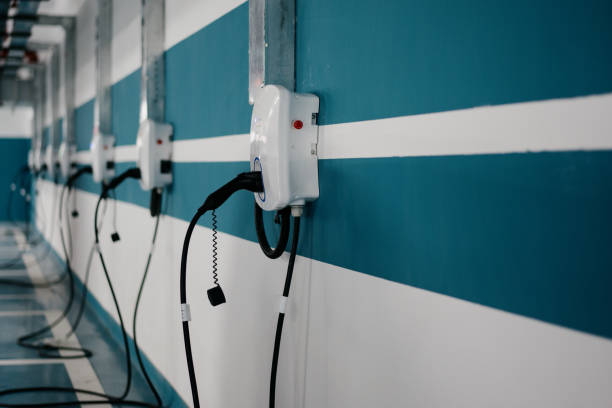
A wall-mounted DC EV charger is a direct-current (DC) electric vehicle charging station that is mounted on a wall — whether exterior or interior — and provides rapid charging to electric vehicles.
- Fast Charging Capability: Provides DC fast charging typically ranging from 15 kW up to 60 kW or more, reducing EV charging times to a fraction of conventional AC chargers.
- Wall Installation: Designed for attachment to walls, columns, or existing structures — enabling installation in tighter spaces compared to pedestal-mounted stations.
- Compact Footprint: Smaller size reduces site planning complexity and improves aesthetics for residential, retail, or high-density environments.
- Advanced Connectivity: Integrated communications (4G/5G, Wi-Fi, Ethernet) allow for remote monitoring, billing, firmware updates, and network integration.
- User Convenience: Built-in cable management, ergonomic design, and safety features make operation intuitive for drivers.
Traditional DC fast chargers often occupy significant ground space, require dedicated civil foundations, and involve costly installation. Wall-mounted DC chargers circumvent these constraints — they can be affixed to building exteriors, garage walls, or existing support structures, drastically reducing installation complexity.
According to industry analysts, the global EV charging infrastructure market is expanding rapidly, driven by EV adoption, government mandates, and corporate fleet electrification. Within this broad trend, wall-mounted DC chargers are emerging as a high-growth segment.
- Residential Electrification: As more households adopt EVs, there's rising demand for faster charging at home without the need for expensive space or equipment.
- Commercial Deployment: Retail centers, workplaces, apartment complexes, and hospitality venues are deploying wall-mounted chargers to serve customers, employees, and tenants.
- Fleet Electrification: Commercial fleet operators — from last-mile delivery to rideshare companies — favor wall-mounted fast chargers for their scalability and operational flexibility.
- Policy Support: Incentives, rebates, and mandates from federal, state, and local governments encourage rapid deployment of EV charging infrastructure, including DC fast solutions.
Together, these factors are driving unprecedented investment in wall-mounted DC charging solutions worldwide.
Innovations in power conversion technology — such as silicon carbide (SiC) semiconductors — have enabled more compact DC chargers with higher efficiency, lower heat output, and reduced weight. These improvements are essential for wall-mounted systems, where space and thermal management are critical constraints.
Modern wall-mounted units often use modular power stacks, allowing operators to scale capacity based on demand. Operators can start with a smaller charger and upgrade power modules over time, protecting their investment.
Connectivity has become a defining feature of modern chargers:
- Remote Monitoring & Diagnostics
- Automated Billing
- Software Over-the-Air (OTA) Updates
- Load Balancing & Grid Communication (V2G / V2X Compatibility)
These features not only improve user experience but also enhance uptime and operational efficiency.
Safety standards like UL, IEC, SAE, and national electrical codes ensure that wall-mounted DC chargers meet rigorous criteria for electrical safety, EMC (electromagnetic compatibility), ingress protection (IP ratings), and thermal design. This reassures customers, installers, and regulators alike.
One of the most compelling reasons EV infrastructure planners choose wall-mounted DC chargers is installation flexibility.
- Faster and Lower-Cost Installation
- With a wall-mounted charger:
- No need for extensive civil work
- Reduced trenching and conduit runs
- Smaller electrical infrastructure footprint
- Lower permitting costs in many jurisdictions
This translates to faster time-to-revenue for charging network operators and lower upfront investment.
Wall-mounted chargers can be deployed in:
- Building façades
- Parking garages
- Retail storefronts
- Apartment complexes
- Commercial fleet parking areas
- Highway rest stops
Because they utilize existing structural support, they minimize disruption to parking spaces and pedestrian areas.
Architects and site planners appreciate the sleek form factor, which blends with urban architecture and enhances site attractiveness — a key consideration for premium retail and commercial properties.
For drivers, wall-mounted DC chargers offer:
- Shorter Charging Sessions — often 20–40 minutes for significant battery replenishment.
- Ergonomic Access — cables and connectors positioned at convenient heights.
- Clear Interfaces — touchscreen or app-controlled sessions with live status and payment options.
Most systems support a wide range of payment models, including:
- Mobile app payments
- RFID cards
- Subscription services
- Pay-per-use billing
- Corporate or fleet authorization systems
Such flexibility makes chargers suitable for both public access and private fleets.
Built-in protections against overcurrent, overvoltage, ground faults, and temperature extremes ensure safe operation for vehicles and users.
In metropolitan areas, multifamily residential buildings face challenges in providing EV charging for tenants. Wall-mounted DC chargers offer a solution by enabling multiple charging points on existing structures, without sacrificing parking spaces or requiring new ground installations. Property owners often recover costs through user fees or increased leasing value.
Major airports and transit centers require high-throughput charging for rental fleets and rideshare services. Wall-mounted DC chargers installed at curbside areas provide rapid top-ups for vehicles between services, improving fleet rotation and customer service.
Retail centers and hotels increasingly install wall-mounted chargers to attract EV drivers who want quick charging while shopping or dining. These stations become customer-draw features, increasing dwell time and associated commercial spending.
Companies with commercial EV fleets — from utility vehicles to delivery vans — leverage wall-mounted DC solutions in central depots. With smart scheduling and load management, fleets can recharge multiple vehicles overnight or between shifts without needing sprawling infrastructure.
While the momentum is strong, there are several challenges to widespread adoption of wall-mounted DC EV chargers.
DC fast chargers impose significant demand on local electrical infrastructure. Utilities and site planners must assess grid capacity, consider demand charges, and integrate load management systems to prevent spikes and optimize energy consumption.
Although global standards like CCS (Combined Charging System) and CHAdeMO exist, there remains fragmentation in connector types and communication protocols across regions. Ensuring station compatibility with diverse EV models remains a priority for network operators.
Though installation costs are lower than traditional DC fast chargers, and technology is becoming more affordable, capital investments remain substantial. Operators must model utilization rates, pricing strategies, and maintenance costs to predict return on investment.
Connected charging stations can become targets for cyberattacks. Manufacturers must embed robust cybersecurity protocols, secure firmware, and encrypted communications to protect networks and user data.
Governments around the world are promoting EV infrastructure — including wall-mounted DC chargers — through a mix of incentives, regulations, and funding programs.
United States
Federal initiatives such as the National Electric Vehicle Infrastructure (NEVI) program, state rebates, and tax incentives provide financial support for charging infrastructure deployment. These policies aim to accelerate EV adoption and ensure equitable access to charging in urban and rural communities alike.
Europe
In Europe, stringent emissions targets and LEZ (Low Emission Zone) policies are driving demand for EVs and charging solutions. Subsidies for fast charging and requirements for new residential and commercial buildings to include EV charging infrastructure are encouraging adoption.
Asia-Pacific
Countries like China, Japan, and South Korea are investing heavily in public and private EV charging networks. Municipal incentives, EV purchase subsidies, and supportive urban planning guidelines are catalyzing infrastructure growth.
Global Collaboration
International initiatives — through the International Energy Agency (IEA), C40 Cities, and standards bodies — are fostering knowledge sharing and interoperability frameworks that benefit charger manufacturers and operators worldwide.
The market for wall-mounted DC EV chargers is highly competitive and rapidly innovating. Established power electronics companies, EV infrastructure specialists, and new energy startups are all vying for market share. Key competitive factors include:
- Power and Efficiency
- Installation Ease
- Connectivity and Software Features
- Service and Support Networks
- Pricing and Total Cost of Ownership
Manufacturers that can deliver reliable hardware with robust software platforms are positioned to lead in this growing segment.
Integration With Renewable Energy
Linking wall-mounted DC chargers with onsite solar, battery storage, and microgrids has the potential to reduce grid dependency and charging costs — particularly for commercial and residential sites.
Vehicle-to-Grid (V2G) Compatibility
As bidirectional charging technologies mature, EVs may serve as distributed energy assets. Wall-mounted DC chargers with V2G support could enable EV batteries to supply energy back to the grid during peak demand — turning cars into virtual power plants.
AI-Driven Load Balancing
Artificial intelligence and machine learning can optimize charging schedules, predict demand patterns, and balance loads across multiple chargers — improving efficiency and reducing energy costs.
Ultra-Fast Charging Development
Battery advancements and power electronics innovation may enable wall-mounted units to deliver even higher power levels — bringing charging times down further and narrowing the gap between electric and liquid-fuel refueling.
Enhanced User Experience
Mobile integration, single-tap payments, digital loyalty rewards, and personalized charging profiles will continue to elevate the consumer charging experience.
Wall-mounted DC EV chargers are reshaping the electric mobility landscape. Their compact design, installation versatility, and fast-charging performance make them an indispensable component of charging ecosystems — from single-family homes to large commercial campuses. Supported by technological progress, public policy, and rising EV demand, these chargers are poised to become a key bridge to a cleaner, electrified transportation future.
Whether for homeowners seeking faster charge times, businesses aiming to attract EV drivers, or utilities managing grid load, wall-mounted DC charging solutions are unlocking new opportunities and redefining expectations for EV infrastructure.
As the global community races toward carbon reduction goals, wall-mounted DC chargers are not just a convenience — they are a cornerstone of the electric mobility revolution.