What Is a Level 2 EV Charger? Complete Guide to Fast Home Charging
As electric vehicles continue to gain global traction, charging infrastructure has become one of the most critical elements shaping user experience and adoption rates. Among the different charging options available today, the Level 2 charger stands out as the most practical and widely adopted solution for both residential and commercial applications. Positioned between the slow but accessible Level 1 charging and the ultra-fast yet expensive DC fast charging, Level 2 chargers offer an ideal balance of speed, cost, and convenience.
A Level 2 EV charger operates on a 240-volt power supply, significantly increasing charging performance compared to Level 1 chargers that rely on standard 120-volt household outlets. Typically delivering between 7 kW and 11 kW of power, Level 2 chargers enable electric vehicles—including both battery electric vehicles (BEVs) and plug-in hybrid electric vehicles (PHEVs)—to recharge efficiently within a few hours. This makes them particularly suitable for overnight home charging, workplace installations, and public charging environments where vehicles remain parked for extended periods.
In this article, we explore what a Level 2 charger is, how it works, charging time expectations, installation considerations, and how to choose the best solution based on your specific needs.
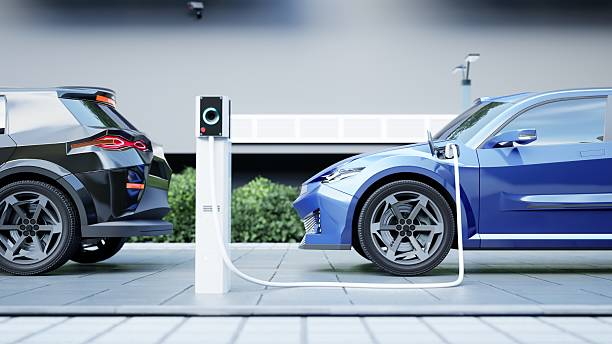
A Level 2 EV charger is a dedicated electric vehicle supply equipment (EVSE) that uses a 240V AC electrical circuit to deliver faster charging than a standard wall outlet. Unlike Level 1 chargers, which can take more than 24 hours to fully charge a vehicle, Level 2 chargers dramatically reduce charging time, making EV ownership far more practical for daily use.
Level 2 chargers are commonly installed in:
- Residential garages and driveways
- Apartment complexes and multi-family housing
- Office buildings and workplaces
- Public charging stations such as shopping centers and parking garages
These chargers typically connect to the vehicle via a standardized connector and provide consistent, safe power delivery regulated by onboard vehicle charging systems.
Level 2 chargers supply alternating current (AC) power to the vehicle's onboard charger, which then converts it into direct current (DC) to store in the battery. The charging speed depends on several factors:
- Charger output (kW rating)
- Vehicle onboard charger capacity
- Battery size and state of charge
- Electrical system limitations
For example, even if a charger can deliver 11 kW, a vehicle with a 7.2 kW onboard charger will only draw up to its maximum supported rate.
This controlled and stable charging method ensures battery longevity while still offering significantly improved charging times compared to Level 1 systems.
Charging time is one of the most important considerations for EV owners, and Level 2 chargers provide a practical solution for most daily driving needs.
PHEVs typically have smaller battery capacities, often ranging from 8 kWh to 20 kWh. With a Level 2 charger:
Full charge time: approximately 2 to 4 hours
This makes it easy for PHEV owners to recharge between trips or overnight.
BEVs have significantly larger batteries, often between 50 kWh and 100+ kWh. With a Level 2 charger:
Full charge time: approximately 6 to 10 hours
For most users, this means plugging in overnight and waking up to a fully charged vehicle.
In everyday use, most drivers do not need to fully recharge from empty. Instead, they top up their battery based on daily mileage. For example:
- A charger delivering 7 kW can add roughly 20–30 miles of range per hour
- Overnight charging (8 hours) can add 150–250 miles, sufficient for most commutes
Compared to Level 1 chargers, Level 2 systems can be up to 5–10 times faster, dramatically improving convenience.
While not as fast as DC fast chargers, Level 2 chargers are far more affordable to purchase and install, making them ideal for home and workplace use.
Level 2 chargers are widely available and can be installed in private and public locations, ensuring flexible access for EV users.
Moderate charging speeds reduce thermal stress on batteries, helping extend battery life compared to frequent fast charging.
Modern Level 2 chargers often include:
- Wi-Fi or Bluetooth connectivity
- Mobile app control
- Scheduling and load management
- Energy usage tracking
Home installation is one of the most popular uses for Level 2 chargers. It allows EV owners to:
- Charge overnight
- Avoid public charging queues
- Benefit from lower electricity rates (off-peak pricing)
Employers are increasingly installing Level 2 chargers to:
- Support employee EV adoption
- Meet sustainability goals
- Provide added workplace benefits
Level 2 chargers are commonly found in:
- Retail parking lots
- Hotels and resorts
- Municipal parking facilities
They are ideal for locations where vehicles are parked for several hours.
Selecting the right Level 2 charger involves evaluating several important factors, including wiring type, connector compatibility, and installation requirements.
Choose a plug-in charger if:
- You are renting your home
- You may relocate in the near future
- You want portability and flexibility
Advantages:
- Easy installation
- No permanent wiring changes
- Can be unplugged and moved
Choose a hardwired charger if:
- You own your home
- You plan long-term installation
- You prefer maximum reliability
Advantages:
- Slightly faster charging potential
- Better durability
- Reduced risk of electrical interruptions
- Standard for most non-Tesla EVs (especially pre-2025 models)
- Compatible with a wide range of vehicles
- Widely supported across charging networks
- Used by Tesla vehicles
- Increasingly adopted by major automakers such as Ford and GM
- Expected to become more common in future EV models
Before purchasing, always verify your vehicle's connector compatibility or ensure the charger includes an adapter if needed.
Most Level 2 chargers operate between 32 amps and 48 amps, which translates to:
- 7.7 kW (32A)
- 9.6 kW (40A)
- 11.5 kW (48A)
Higher amperage results in faster charging but requires a stronger electrical circuit.
Modern chargers often include advanced functionality such as:
- Remote monitoring and control
- Scheduled charging to reduce costs
- Integration with home energy systems
- Load balancing for multiple chargers
These features are especially useful for homeowners and businesses managing multiple vehicles.
For outdoor installations, choose chargers with:
- High IP ratings (e.g., IP54 or above)
- UV-resistant enclosures
- Wide operating temperature ranges
This ensures reliable performance in various environmental conditions.
Installing a Level 2 charger requires careful planning and professional expertise.
Before installation, a licensed electrician should evaluate your electrical panel:
- 200A panel: Typically sufficient for Level 2 installation
- 100A panel: May require upgrades or energy management systems
Typical installation costs range from:
$500 to $2,000
Factors affecting cost include:
- Distance from panel to charger
- Electrical upgrades required
- Labor complexity
Local building codes may require:
- Permits
- Inspections
- Compliance with electrical standards
Working with a certified electrician ensures safety and regulatory compliance.
For homes with limited electrical capacity, energy management systems can help optimize power usage by:
- Balancing load between appliances and EV charger
- Preventing circuit overload
- Enabling smart charging during off-peak hours
This can eliminate the need for costly panel upgrades.
Feature | Level 1 Charger | Level 2 Charger | DC Fast Charger |
Voltage | 120V | 240V | 400V+ |
Charging Speed | Slow | Moderate | Very Fast |
Typical Use | Home backup | Home/workplace | Highway/public |
Installation Cost | Low | Moderate | High |
Charging Time | 24+ hours | 2–10 hours | 20–60 minutes |
Level 2 chargers represent the "sweet spot" for most EV users, offering a practical combination of speed and affordability.
As more automakers adopt Tesla's connector standard, compatibility and infrastructure will continue to evolve.
Future Level 2 chargers will increasingly support:
- Vehicle-to-grid (V2G) technology
- Renewable energy integration
- Dynamic load balancing
Governments and private companies are investing heavily in expanding Level 2 charging networks, especially in urban areas and residential communities.
Level 2 EV chargers have become the backbone of modern electric vehicle charging infrastructure. By delivering significantly faster charging than Level 1 systems while remaining cost-effective and accessible, they provide an ideal solution for both residential and commercial applications.
Whether installed at home, in workplaces, or in public spaces, Level 2 chargers enable EV owners to charge efficiently and conveniently, supporting the broader transition toward sustainable transportation. With advancements in smart technology, connector standards, and energy management, Level 2 charging will continue to play a pivotal role in shaping the future of mobility.
For anyone considering EV ownership or looking to upgrade their charging setup, investing in a Level 2 charger is a practical and forward-thinking decision that balances performance, cost, and long-term usability.