A Complete Guide to On-Street EV Chargers: Technology, Installation, and City Planning
The rapid global transition toward electric mobility is reshaping how cities think about public infrastructure, energy distribution, and transportation planning. While many early electric vehicle (EV) owners relied on private driveways or garage installations for home charging, this model does not work for the millions of urban residents who depend on street parking. As electric vehicle adoption accelerates, the lack of accessible charging for households without off-street parking has emerged as one of the biggest barriers to widespread EV uptake—particularly in dense urban environments.
This challenge has propelled on-street EV charging into the spotlight as a critical piece of modern city infrastructure. On-street chargers provide convenient charging access directly on public roads, enabling EV owners to recharge their vehicles while parked near homes, workplaces, or commercial districts. Over the past few years, cities around the world have begun deploying extensive on-street charging networks to support greater EV adoption and reduce dependence on fossil fuel transportation systems.
This industry news report explores the evolving landscape of on-street EV charging, including definitions, typical charger types, technology innovations, regulatory frameworks, installation processes, business models, safety considerations, and global case studies. It also highlights the growing role of municipalities, utilities, and private enterprises in building inclusive, reliable, and user-friendly on-street charging ecosystems.
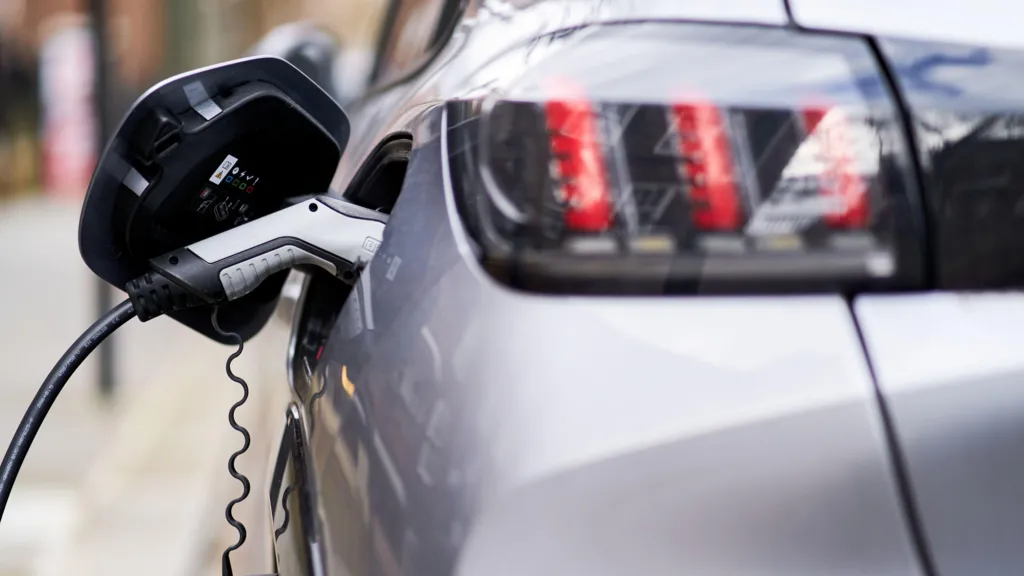
On-street EV charging refers to charging infrastructure installed on public roadsides, usually adjacent to designated parking spaces. These stations are specifically designed for vehicles that remain parked for extended periods—during the day while drivers work or at night when residents park near their homes. Unlike rapid DC chargers located along highways or commercial charging hubs, on-street chargers typically offer lower charging speeds suitable for slow to moderate battery replenishment over several hours.
For many urban drivers, on-street charging serves the same purpose as overnight home charging. It provides a dependable, accessible source of energy without requiring private land or expensive electrical upgrades to residential buildings. As a result, it is essential for promoting EV adoption among apartment dwellers and residents of older neighborhoods where private parking infrastructure is limited or nonexistent.
Because these chargers are installed on public land, they require regulatory permissions, careful urban planning, and coordination with local authorities, electrical utilities, and street management agencies. Depending on the region, installations may be funded by city governments, private charging operators, or public-private partnerships.
On-street EV charging equipment varies in power output, user interface, energy management systems, and installation methods. Two primary categories dominate the market:
These AC chargers are the most common type used for on-street parking. They are designed for overnight or long-duration charging sessions. A typical 7 kW charger can replenish an average EV battery in 6–10 hours, depending on the vehicle's capacity. A 3 kW charger requires more time, often extending to 12–20 hours.
Standard chargers remain popular because:
- They are inexpensive to install and maintain
- They place minimal strain on existing electrical grids
- They align with natural parking behavior in residential neighborhoods
- They support predictable and balanced energy consumption patterns
For municipalities, slow chargers offer the highest cost-benefit ratio for widespread deployment.
Although less common on public streets, 11–22 kW AC fast chargers are increasingly deployed in commercial areas or locations with higher vehicle turnover. These chargers can fully recharge an EV in approximately 3–5 hours—ideal for daytime usage near offices, shopping districts, transit stations, and municipal buildings.
Fast chargers are more expensive and require greater electrical capacity, but they offer flexibility and convenience in mixed-use urban areas.
Multiple stakeholders are involved in expanding on-street charging networks:
Local governments are the driving force behind the majority of on-street charging projects. Cities often adopt strategic charging plans that map out high-demand areas such as residential zones with limited private parking, commercial corridors, transit hubs, libraries, public institutions, and tourist attractions.
Municipalities may install chargers directly, partner with utilities or EV charging companies, or award concessions to private providers in exchange for long-term infrastructure management. In many regions, government incentives or subsidies are available to support installation.
Businesses such as retail centers, hotels, and office buildings may request permission to install on-street chargers adjacent to their property. These installations must comply with urban planning and safety guidelines, minimize disruption to pedestrian and vehicular traffic, and ensure proper electrical connectivity.
For businesses, offering on-street charging can attract more customers, increase dwell times, and enhance brand image.
In some cities, homeowners without driveways can apply for on-street charging permits. Once approved, they may install a personal charging point on the curb near their residence. This is more common in the UK and certain European countries, where urban EV policy emphasizes equitable access to charging infrastructure.
On-street chargers must be deployed with careful consideration for aesthetics, accessibility, and safety. Several installation models are used globally:
These standalone posts resemble parking meters and are directly installed on sidewalks. They require small footprints and are widely used in residential neighborhoods.
One of the most innovative approaches involves converting existing streetlamps into EV chargers. This significantly reduces installation costs and minimizes street disruption. Lamp-post chargers leverage existing electrical connections, though power output may be limited to 3–7 kW.
In areas where buildings are immediately adjacent to the sidewalk, chargers can be mounted onto exterior walls. This model is popular in European cities with narrow streets and limited pavement space.
These solutions keep sidewalks clutter-free. Chargers rise from the ground when needed and retract when not in use. Although visually appealing, they are more expensive to install.
Some cities develop small clusters of chargers along designated parking bays, allowing multiple EVs to charge simultaneously.
Modern on-street EV chargers incorporate smart technologies that support efficient power distribution and grid stability. Key features include:
On streets where several chargers share a single connection, dynamic load balancing helps evenly distribute energy and avoid grid overload. Chargers automatically adjust output based on demand and available power.
Smart charging schedules lower energy output during peak hours and increase charging activity during off-peak times, reducing costs for municipalities and residents.
Most commercial on-street chargers support the Open Charge Point Protocol (OCPP), allowing operators to monitor performance, collect usage data, manage pricing, and troubleshoot remotely.
Chargers typically support mobile apps, RFID cards, membership systems, or contactless payments.
Emerging technologies enable bi-directional energy flow between vehicles and the grid, paving the way for vehicle-to-grid (V2G) or vehicle-to-home (V2H) services. Although early in adoption, V2G-ready on-street chargers could help stabilize urban energy systems.
Installing on-street chargers requires coordination across multiple regulatory layers, including:
Cities typically enforce guidelines for equipment placement, spacing, signage, and accessibility. On-street chargers must not obstruct sidewalks, crosswalks, or bike lanes.
Chargers must be safely connected to local electrical networks. Utility companies evaluate load capacity, grid impact, and required upgrades.
Dedicated EV-only parking zones must be clearly marked and enforced. Cities often include:
- Time limits
- Overnight charging rules
- Penalties for combustion engine vehicles parked in EV spaces
Charger hardware must comply with electrical safety standards such as IEC, UL, CE, or equivalent certifications. Ground fault protection, waterproofing, cable management, and emergency shutoff mechanisms are typically required.
Cities may require visual impact assessments or environmental reviews to ensure minimal disruption to streetscapes.
Various financial models support on-street charging expansion:
Governments invest directly in installation and maintenance, often using public funds or climate transition budgets. Many cities use grant programs to accelerate deployment.
Municipalities partner with private operators who handle installation, management, and maintenance. Revenue is shared or retained by the operator depending on agreements.
Charging companies may fully finance installations in exchange for exclusive rights to operate chargers and collect user fees.
In certain programs, residents contribute to installation costs for on-street chargers near their homes. Cities may subsidize partial costs.
Commercial sponsors install chargers as part of sustainability initiatives or customer attraction strategies.
Despite growing adoption, several challenges must be addressed for successful widespread deployment:
Many urban areas have aging grid infrastructure, requiring upgrades to support additional chargers.
Installing chargers must not inconvenience pedestrians, cyclists, or street vendors. Space constraints are a significant challenge in older cities.
Depending on the region, civil works, permits, and utility upgrades can be costly—particularly for fast chargers.
Ensuring EV drivers do not block chargers for extended periods, and preventing gasoline vehicles from occupying EV spaces, requires effective enforcement.
Chargers must withstand rain, snow, humidity, and extreme temperatures while maintaining reliability.
The UK has one of the world's most extensive on-street charging networks, driven by government grants and strong municipal involvement. London leads with lamp-post chargers and resident-requested installations.
Dutch cities use a demand-driven model: residents can request chargers, prompting municipalities to install them. Smart load management and renewable energy integration are central to Dutch policy.
Germany's focus is on scalable, standardized infrastructure. Many cities integrate chargers into existing utilities such as streetlamps or telecom boxes.
On-street charging is rapidly expanding in dense cities like New York, Los Angeles, Seattle, and Boston. Utilities and private operators such as ChargePoint and Blink Mobility play major roles.
China deploys large-scale curbside charging stations in megacities such as Shanghai, Beijing, and Shenzhen. Integrated urban charging hubs support taxis, ridesharing fleets, and private EV drivers.
Australian cities are rolling out strategically placed curbside chargers with strong emphasis on renewable energy integration.
The rise of on-street charging has significant implications:
Access to reliable curbside charging removes one of the biggest barriers for apartment dwellers.
Electrifying city transportation supports climate goals and improves air quality.
Smart chargers balance grid loads, support renewable integration, and help modernize energy distribution networks.
The installation, operation, and maintenance of on-street chargers generate skilled jobs and support new business ecosystems.
Charging access encourages EV-friendly policy development, shared mobility programs, electrified delivery fleets, and reduced noise pollution.
On-street EV chargers are becoming a crucial part of modern city infrastructure, enabling millions of residents without private parking to participate in the electric mobility transition. As governments, utilities, and private operators work together to expand on-street charging networks, cities are moving closer to creating accessible, sustainable, and future-ready transportation ecosystems. With continued technological advancements, refined regulations, and strategic investments, on-street charging will remain a foundational pillar of urban electrification for years to come.