
As electric vehicles (EVs) continue to surge in popularity, the world's charging infrastructure is undergoing rapid transformation. Traditional charging models—home AC chargers and large-scale, high-power DC fast-charging stations—no longer meet the diverse needs of today's drivers, businesses, and fleet operators. This has opened the door to a new category of charging technology: compact DC EV chargers, typically ranging from 20 kW to 60 kW.
Compact DC chargers are reshaping the industry with their balance of fast charging performance and minimal installation requirements. Unlike massive DC stations that require extensive power upgrades, heavy concrete bases, and high installation budgets, these compact units offer rapid charging in a small footprint, enabling faster, more flexible deployment in commercial, retail, fleet, and semi-public environments.
Whether mounted in a parking garage, placed at a small business, installed at a car dealership, or deployed as a mobile charging unit, compact DC chargers bridge the gap between slow AC chargers and high-power DC fast chargers. They deliver 1–2 hour charging—depending on EV model and battery size—making them ideal for urban and suburban settings where short dwell-time top-ups are needed.
This industry news report explores the expanding role of compact DC EV chargers in the evolving energy ecosystem, focusing on their technical strengths, installation advantages, costs, use cases, and their emerging importance across commercial sectors worldwide.
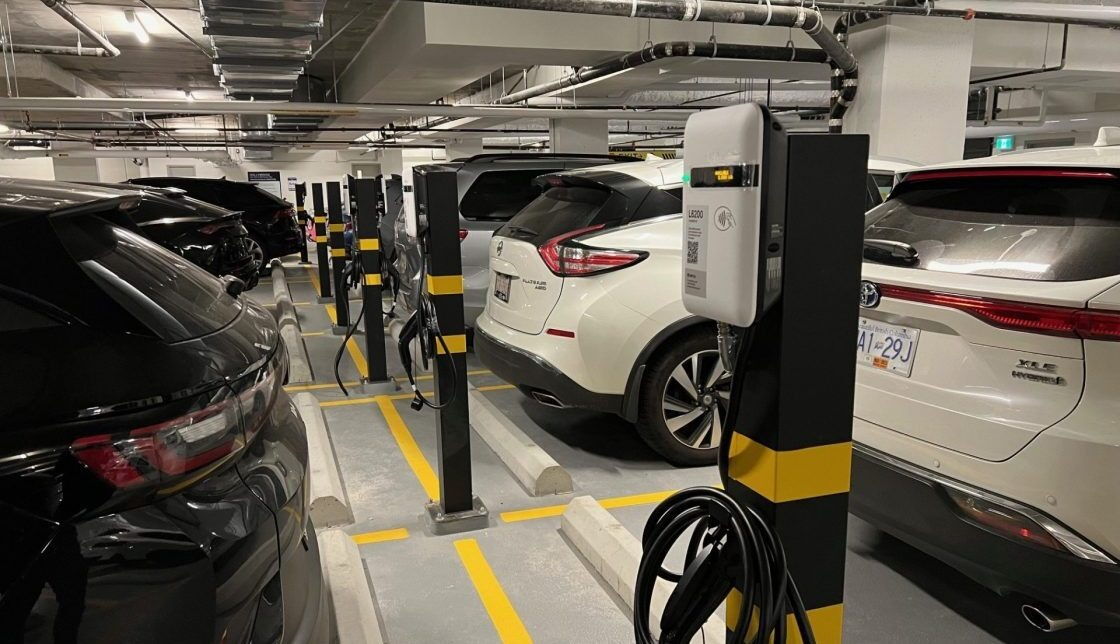
Compact DC chargers are direct-current charging devices engineered to provide fast charging in a slim and space-efficient format. While most consumers are familiar with AC chargers and large highway DC fast chargers, compact DC units sit between these categories, offering significantly faster charging than AC but requiring far less infrastructure than full-size DC stations.
Typical power levels include:
Compact DC chargers convert AC power to DC within the charger itself rather than relying on the vehicle's onboard AC-to-DC converter, which is often limited to anywhere from 3.7 kW to 11 kW on most EV models. Because the onboard charger is bypassed, the vehicle receives DC power directly into the battery, dramatically reducing charging times even for vehicles with slow AC charging capabilities.
Traditional DC fast chargers (120–350 kW) require substantial installation work, including:
Compact DC chargers, on the other hand, require only 400–480V three-phase power, which is readily available in many commercial and light-industrial locations. Despite their smaller size, they offer considerable speed advantages over AC chargers.
Typical performance:
This performance is ideal for drivers who need a fast top-up during shopping, lunch breaks, errands, or short business stops.
Compact DC chargers are engineered to maximize power delivery while minimizing physical footprint. Their compact size enables installation in locations that would be challenging—or impossible—for large DC fast chargers.
Typical installations include:
Their small footprint allows them to be mounted on walls, placed on slim pedestals, or installed between tight parking spaces—making them ideal for urban environments where space is limited.
The cost of installing a high-power DC fast charger can easily exceed $150,000 to $300,000, primarily due to:
In contrast, compact DC chargers can often be installed for a fraction of that cost.
Typical installation cost estimates:
(depending on site conditions, cabling distance, communication requirements, and local labor rates)
Because most commercial buildings already provide three-phase power, installation timelines are shorter and permits are easier to obtain. This reduces downtime, administrative delays, and overall project complexity.
Electrification of commercial fleets is accelerating globally. Fleets often have very different charging needs than private drivers. Instead of long highway trips, most fleet vehicles follow predictable daily routes and return to the depot each night.
Compact DC chargers are ideal for:
Key advantages for fleets include:
Fleets benefit from being able to charge vehicles consistently throughout the day, reducing downtime and maximizing vehicle utilization.
Compact DC chargers are increasingly used in destination charging locations—places where people naturally spend time. Providing fast charging at these locations increases customer satisfaction and encourages longer visits.
Popular installation scenarios include:
With compact DC charging, guests can add 50–200 km of range during a short visit, which is ideal for modern EV drivers.
Compact DC chargers come packed with advanced technology and safety features that support reliable and smart operation in commercial environments.
Compact DC chargers typically fall into these categories:
Peak charging power is delivered depending on:
Modern chargers automatically adjust output for optimal performance.
Compact DC chargers prioritize intelligent energy management, allowing businesses to control costs and improve reliability.
Common features include:
These features help operators maximize revenue while reducing operational complexity.
Compact DC chargers support multiple communication methods:
This allows real-time data updates, firmware upgrades, billing management, and integration with external systems such as:
Connectivity ensures chargers can adapt to network growth and evolving operational needs.
Safety is essential in all EV charging systems, and compact DC chargers are equipped with robust protection layers.
Typical protections include:
These features ensure safe charging in any environment, reducing risk for operators and users.
Compact DC chargers use:
Unlike higher-power DC stations, they do not require liquid cooling systems. This significantly reduces:
Compact DC chargers are extremely versatile. Their modest installation requirements and robust performance make them suitable for a wide range of sectors.
Commercial centers increasingly view EV charging as a competitive advantage. Installing compact DC chargers enhances customer satisfaction, increases foot traffic, and encourages longer stays.
Benefits for retail operators:
Retailers are rapidly adopting compact DC chargers as part of a modern customer experience strategy.
Hotels, resorts, and tourist destinations are ideal locations for compact DC chargers, offering guests fast charging during their stay.
Benefits include:
Guests with premium EVs often prefer fast charging options, making compact DC chargers a valuable addition to hospitality infrastructure.
Many businesses are transitioning to sustainable workplace initiatives. Providing EV charging improves employee retention and supports corporate sustainability goals.
Workplace benefits include:
Compact DC chargers offer faster charging than workplace AC chargers, allowing employees to top up during short breaks or meetings.
Car dealerships are increasingly electrifying their inventory. Compact DC chargers help dealerships manage:
Dealers benefit from compact DC chargers' ability to quickly power EVs, improving customer satisfaction and reducing turnaround time.
One of the most impactful sectors for compact DC chargers is fleet charging.
Applications include:
Advantages for fleets:
Compact DC chargers allow fleets to maintain high uptime without investing in large-scale charging hubs.
Portable compact DC chargers (20–30 kW) are emerging as a new category of mobile charging equipment.
They are used for:
This mobility provides charging flexibility unique to compact DC units.
Compact DC chargers operate on:
This makes installation feasible in a wide range of locations without requiring major electrical upgrades.
Typical site preparation includes:
Compared to high-power DC chargers, compact DC systems significantly reduce:
Operating a compact DC charger is considerably more cost-effective than running a high-power charging station. Key factors include:
Smart charging features help operators manage energy costs by adjusting output based on demand, time-of-use tariffs, or fleet schedules.
Compact DC chargers create multiple revenue streams for site owners:
Combined with lower installation and operational costs, compact DC chargers offer strong return on investment for commercial properties.
Compact DC EV chargers are rapidly becoming one of the most important components of the global charging ecosystem. They provide an ideal balance of speed, flexibility, affordability, and ease of installation. With power levels from 20 kW to 60 kW, they deliver significantly faster charging than AC wallboxes, while avoiding the high infrastructure cost and complexity of large DC fast-charging stations.
These chargers are well-suited to a wide range of environments—including retail centers, fleet depots, workplaces, hotels, car dealerships, and public parking facilities—making them an essential tool for supporting EV adoption. By offering rapid charging in a small footprint and requiring minimal electrical upgrades, compact DC chargers help businesses, governments, and EV operators expand charging access quickly and cost-effectively.
As the EV market continues to evolve, compact DC chargers play an indispensable role in meeting the charging needs of today's drivers and building robust charging networks that support widespread electrification.
