Floor-Mounted EV Charger: A Reliable Charging Solution for Modern Electric Mobility
As electric vehicles continue to gain popularity around the world, the demand for practical, efficient, and accessible charging infrastructure is growing rapidly. A Floor-Mounted EV Charger has become one of the most important solutions in this expanding market. Designed to be fixed securely to the ground, this type of charger provides dependable charging services for electric vehicles in a wide variety of environments, including public parking lots, commercial properties, residential communities, office complexes, service areas, and dedicated charging stations.
Unlike wall-mounted chargers, floor-mounted EV chargers operate as independent units. This gives them a major advantage in locations where wall access is limited or where open-space installation is preferred. Their freestanding design allows them to be positioned strategically in places with high vehicle turnover and heavy traffic, making them especially suitable for public and commercial use. In addition, many floor-mounted charging stations can support charging for multiple vehicles, improving efficiency and convenience for both operators and EV drivers.
As the transition to electric mobility accelerates, floor-mounted EV chargers are playing a central role in shaping the future of transportation infrastructure. Their flexibility, visibility, and scalability make them a valuable asset for businesses, municipalities, and property developers looking to meet the needs of a growing EV user base. This article explores the features, advantages, applications, technical considerations, and future trends of floor-mounted EV chargers, offering a comprehensive look at why they have become an essential part of modern EV charging networks.
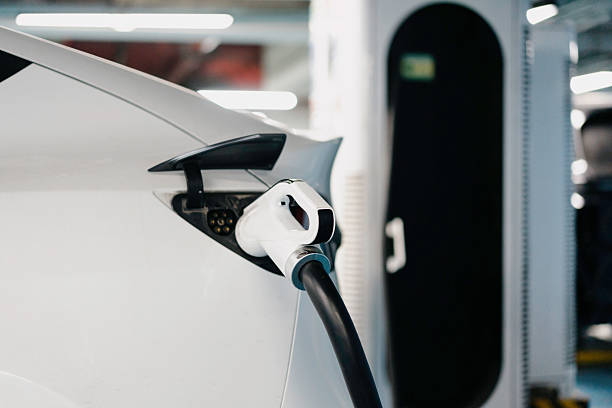
A floor-mounted EV charger is a standalone charging unit installed directly on the ground or on a dedicated pedestal. It is specifically engineered to supply electrical energy to electric vehicles in a safe and controlled manner. These chargers are commonly connected to the local electrical grid and equipped with charging connectors compatible with different EV models.
The defining feature of a floor-mounted charger is its independent support structure. Because it does not rely on an exterior wall for installation, it can be placed in open parking areas, roadside charging points, underground garages, fleet depots, or commercial zones where wall-mounted systems may not be practical. This makes it an ideal option for locations that need flexible charger placement or must serve multiple parking spaces.
Floor-mounted EV chargers are available in different power levels and configurations. Some are designed for AC EV charging, which is commonly used for residential communities, workplaces, and long-duration parking. Others are designed for DC fast charging, which supports rapid charging in public stations, highway service areas, and fleet applications where reduced charging time is critical. Depending on the design, a pedestal charger may serve a single vehicle or incorporate dual charging ports to charge two vehicles simultaneously.
The increasing need for reliable charging infrastructure is one of the key reasons floor-mounted EV chargers are becoming more important. EV adoption is no longer limited to early adopters or environmentally focused consumers. Today, electric vehicles are entering the mainstream, supported by government incentives, improvements in battery technology, and growing consumer awareness of sustainability and energy efficiency.
As more EVs appear on the road, users expect charging to be available wherever they live, work, shop, and travel. This expectation is placing pressure on property owners and infrastructure developers to install charging solutions that are practical, scalable, and user-friendly. Floor-mounted chargers meet these needs very effectively.
Their freestanding structure allows operators to optimize parking layouts and deploy chargers exactly where they are needed. In many public and commercial settings, this flexibility simplifies infrastructure planning and improves user access. These chargers also tend to be more visible than wall-mounted units, helping drivers identify charging points quickly in large or busy parking environments.
For businesses, installing floor-mounted EV chargers is not only a response to market demand but also a way to enhance property value, attract customers, and demonstrate environmental responsibility. For municipalities and utility providers, pedestal chargers help expand charging coverage in urban and suburban areas. For fleet operators, they support efficient depot charging and help accelerate electrification strategies.
Floor-mounted EV chargers are designed with a range of features that support durability, convenience, and operational efficiency. One of the most important features is structural independence. Since the charger stands on its own pedestal or frame, it can be installed in open environments without requiring nearby walls or building surfaces.
Another important feature is installation flexibility. Operators can place floor-mounted chargers in parking rows, central islands, curbside locations, and dedicated EV bays. This flexibility is especially useful in commercial areas where parking design and traffic movement must be carefully managed.
Many floor-mounted EV chargers also support dual-port charging. This means a single unit can provide charging access to two vehicles at the same time, helping maximize space efficiency and reduce equipment costs per charging point. In high-demand locations such as shopping centers, office parks, and public parking lots, this can significantly improve charging availability.
Modern pedestal chargers are often equipped with intelligent communication systems. These may include Wi-Fi, Ethernet, 4G, RFID card access, mobile app integration, remote monitoring, payment systems, and cloud-based management platforms. Smart connectivity allows operators to monitor charger status, control access, analyze usage, manage billing, and perform remote software updates.
Durability is another defining characteristic. Because floor-mounted chargers are often installed outdoors, they are typically built with weather-resistant enclosures and strong materials that can withstand rain, dust, ultraviolet exposure, and temperature fluctuations. Many also include protective features such as cable management systems, anti-collision bollards, and vandal-resistant housings.
One of the greatest advantages of floor-mounted EV chargers is their versatility. Since they do not depend on wall access, they can be installed in a much broader range of environments than wall-mounted chargers. This makes them ideal for open parking lots, highway rest areas, urban curbside charging zones, and commercial complexes.
A second major advantage is improved visibility. In busy public areas, a freestanding charging station is easier for drivers to locate than a charger attached discreetly to a wall or building column. This visibility not only improves user convenience but can also help increase charger utilization.
Floor-mounted chargers are also highly suitable for commercial deployment. Their design allows them to serve multiple parking spaces efficiently, and dual-gun or dual-port models can further improve charging throughput. For property owners, this means better return on infrastructure investment and more effective use of available space.
Scalability is another strong benefit. Charging networks often grow over time as EV adoption increases. Floor-mounted systems can be deployed in phases, making it easier for operators to start with a limited number of chargers and expand later. This gradual approach supports budget planning and reduces the risk of overbuilding in the early stages.
In addition, these chargers contribute to a better user experience. They are often positioned in accessible and clearly marked areas, making them easier to use for both experienced and first-time EV drivers. Features such as large displays, status indicators, intuitive interfaces, and contactless payment options further enhance convenience.
Floor-mounted EV chargers are used across a wide range of environments because of their flexibility and practical design. One of the most common applications is in public charging stations. In these locations, pedestal chargers provide reliable and visible access to charging for drivers who need energy while shopping, commuting, or traveling.
Commercial parking lots are another major application area. Shopping malls, supermarkets, hotels, restaurants, cinemas, and office buildings are increasingly installing floor-mounted chargers to attract EV-driving customers and employees. By offering charging as an added service, these businesses can improve customer satisfaction and strengthen their sustainability image.
Residential communities also benefit from floor-mounted EV chargers, especially in apartment complexes, condominiums, and shared housing developments. In these environments, wall-mounted installation may not always be possible, especially in open parking zones. Pedestal chargers provide a practical alternative that can serve residents efficiently.
Fleet depots are another important application. Delivery companies, taxi services, ride-hailing operators, public transit agencies, and corporate fleets are gradually electrifying their vehicles. Floor-mounted charging stations support organized depot charging, allowing multiple vehicles to charge in designated rows or parking areas.
Municipal infrastructure projects also make extensive use of floor-mounted chargers. Cities and local governments install them in public parking areas, transport hubs, streetside locations, and community centers to support the broader adoption of EVs. Their visibility and standalone structure make them particularly suitable for public infrastructure planning.
Floor-mounted EV chargers can generally be divided into AC chargers and DC chargers, each serving different needs.
AC floor-mounted chargers are typically used for slower or medium-speed charging. They are common in workplaces, residential communities, hotels, and parking areas where vehicles remain parked for several hours. AC chargers are often cost-effective, easier to install, and suitable for daily charging needs. They work well for drivers who can charge while working, shopping, or staying overnight.
DC floor-mounted chargers, on the other hand, are designed for fast charging. They convert AC power from the grid into DC power inside the charger, delivering electricity directly to the EV battery. This reduces charging time significantly and makes DC chargers ideal for high-turnover public charging stations, roadside service areas, logistics depots, and intercity travel routes.
The choice between AC and DC depends on the use case, available electrical capacity, expected dwell time, and investment goals. In many cases, operators develop a balanced charging network with both options. AC chargers serve routine destination charging, while DC chargers support rapid top-ups for drivers who need quick turnaround.
Successful deployment of floor-mounted EV chargers requires careful planning. Site selection is one of the first considerations. Chargers should be placed in locations that are easy to access, visible to drivers, and compatible with traffic flow. Parking layout, cable reach, pedestrian movement, and vehicle turning space all influence installation design.
Electrical capacity is another critical factor. The site must have sufficient power supply to support the charger's output. In some cases, electrical upgrades, transformer adjustments, or load management systems may be required. Smart power distribution can help reduce peak demand and improve energy efficiency when multiple chargers are installed.
Foundation and structural support are also important. Since floor-mounted chargers are fixed to the ground, they need a stable and durable mounting base. Outdoor installations may require concrete foundations, waterproof cable routing, drainage planning, and impact protection.
Safety must always be a top priority. Installations should comply with local electrical regulations, fire safety standards, accessibility requirements, and charging standards. Features such as emergency stop buttons, overload protection, ground fault protection, surge protection, and secure cable storage enhance operational safety.
Network connectivity is another key element for smart chargers. Reliable communication enables remote diagnostics, usage data collection, payment processing, and software management. In areas with weak communication signals, operators may need to plan for additional network support.
The modern floor-mounted EV charger is more than just a power supply device. It has evolved into an intelligent charging terminal capable of delivering a seamless and connected user experience.
Many chargers now feature digital displays that show charging status, power delivered, session duration, and payment information. LED indicators help drivers quickly identify whether a charger is available, in use, or out of service. RFID cards, QR codes, mobile applications, and contactless payments simplify charger access and improve convenience.
For operators, smart software platforms provide valuable management tools. They can monitor charger performance in real time, detect faults, schedule maintenance, manage pricing, and analyze user behavior. This data-driven approach improves uptime and helps operators optimize charger utilization.
Dynamic load balancing is another advanced feature increasingly found in floor-mounted chargers. It allows available electricity to be distributed intelligently among multiple charging points, reducing the risk of overload and improving site efficiency. This is especially useful in apartment complexes, office parks, and fleet depots where multiple EVs may charge simultaneously.
Some chargers also support integration with renewable energy systems and battery storage. This opens new possibilities for solar-powered charging, peak shaving, and better energy management. As sustainability becomes a greater priority, these smart energy features are likely to become even more important.
Because many floor-mounted EV chargers are installed outdoors, their durability is a major factor in long-term performance. Manufacturers typically use robust materials such as powder-coated steel, aluminum alloys, and high-strength engineering plastics to protect the charger from environmental exposure.
Outdoor chargers are often designed with high ingress protection ratings to resist water and dust. This ensures reliable operation in rain, wind, snow, heat, and other challenging conditions. Temperature control systems may also be included to protect internal electrical components in extremely hot or cold climates.
Mechanical protection is equally important. Since pedestal chargers are often installed in parking areas, they may be exposed to accidental vehicle contact. Protective bollards, reinforced pedestals, and impact-resistant housings help reduce damage risks and improve safety.
Long service life is essential for charging infrastructure investments. Durable charger construction reduces maintenance costs, minimizes downtime, and improves return on investment for site owners and charging network operators.
Installing floor-mounted EV chargers can create substantial business value. For commercial properties, charging stations attract EV-driving customers who are likely to spend time and money on-site while their vehicles charge. Retail centers, restaurants, hotels, and entertainment venues can use charging services to strengthen competitiveness and improve visitor experience.
For office buildings and employers, EV chargers support employee satisfaction and contribute to green workplace initiatives. Companies that provide charging access may gain an advantage in attracting environmentally conscious talent and meeting corporate sustainability goals.
Property developers also benefit by future-proofing their assets. As EV adoption expands, properties with established charging infrastructure are likely to become more desirable. This can increase occupancy appeal, rental value, and long-term market relevance.
Charging stations can also generate direct revenue. Depending on the business model, operators may charge users by time, energy consumed, or session fee. Some sites use EV charging as a premium service, while others offer it as a customer benefit to support broader business objectives.
In public infrastructure projects, floor-mounted chargers help cities demonstrate commitment to clean transportation and carbon reduction goals. Their installation can support economic development, environmental policy, and transportation modernization all at once.
Although floor-mounted EV chargers offer many benefits, there are also challenges to consider. Initial installation cost can be significant, especially for high-power DC systems or sites requiring major electrical upgrades. Planning, equipment, foundation work, and network integration all contribute to project cost.
Space management can also be a challenge in crowded parking areas. Charger placement must balance accessibility, safety, and efficient use of parking capacity. Poorly planned layouts may lead to blocked access or underutilized equipment.
Maintenance is another important factor. Like any technical infrastructure, EV chargers require regular inspection, cleaning, software updates, and occasional repairs. Choosing reliable equipment and working with experienced service providers helps reduce long-term operational risk.
Compatibility and standardization should also be considered. The charger must match regional connector standards, payment expectations, and communication protocols. As technology evolves, operators should choose solutions with upgrade potential and broad interoperability.
The future of floor-mounted EV chargers looks very promising. As electric mobility continues to expand, these chargers will become more intelligent, more powerful, and more integrated into broader energy and transportation systems.
One important trend is higher charging power. As EV batteries and vehicle architectures improve, demand for faster charging will continue to rise, especially in commercial and highway applications. More floor-mounted DC fast chargers will be deployed to support this need.
Another trend is the integration of smart energy management. Chargers will increasingly communicate with buildings, utilities, solar systems, and battery storage platforms to optimize energy use and reduce costs. This will make charging infrastructure more efficient and environmentally friendly.
Design will also continue to evolve. Future pedestal chargers are likely to become more compact, more user-friendly, and more visually appealing, especially in premium commercial and urban environments. Enhanced displays, improved cable handling, and better accessibility features will further improve the user experience.
The role of software will grow as well. Predictive maintenance, intelligent pricing, energy optimization, and charger reservation systems are likely to become more common. These capabilities will help operators manage growing networks with greater efficiency.
Floor-mounted EV chargers have become an essential part of the modern electric vehicle ecosystem. Their standalone design, flexible installation options, strong visibility, and ability to serve a wide variety of locations make them one of the most practical charging solutions available today. Whether installed in public parking lots, commercial centers, residential communities, fleet depots, or municipal charging networks, they provide reliable and convenient access to the power that electric vehicles need.
As the world moves toward cleaner transportation, the demand for dependable and scalable charging infrastructure will only continue to grow. Floor-mounted charging stations are uniquely positioned to meet this demand because they combine durability, adaptability, and smart functionality in a single solution. They not only support the daily needs of EV drivers but also help businesses, property owners, and governments prepare for the future of mobility.
With continuous advances in charging speed, connectivity, and energy management, floor-mounted EV chargers will play an even greater role in the years ahead. They are more than just charging devices. They are a visible symbol of the transition to sustainable transportation and a critical foundation for the next generation of electric mobility.