
What Is the Cheapest Way to Charge an EV at Home?
As electric vehicles (EVs) continue to gain popularity worldwide, more drivers are asking an important question: what is the cheapest way to charge an EV at home? While EVs are already known for lower running costs compared to gasoline vehicles, the actual cost of charging can vary significantly depending on how, when, and where you charge. Understanding the factors that influence home charging costs can help EV owners save money over the long term while maximizing convenience.
This article explores the most cost-effective ways to charge an electric vehicle at home, covering electricity pricing, charging equipment, smart EV charging strategies, solar energy integration, and practical money-saving tips.
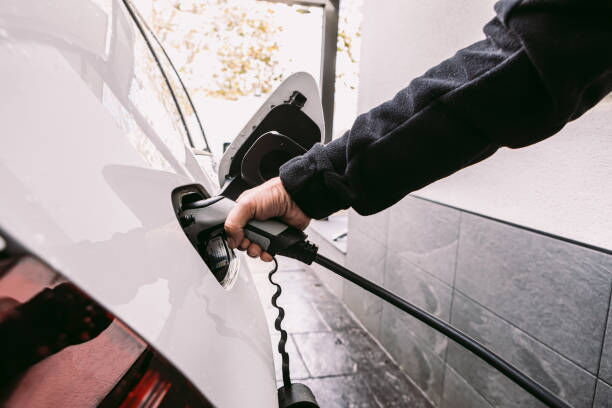
Home charging is almost always cheaper than public charging. Public charging stations, especially DC fast chargers, include additional costs such as infrastructure investment, maintenance, network fees, and profit margins. These costs are passed on to users in the form of higher per-kilowatt-hour (kWh) prices.
In contrast, charging at home allows EV owners to purchase electricity at residential utility rates, which are typically much lower. For most drivers, home charging can reduce fuel costs by 50–70% compared to gasoline and by 30–60% compared to public EV charging.
Additionally, home charging provides predictable pricing. Unlike gasoline prices, which fluctuate frequently, residential electricity rates are relatively stable. This makes it easier for EV owners to estimate monthly energy expenses and manage household budgets.
After understanding electricity pricing and charging schedules, choosing the right home charging hardware becomes the next critical step in reducing EV charging costs. The goal is not simply to buy equipment, but to invest in a solution that matches your daily driving needs and long-term energy strategy.
Level 1 charging is the most basic option and is usually available immediately, as most electric vehicles come with a compatible charging cable. It plugs directly into a standard household outlet, making it the lowest-cost option from an installation standpoint.
The main advantage is simplicity—no additional hardware or electrical upgrades are required. However, charging speed is very limited, typically adding only 3 to 5 miles (5–8 km) of range per hour. This makes Level 1 charging suitable mainly for drivers with very short daily commutes, generally under 30 miles (50 km). For higher mileage users, it can quickly become impractical.
Level 2 charging requires the installation of a dedicated 240V circuit, similar to those used for large household appliances. While the upfront cost is higher—usually involving both equipment and professional installation—it delivers a major improvement in charging speed, adding 25 to 40 miles (40–60 km) of range per hour. For most households, this efficiency makes Level 2 charging the more practical and cost-effective long-term choice.
The cost of home EV charging depends largely on your electricity rate structure. Many utilities offer different pricing models:
With flat-rate pricing, the cost per kWh remains the same throughout the day. While simple, this model does not reward flexible charging behavior. Even so, home charging under flat rates is usually cheaper than public charging.
Time-of-use pricing is one of the most effective ways to reduce EV charging costs. Under TOU plans, electricity is cheaper during off-peak hours—typically late at night and early morning—and more expensive during peak demand hours.
For EV owners, this is ideal. Most vehicles are parked overnight, making it easy to schedule charging during the lowest-cost periods. In some regions, off-peak electricity can be 40–70% cheaper than peak rates.
Some utilities offer EV-specific electricity plans with ultra-low overnight rates designed specifically for vehicle charging. These tariffs can reduce the cost per mile to just a few cents, making EV ownership even more economical.
Charging overnight is one of the easiest and cheapest ways to reduce home charging costs. Even without a special tariff, electricity demand is generally lower at night, and some utilities automatically reduce prices during these hours.
Most modern EVs and chargers allow users to schedule charging times. By setting your vehicle to begin charging after midnight, you can consistently avoid higher daytime rates without changing your daily routine.
Benefits of overnight charging include:
Lower electricity costs
Reduced strain on the power grid
Improved battery temperature management
Greater convenience with a fully charged vehicle each morning
Level 1 charging uses a standard household outlet and requires no additional equipment beyond the charging cable supplied with most EVs. This makes it the cheapest option in terms of initial investment.
Advantages
No installation cost
Uses existing electrical infrastructure
Ideal for short daily commutes
Limitations
Slow charging speed (typically 3–5 miles of range per hour)
Not suitable for high daily mileage
For drivers who travel less than 30–40 miles per day, Level 1 charging can meet daily needs while keeping costs extremely low.
Level 2 chargers operate on a 240-volt circuit and offer much faster charging speeds. While the upfront cost is higher due to equipment and installation, Level 2 charging can still be cheaper in the long run.
Why Level 2 Can Save Money
Enables full charging during off-peak windows
Improves charging efficiency compared to Level 1
Reduces reliance on public chargers
Many homeowners find that the convenience and flexibility of Level 2 charging outweigh the installation cost, especially for households with multiple EVs or longer daily commutes.
Smart EV chargers play a key role in minimizing charging costs. These chargers connect to apps or home energy systems and offer advanced features such as:
Automatic off-peak charging
Real-time electricity price tracking
Load balancing to avoid overloading home circuits
Integration with solar panels or batteries
By optimizing when and how electricity is used, smart chargers ensure that EVs always charge at the lowest possible cost without user intervention.
For homeowners with suitable roofs, solar energy offers the lowest long-term cost for EV charging. While solar systems require a significant upfront investment, they can dramatically reduce or even eliminate EV charging expenses over time.
Charging directly from solar panels during the day can offset grid electricity use. This works best for people who work from home or can charge during daylight hours.
Adding a home battery allows excess solar energy generated during the day to be stored and used for overnight EV charging. This maximizes self-consumption and minimizes reliance on the grid.
Over the lifespan of a solar system, the effective cost per kWh can be far lower than utility electricity, making solar-powered EV charging the cheapest option in the long term.
Many governments and utilities offer incentives that significantly reduce the cost of home EV charging equipment and solar installations. These may include:
Tax credits for EV chargers
Utility rebates for charger installation
Solar tax incentives and feed-in tariffs
Taking advantage of these programs can shorten payback periods and make advanced charging setups more affordable.
Small changes in charging behavior can lead to meaningful savings:
Avoid charging to 100% unless necessary
Precondition the vehicle while plugged in
Keep tires properly inflated to improve efficiency
Combine trips to reduce total energy use
Monitoring energy consumption through vehicle apps or home energy dashboards also helps identify inefficiencies and optimize charging habits.
Public charging is convenient, but it is rarely the cheapest option. DC fast charging, in particular, is designed for speed rather than cost efficiency. Regular reliance on public chargers can significantly increase operating expenses.
Home charging remains the most economical choice for everyday driving, with public charging best reserved for long trips or emergencies.
The cheapest way to charge an EV at home is not defined by a single method, but by a combination of smart choices:
Charging at home instead of public stations
Using off-peak or EV-specific electricity rates
Scheduling overnight charging
Choosing the right charging level
Using smart chargers
Integrating solar energy where possible
For most EV owners, simply charging at night on a time-of-use plan delivers immediate savings. Over the long term, pairing home charging with solar power offers the lowest possible cost per mile.
By understanding your electricity rates, driving habits, and available technologies, you can turn home EV charging into one of the most economical and convenient aspects of electric vehicle ownership.
