Apartment EV Charging Solutions for Modern Multifamily Living
As electric vehicles (EVs) continue to move from niche adoption to mainstream transportation, one question is becoming increasingly urgent for millions of renters: How can I charge my EV if I live in an apartment? While single-family homeowners often have the advantage of installing private EV chargers in garages or driveways, apartment residents face a more complex challenge. Shared parking, limited electrical capacity, and ownership structures can complicate EV charging access in multifamily buildings.
Yet the demand is undeniable. Governments around the world are promoting EV adoption through incentives and emissions regulations, automakers are expanding their electric lineups, and consumers are embracing cleaner mobility. As a result, apartment EV charging is rapidly emerging as a critical amenity—one that directly impacts tenant satisfaction, property competitiveness, and long-term asset value.
This article explores the main EV charging options for apartment settings, explains why tenants increasingly expect charging access at home, and examines the benefits and challenges of installing EV charging stations in multifamily properties. It also looks ahead to the technologies and strategies shaping the future of apartment EV charging.
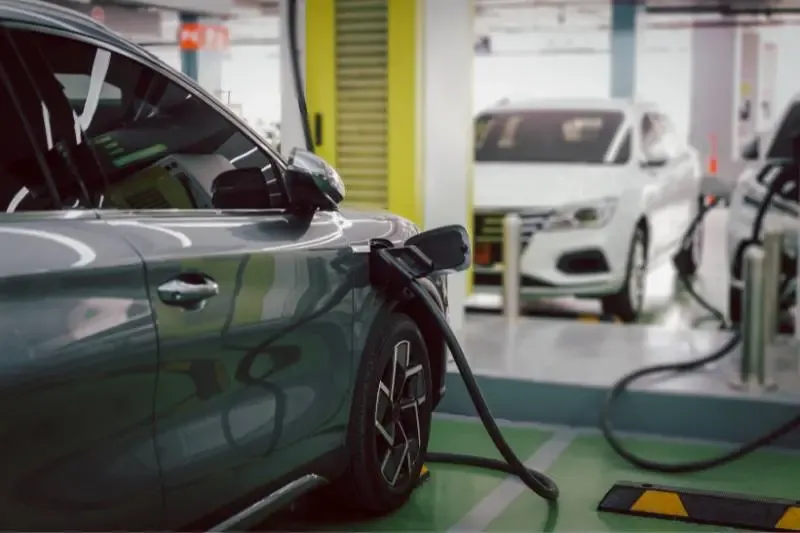
Not all EV charging solutions are created equal. Apartment complexes typically consider three main charging options: Level 1, Level 2, and DC fast charging. Each has its own advantages, limitations, and suitability for multifamily environments.
Level 1 EV charging uses a standard 120-volt electrical outlet, the same type found in most residential buildings. This is the simplest form of EV charging and requires no specialized equipment beyond the charging cable that usually comes with the vehicle.
To use Level 1 charging, an EV driver plugs their vehicle directly into a standard wall outlet. Charging speeds are modest, typically adding around 3 to 5 miles of driving range per hour. While slow, this method can still meet the needs of drivers with short daily commutes or predictable driving routines.
Level 1 charging can be appealing for apartment residents because it has a low upfront cost and minimal infrastructure requirements. In some cases, tenants may already have access to an outlet in a private garage or storage area. For property owners, it represents the least disruptive way to support EV charging.
However, Level 1 charging also has clear limitations. The slow charging speed makes it impractical for drivers with longer commutes, and standard outlets may not be designed for continuous high-load use, raising concerns about electrical safety. Additionally, shared outlets in common areas can create billing and access challenges.
Level 1 EV charging is best suited for:
- Low-mileage drivers
- Older apartment buildings with limited electrical capacity
- Temporary or transitional EV charging solutions
While not a long-term answer for most multifamily properties, Level 1 charging can serve as a starting point for EV-friendly apartments.
Level 2 EV charging is widely considered the most practical and scalable solution for apartment complexes. It operates on a 240-volt power supply and delivers significantly faster charging speeds.
A Level 2 EV charger typically adds 20 to 40 miles of range per hour, allowing most EVs to fully recharge overnight. This makes it ideal for residents who want the convenience of “plug in and forget” charging after work.
Compared to Level 1, Level 2 EV charging is more efficient, better suited for shared use, and compatible with smart charging technologies that help manage energy consumption.
Installing Level 2 EV chargers in apartment buildings requires careful planning. Because of the higher voltage, professional installation by certified electricians is essential to ensure safety and code compliance. Property owners must also assess:
Available electrical capacity
Panel upgrades or transformer requirements
Parking layout and cable management
Accessibility and ADA compliance
Modern apartment developments often integrate Level 2 charging during construction, while existing properties may need phased upgrades.
One of the most important advancements supporting Level 2 EV charging in apartments is dynamic load-sharing technology. This system allows multiple chargers to operate on a single electrical circuit by automatically distributing power based on real-time demand.
Instead of upgrading infrastructure for peak usage—which can be costly—load management ensures that power is allocated efficiently. When fewer vehicles are charging, each charger delivers higher power. When demand increases, power is shared evenly to avoid overloads.
This technology makes Level 2 charging more affordable and scalable for multifamily properties.
DC fast charging, also known as Level 3 charging, provides the fastest charging speeds available today. These stations can add up to 150 miles of range in as little as 30 minutes, depending on the charger and vehicle.
While DC fast charging is ideal for highway corridors and commercial locations, it is generally not well suited for apartment buildings. The reasons include:
- Extremely high installation and equipment costs
- Significant electrical infrastructure requirements
- High peak power demand
- Limited need for rapid charging at home
Apartment residents typically park overnight, making fast charging unnecessary. In addition, frequent use of DC fast charging can accelerate battery degradation, which further reduces its appeal for daily residential use.
DC fast chargers may make sense in mixed-use developments, luxury high-rise buildings, or properties located near major transportation hubs. However, for most apartment communities, Level 2 charging offers a better balance of cost, convenience, and practicality.
A commonly cited statistic in the EV industry is that around 80% of EV drivers prefer to charge their vehicles at home. This preference is driven by a combination of convenience, cost savings, and lifestyle integration.
Public charging stations play an important role, but they are inherently less convenient than home charging. Drivers must travel to a separate location, wait for an available charger, and either leave the vehicle unattended or remain nearby while it charges.
In contrast, home charging—whether in a house or apartment—fits seamlessly into daily life. A driver plugs in their vehicle after parking and goes about their evening routine: cooking dinner, working, relaxing, or spending time with family. By morning, the vehicle is ready to go.
Public charging, especially DC fast charging, is generally more expensive than residential electricity. Apartment EV charging allows tenants to benefit from lower energy rates and predictable costs, especially when charging overnight during off-peak hours.
As EVs become more affordable and widely available, a growing number of renters are choosing electric vehicles. Many prospective tenants now consider EV charging access a deciding factor when choosing an apartment, similar to high-speed internet or in-unit laundry.
Properties that fail to offer charging risk losing these tenants to more forward-thinking competitors.
For property owners and managers, apartment EV charging is more than just a tenant perk—it is a strategic investment.
EV charging stations are still relatively uncommon in many multifamily properties, making them a powerful differentiator. Offering EV charging signals innovation, convenience, and responsiveness to modern lifestyles.
As EV adoption accelerates, charging infrastructure will shift from a “nice-to-have” to a “must-have” amenity.
Electric vehicles produce fewer greenhouse gas emissions than traditional gasoline vehicles, particularly when paired with renewable energy sources. By installing EV charging stations, apartment communities can strengthen their environmental credentials and appeal to eco-conscious residents.
This can also support green building certifications and corporate sustainability initiatives.
EV charging infrastructure can enhance the long-term value of a property. Investors and buyers increasingly view charging stations as future-proof infrastructure that aligns with transportation trends and regulatory requirements.
Properties equipped with EV charging may command higher rents, experience lower vacancy rates, and attract a broader tenant base.
Apartment EV charging stations can generate revenue in several ways. Property owners may:
- Charge tenants per kilowatt-hour
- Implement subscription-based access
- Recover installation costs through usage fees
Many modern charging systems include built-in billing and payment management, making it easy to track usage and automate payments.
Despite the benefits, apartment EV charging does come with challenges that must be addressed thoughtfully.
Older apartment buildings may lack sufficient electrical capacity to support widespread EV charging. Solutions include load management, phased installations, or targeted upgrades focused on high-demand areas.
Shared charging stations require clear policies to ensure fair access. Smart chargers with user authentication, scheduling, and billing features help prevent misuse and reduce disputes among residents.
While installation costs can be significant, incentives, grants, and utility programs can offset expenses. Long-term benefits often outweigh initial investments.
The future of apartment EV charging is smart, connected, and scalable. Key trends include:
- Smart charging networks with real-time monitoring
- Integration with solar energy and energy storage
- Vehicle-to-grid (V2G) technology
- Regulatory requirements for EV-ready buildings
As EV adoption continues to rise, apartment communities that invest early will be best positioned to meet tenant expectations and regulatory changes.
Apartment EV charging is no longer a niche consideration—it is a fundamental component of modern multifamily living. From basic Level 1 charging to advanced Level 2 systems with load management, there are practical solutions for nearly every property type.
For tenants, EV charging means convenience, affordability, and lifestyle integration. For property owners, it represents an opportunity to attract residents, support sustainability goals, increase property value, and generate new revenue streams.
As the transition to electric mobility accelerates, apartment communities that embrace EV charging today will lead the way toward a cleaner, smarter, and more connected future.