
Behind the Scenes of EV Chargers: How CT Clamps Enable Smarter Energy Use
As electric vehicle (EV) adoption accelerates worldwide, the supporting charging infrastructure has evolved rapidly to meet the growing demand for efficient, safe, and intelligent charging solutions. One small but crucial component contributing to this progress is the CT clamp, short for Current Transformer clamp. Though often unnoticed by end users, this compact device plays an essential role in ensuring smooth operation and unlocking advanced features across many residential and commercial EV charging systems.
Interestingly, CT clamps are not legally required the way certain safety components—such as earth rods or isolator switches—may be in specific installations. However, they are increasingly common in smart EV chargers, especially those offering solar integration, dynamic load balancing, or energy-management capabilities. Many manufacturers now include CT clamps as part of the standard installation package, recognizing the performance and safety advantages they provide.
Homeowners may not know whether their charger has one, but a simple guideline is this: If your charger supports smart energy features, solar charging, or home load balancing, it almost certainly uses a CT clamp. And even when an installation did not originally include one, CT clamps can often be retrofitted, especially when new software updates introduce additional features like solar export limitation or dynamic load management.
This news article explores what CT clamps are, how they function, why they are vital for modern EV charging, and how they contribute to the smarter, safer, and more sustainable EV energy ecosystem evolving today.
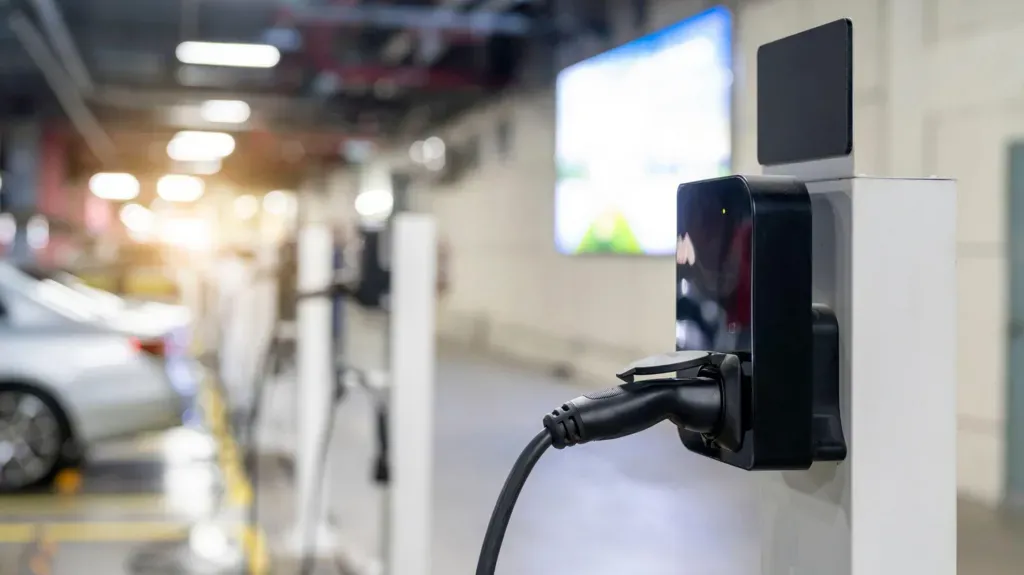
At its core, a CT clamp is a Current Transformer—a device designed to measure the electrical current (amps) flowing through a conductor in real time. Unlike wired meters that require direct electrical contact, CT clamps work by “clamping” around a live cable, allowing non-intrusive monitoring of electrical flow.
You will typically find a CT clamp installed inside or near your main electrical panel, meter box, or consumer unit. It sits alongside familiar components such as the main breaker, meter, and distribution board, quietly providing continuous data to the EV charger or home energy management system.
Though compact, its job is critical:
It monitors the electrical load of the entire household and communicates this data to the EV charger.
This monitoring enables the charger to:
Adjust power output dynamically
Prevent overloads
Balance power between high-demand appliances
Integrate renewable solar power
Support energy metering and billing functions
In short, the CT clamp acts as the “eyes and ears” of the EV charger, ensuring it operates smoothly, safely, and intelligently.
CT clamps serve several essential functions that improve reliability, energy efficiency, and safety in both home and commercial charging environments. As EV technology advances, the roles of CT clamps extend beyond basic monitoring—they now support complex energy-management algorithms that allow chargers to function as smart nodes within the electrical ecosystem.
Below are the key operational benefits and industry applications of CT clamps in EV charging systems.
One of the most critical functions of a CT clamp is its ability to detect electrical anomalies, including:
Excessive current (overload)
Unexpected spikes in demand
Potential short circuits
Abnormal fluctuations caused by faulty appliances or supply issues
When the CT clamp detects that household or facility electricity is approaching a dangerous threshold, it communicates with the EV charger to reduce or completely stop charging.
This automatic load adjustment protects:
Household wiring
Main breakers
Sensitive devices connected to the home
The EV charger itself
The electric vehicle’s onboard charging system
For commercial charging stations, where high loads are prevalent and multiple chargers may run simultaneously, overload protection becomes even more crucial.
In essence, the CT clamp acts like a real-time guardian, preventing electrical breakdowns and significantly reducing fire risks or unexpected power outages.
In commercial EV charging environments—such as public charging hubs, parking facilities, residential complexes, or fleet depots—accurate measurement of electricity usage is essential. The CT clamp provides highly precise current data, enabling the system to:
Record total charging consumption
Separate EV charging usage from overall facility electricity
Calculate bills for individual users
Support CPOs (Charge Point Operators) with reliable operational data
For CPOs, this data allows them to:
Monitor station performance
Detect faults or anomalies early
Analyze usage patterns and peak times
Optimize pricing structures
Make decisions on charger expansion and load management
Without CT clamps or equivalent monitoring hardware, operating a large charging network efficiently would be nearly impossible.
Modern EV chargers increasingly rely on advanced smart features, many of which depend on real-time current monitoring from CT clamps. Smart charging allows the system to make intelligent decisions regarding how and when to charge the vehicle, improving efficiency while minimizing costs.
Key functions supported by CT clamps include:
This prevents the home or building from overloading when many appliances are running simultaneously. For example:
If the air conditioner, electric oven, and washer are in use, the EV charger automatically reduces its charging rate.
When demand drops, charging speeds back up.
This ensures maximum safety without requiring expensive electrical panel upgrades.
For homeowners with solar panels, CT clamps make solar-aware charging possible. They help:
Detect how much solar energy is being generated
Determine how much is being exported or used by the home
Enable EV chargers to prioritize solar power
Allow “zero-export” charging modes required in some regions
This allows for greener, more cost-efficient charging.
In areas where electricity tariffs vary throughout the day, CT clamp data helps:
Schedule charging during off-peak hours
Reduce charging costs for users
Ease strain on the electrical grid
Improve overall energy distribution efficiency
Smart charging powered by CT clamps is increasingly becoming the norm, especially as utilities and governments encourage grid-friendly EV practices.
Beyond the technical aspects, CT clamps significantly enhance the everyday experience of EV owners and facility operators.
No need to worry about tripping breakers
More efficient use of household electricity
Ability to charge from solar power
Lower energy costs through intelligent scheduling
Increased lifespan of home electrical components
Accurate billing avoids disputes
Detailed analytics for planning and scaling EV infrastructure
Improved safety and reduced downtime
Ability to manage multiple charging stations simultaneously
Better compliance with local grid regulations
Compatibility with smart grid requirements
Easier integration with energy management systems
Lowered risk of installation failure or returns
Ability to offer more advanced features without redesigning hardware
In short, CT clamps add reliability and efficiency to an already complex charging ecosystem.
Most EV charger installations today include CT clamps as part of the standard package. The installer typically positions them:
Inside the electrical meter box
Near the main supply cable
Alongside consumer units
Directly on the live supply conductor feeding the property
Once installed, the clamp is connected via cable or wireless pairing to the EV charger.
As software features expand, some older chargers may begin supporting capabilities that were not available at the time of installation—solar integration being a prime example.
In these cases, a CT clamp can often be retrofitted to unlock the new feature set. Retrofitting takes minimal time and is significantly cheaper than replacing the entire charger.
The role of CT clamps is becoming even more important as the EV charging landscape evolves. Several trends are emerging where current transformer technology will continue to play a key role:
As bidirectional charging gains traction, accurate current monitoring will become essential to:
Control power sent back to the home or grid
Protect circuits from reverse overload
Optimize energy distribution based on demand
Future households may combine:
EV charging
Solar panels
Home batteries
Smart appliances
Heat pumps
CT clamps will be a key component that ties these systems together, enabling seamless energy orchestration.
Utilities are increasingly requiring real-time data on household loads to maintain grid stability amid rising EV adoption. CT clamp data will become critical for:
Demand response programs
Dynamic grid balancing
Peak shaving initiatives
Machine learning algorithms used in future chargers will rely heavily on continuous current data from CT clamps to optimize energy usage patterns.
As the global shift towards electric mobility continues, components like the CT clamp—though small and often overlooked—play a crucial role in enabling safer, smarter, and more efficient EV charging. By providing real-time current monitoring, CT clamps empower EV chargers with advanced capabilities such as dynamic load balancing, solar integration, intelligent scheduling, precise energy metering, and proactive safety protection.
Whether used in residential installations, commercial charging hubs, or fleet depots, CT clamps ensure the stability and reliability of the charging process. They help users avoid electrical overloads, reduce energy costs, and maintain compliance with regional grid regulations. And as EV charging systems become increasingly interconnected with renewable energy and smart grid technologies, the importance of CT clamps will only continue to grow.
In the end, the CT clamp is a small device with a big impact—quietly enabling the future of EV charging, one amp at a time.
