
How Curbside EV Charging Is Solving the Apartment Dweller Charging Problem
As electric vehicles (EVs) continue their rapid adoption across the United States and globally, cities are confronting a stark reality: the availability of convenient and equitable charging infrastructure — especially for drivers without private parking — remains a critical bottleneck in the EV transition. In response, urban planners, municipal governments, utilities, and private companies are pursuing curbside EV charging — installing EV chargers directly in street parking or integrating them into existing urban infrastructure — as a transformative solution.
This approach, once a niche concept, is now gaining traction nationwide, supported by pilot projects in major cities, innovative technical designs, and significant federal and local investments. Advocates argue that curbside EV charging can fill a major gap in EV access, especially for renters and multi-family dwellers, while boosting clean mobility and helping cities meet climate goals. Yet the model also raises complex challenges — from parking demands to regulatory adaptation — that city leaders must reconcile.
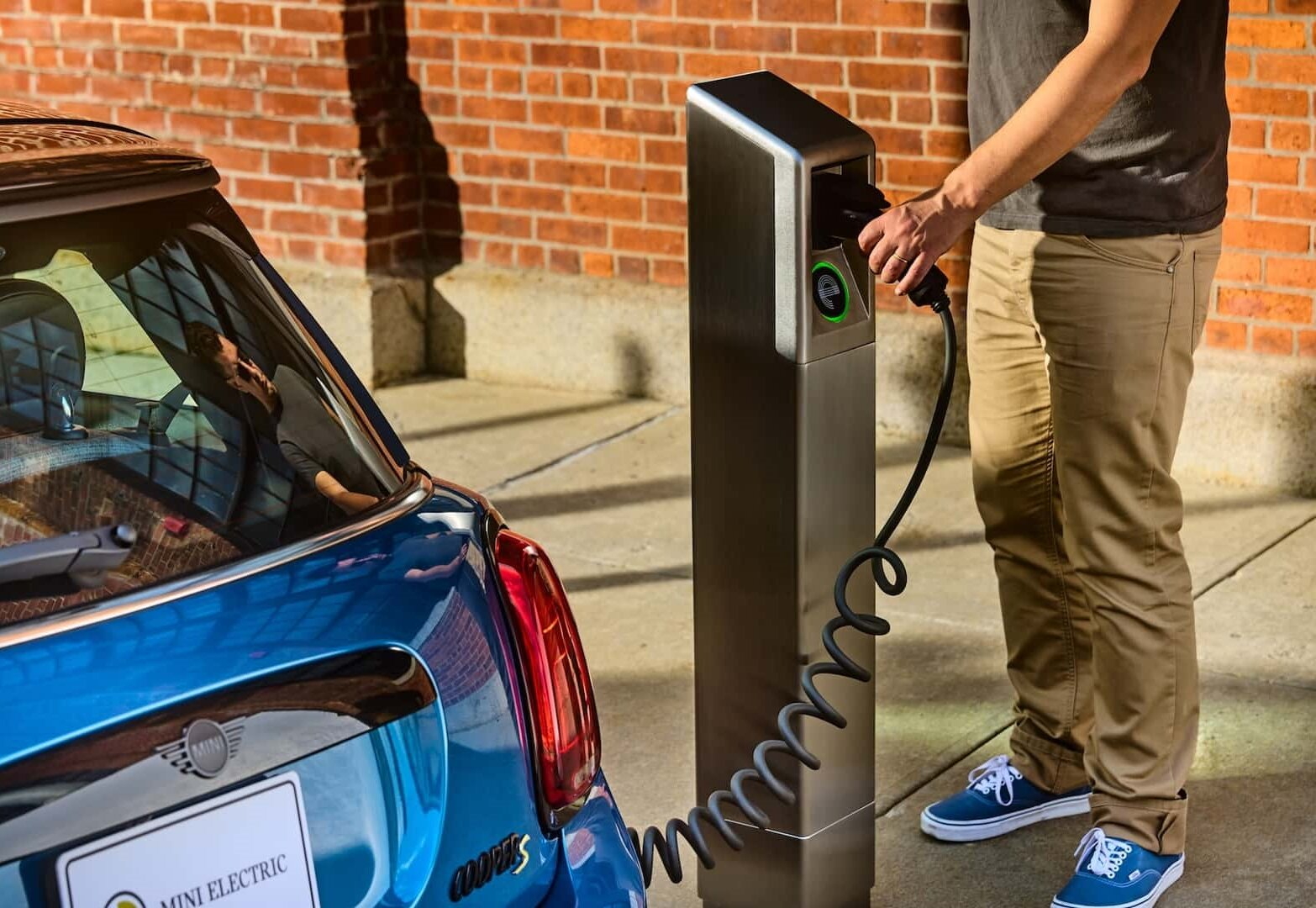
Curbside EV charging refers to the deployment of publicly accessible charging stations along urban streets — typically in existing parking spaces — or as integrated infrastructure on lampposts, utility poles, or building façades. Unlike traditional public charging facilities located in parking garages, shopping centers, or highway rest areas, curbside chargers bring power directly to where many drivers live, work, and park.
This model responds to a core issue: millions of urban residents lack access to home charging because they live in apartments, condos, or neighborhoods without driveways or garages. According to research on charging access, a significant percentage of households in dense urban environments fall into this category, creating what's often called a “charging gap” that threatens broader EV adoption unless addressed.
Across the U.S., cities of all sizes are now piloting and expanding curbside charging strategies as part of broader EV infrastructure plans. From New York and Los Angeles to Boston, Alameda (CA), and Detroit, innovators are testing a variety of deployment models, from behind-the-meter connections to building-powered systems, lamppost chargers, and dedicated curbside ports.
San Francisco's curbside EV charging pilot, initiated as part of the city's broader climate and transportation goals, is among the most expansive in the country. After targeting neighborhoods with high proportions of multi-unit housing and on-street parking constraints, the city approved proposals from multiple companies — including Urban EV, Itselectric, and Voltpost — to install curbside chargers tailored to San Francisco's varied urban landscape.
These installations incorporate both traditional Level 2 chargers in dedicated curbside spots and innovative lamppost-mounted stations that draw power from existing street infrastructure. The goal is to create a scalable ecosystem where drivers can plug in conveniently near home while minimizing disruptions to traffic and sidewalks.
City officials have underscored that this multi-provider approach — drawing on varied technical solutions — will help determine best practices for future larger-scale deployments in other urban areas.
In Los Angeles, the City Department of Transportation (LADOT) has dramatically expanded curbside charging by installing hundreds of new public ports, many of them mounted on existing streetlight circuitry, enabling faster rollout without extensive utility upgrades.
This infrastructure is particularly strategic because it reaches neighborhoods with high renter populations and limited access to home charging. By leveraging streetlights — often already equipped with electrical connections — Los Angeles can install chargers more cost-effectively and with less public disruption than traditional installations. Advocates in the city also see this approach as a model for other large U.S. urban centers seeking quick build-out without heavy grid investment.
New York City — a natural test bed for curbside EV charging due to its density and high number of residents without off-street parking — has been running curbside charging pilots since the early 2020s. A report from the city's Q3 2025 analysis highlighted exceptionally high demand, more than 99% system uptime, and dramatic usage growth across the five boroughs, particularly in high-density neighborhoods.
Yet the report also revealed public perception challenges: community satisfaction lagged, in part due to the loss of scarce parking spaces and resistance from non-EV drivers. Despite this, the city is moving forward. In 2024, New York City secured a $15 million federal grant — one of the largest such awards nationwide — to build out the city's curbside charging infrastructure further, with a focus on historically underserved neighborhoods.
City leaders framed this investment as a cornerstone of equitable climate action, helping lower-income communities adopt zero-emission transportation while reducing local pollution and emissions.
Boston's partnership with the Brooklyn-based charging startup itselectric represents one of the first behind-the-meter curbside charging implementations in the U.S. — meaning chargers are powered by adjacent buildings rather than requiring new utility lines or major infrastructure upgrades.
The pilot in Roslindale and other neighborhoods aims to accelerate charger deployment across the city with minimal disruption and cost to public agencies. City leaders emphasize that this model helps close the charging gap for residents who park on the street, supports community equity goals, and fits into Boston's broader plan to achieve carbon neutrality by 2050.
Smaller cities and mid-sized metros also have big plans for curbside charging. In Alameda, California, a partnership between It's Electric and the Housing Authority will bring building-powered public curbside EV chargers directly to residents without garages, supporting equitable access in historically underserved communities.
Similarly, Detroit — once synonymous with the internal combustion engine — is embracing curbside charging through a collaboration that connects chargers to existing building power, enabling rapid deployment and linking private property owners with drivers seeking charging access.
Research shows that a significant proportion of urban residents — especially those living in multifamily housing — lack access to home charging options like driveways or private garages. This “charging gap” has been identified as a major impediment to broader EV adoption, especially among lower-income residents and renters.
Curbside charging directly addresses this gap by bringing accessible charging directly to the street, near where people already park their cars. Instead of planning long trips to distant charging hubs, drivers can plug in overnight or while at home, just as they would if they had a private charger.
Beyond convenience, curbside charging plays a critical equity role. Many of the residents most affected by air pollution and climate impacts — urban renters and historically underserved populations — have also lacked easy access to EV charging infrastructure. By prioritizing installations in underserved ZIP codes and neighborhoods with limited alternative charging options, cities aim to reduce infrastructure inequities and promote fair participation in the clean energy transition.
This focus aligns with federal climate priorities, which increasingly tie funding and planning support to equitable outcomes.
A less widely discussed but growing rationale for curbside charging is its potential to support ride-hail drivers and small business fleets. Many such drivers spend long hours on the road, and lack of convenient charging options forces them to return home or make inefficient detours. Curbside chargers — strategically placed in high-demand urban corridors — can shorten downtime and make electrification more economically viable for drivers who otherwise face barriers to home charging.
Curbside charging isn't a one-size-fits-all solution. Cities and private providers are experimenting with multiple approaches:
- Lamppost and Utility Pole Chargers: These chargers attach to existing poles and draw minimal additional infrastructure investment, making them a cost-effective option for dense urban streets.
- Behind-the-Meter Systems: Chargers powered by adjacent buildings avoid utility infrastructure upgrades and reduce installation timelines, a strategy used in Boston and Alameda.
- Dedicated Curbside Ports: These are traditional Level 2 charging stations installed in parking spaces, often with detach-and-park cable systems to keep sidewalks clear.
Internationally, some countries — including Germany and Australia — have explored sidewalk-embedded curb chargers or extensive public charging networks along curbs and street furniture, providing models for future U.S. deployments.
Despite its promise, curbside charging raises several challenges:
Urban curb space is a contested resource. Turning parking spots into charging stations can exacerbate tensions in cities where parking is already limited. Reports from New York City pilots indicate that while utilization rates soared, community satisfaction lagged due to perceived loss of parking and limited charger availability.
Deploying curbside charging at scale requires cities to adapt zoning codes, streamline permitting processes, and update rights-of-way policies. While federal guidance and funding can help, local rule changes remain essential and often complex.
Depending on the technology and location, curbside chargers may require utility upgrades or new electrical connections, particularly for higher-powered units. Innovative models like behind-the-meter help reduce grid strain but aren't universally feasible.
Even well-intended infrastructure can create community pushback if residents feel excluded or inconvenienced. Ensuring that curbside charging deployments are informed by robust community consultation is vital, particularly in neighborhoods with limited parking or strong pedestrian priorities.
Despite barriers, the momentum behind curbside EV charging is unmistakable. Federal investments, emerging business models, and local leadership are converging to turn street-side parking into clean energy infrastructure. Market projections suggest rapid growth in the curbside charging segment globally, driven by policy support, private investment, and urban electrification strategies.
As cities continue to expand efforts — guided by data from pilots like New York's or Boston's innovative behind-the-meter model — curbside charging is likely to become an essential pillar of urban EV infrastructure, complementing home, workplace, and destination charging.
Curbside EV charging marks a pivotal evolution in how cities support electric mobility. By making charging convenient where people already park, this approach bridges critical gaps in access, supports environmental justice, and helps cities reduce transportation emissions — a leading source of urban air pollution and greenhouse gases.
Yet the model isn't without its challenges: parking conflicts, regulatory complexity, community perceptions, and infrastructure demands must all be addressed thoughtfully. The cities that succeed will be those that balance innovation with inclusion, deploying curbside charging in ways that meet drivers’ needs while respecting public space and urban dynamics.
In the coming years, as EV adoption continues to grow, curbside charging could redefine how cities think about curb space, transportation equity, and sustainable infrastructure — making electric vehicles a practical, convenient reality for millions more drivers.
