
How to Choose the Right EV Charging Cable for Faster and Safer Charging
As the global transition toward electrified transportation accelerates, electric vehicles (EVs) are becoming a central pillar of sustainable mobility strategies. Governments, manufacturers, and energy providers are investing heavily in EV infrastructure, including charging stations, battery technologies, and grid integration. However, one essential component that underpins the entire charging ecosystem—yet often receives less attention—is the EV charging cable.
At first glance, an EV charging cable may appear to be a simple connector between a vehicle and a charging point. In reality, it is a highly engineered product designed to safely transmit electrical power while facilitating communication between the vehicle and the charger. The quality, compatibility, and specifications of a charging cable directly influence charging speed, operational safety, user convenience, and long-term system reliability.
With the increasing demand for faster charging, higher power capacities, and smarter energy management, EV charging cables are evolving rapidly. This article provides a comprehensive and in-depth analysis of EV charging cable types, technical standards, material innovations, selection criteria, industry challenges, and future trends shaping this critical sector.
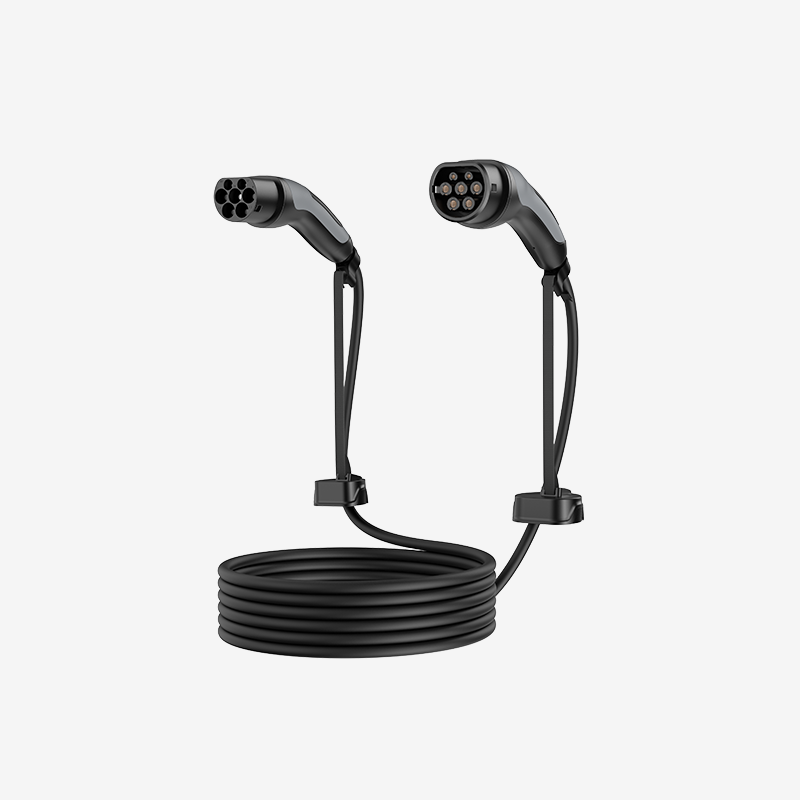
EV charging cables serve as the vital interface between the electric vehicle and the power source. Their role extends beyond simple electricity transfer and includes several key functions:
- Power Transmission Efficiency: Ensuring minimal energy loss during charging
- Thermal Management: Preventing overheating under high current loads
- Signal Communication: Enabling data exchange between the EV and the charging station
- Safety Assurance: Protecting users and equipment from electrical faults
- Environmental Resistance: Withstanding outdoor conditions such as rain, dust, UV exposure, and temperature fluctuations
Modern EV charging systems rely heavily on the cable's ability to maintain stable performance under varying loads and environmental conditions. A poorly designed or incompatible cable can lead to inefficient charging, system errors, or even safety hazards such as overheating and electrical failure.
Understanding the different types of EV charging cables is essential for ensuring compatibility and maximizing performance. These cables are generally categorized based on connector types and charging methods.
Type 1 connectors feature a 5-pin configuration and are primarily used in older EV models, particularly in North America and Japan. These cables support single-phase AC charging and are typically limited to lower power outputs.
Key Characteristics:
- Single-phase AC charging
- Maximum current typically up to 32A
- Mechanical latch system for secure connection
Applications:
- Early EV models such as first-generation Nissan Leaf
- Legacy charging infrastructure
Limitations:
- Lower charging speeds compared to newer standards
- Gradual decline in global usage
Although still in use, Type 1 connectors are steadily being replaced by more advanced and versatile alternatives.
Type 2 connectors have become the dominant standard for AC charging in many regions, particularly in Europe and increasingly in global markets. Their 7-pin design supports both single-phase and three-phase charging, enabling higher power delivery.
Key Characteristics:
- Supports single-phase and three-phase AC charging
- Higher current capacity (up to 63A in some configurations)
- Enhanced compatibility across EV brands
Applications:
- Residential charging systems
- Commercial charging stations
- Public AC charging networks
Advantages:
- Faster charging capabilities
- Widely adopted global standard
- Flexible for various power configurations
Type 2 connectors are now the preferred choice for most new EVs, offering a balance between performance, safety, and interoperability.
The Combined Charging System (CCS) represents a significant advancement in EV charging technology by integrating AC and DC charging into a single interface.
Unlike standard AC cables, CCS is primarily used for DC fast charging and is typically attached to the charging station rather than sold as a separate cable. It builds upon Type 1 or Type 2 connectors by adding two high-power DC pins.
Key Characteristics:
- Supports ultra-fast DC charging
- Power output can exceed 350 kW in advanced systems
- Compatible with most modern EVs
Applications:
- Highway charging stations
- Long-distance travel infrastructure
- Commercial fast-charging hubs
Advantages:
- Significantly reduced charging time
- Growing global adoption
- Integration with future high-power charging networks
The performance of EV charging cables heavily depends on the materials and engineering techniques used in their construction.
Copper remains the primary conductor material due to its excellent electrical conductivity. In some cases, aluminum alloys may be used to reduce weight and cost, though they require careful design to maintain efficiency.
Advanced polymers such as thermoplastic elastomers (TPE) and cross-linked polyethylene (XLPE) are commonly used for insulation. These materials provide:
- High thermal resistance
- Flexibility in various temperatures
- Protection against moisture and chemicals
Connectors are designed with precision to ensure secure contact, minimal resistance, and durability under repeated use. Features include:
- Silver-plated contacts for improved conductivity
- Ergonomic designs for ease of handling
- Locking mechanisms for safety
Selecting the right EV charging cable requires careful consideration of several technical and practical factors.
The first step is to identify the vehicle's charging port type. Using an incompatible connector will prevent charging entirely. Most modern EVs support Type 2, while older models may require Type 1.
Cable length affects both usability and storage. Common options include:
- Short cables (3–5 meters): Ideal for compact spaces
- Medium cables (5–7 meters): Balanced flexibility
- Long cables (8–10 meters): Suitable for larger areas or public use
The cable's current rating determines how much power it can safely carry.
- 16A cables: Suitable for slower home charging
- 32A cables: Support faster charging speeds
- Three-phase cables: Enable even higher power levels
Choosing a higher-rated cable can provide future flexibility as charging technologies evolve.
High-quality cables should offer:
- UV resistance for outdoor use
- Waterproof and dustproof protection (IP ratings)
- Resistance to mechanical stress and bending
Safety is a critical aspect of EV charging cable design. Manufacturers must comply with international standards to ensure reliability and user protection.
Key Standards Include:
- IEC 62196 (connector specifications)
- IEC 61851 (charging system requirements)
- UL certifications (North America)
- CE certification (Europe)
Testing procedures evaluate electrical performance, thermal stability, mechanical durability, and environmental resistance.
The EV charging cable industry is experiencing rapid innovation to meet growing performance demands.
High-Power and Liquid-Cooled Cables
As charging speeds increase, managing heat becomes a major challenge. Liquid-cooled cables are emerging as a solution, allowing higher currents without excessive temperature rise.
Smart Charging Capabilities
Modern cables are increasingly integrated with smart systems that enable:
- Real-time monitoring
- Load balancing
- Energy optimization
- Integration with renewable energy sources
Lightweight and Flexible Designs
Manufacturers are developing cables that are easier to handle without compromising durability, improving user experience in both residential and commercial settings.
The global EV charging cable market is expanding rapidly, driven by several key factors:
- Increasing EV adoption worldwide
- Government policies promoting clean energy
- Expansion of public charging infrastructure
- Growth of commercial EV fleets
Regional Developments
- Europe: Leading in Type 2 adoption and standardization
- North America: Transitioning toward CCS and high-power charging
- Asia-Pacific: Rapid growth led by China's EV market
Despite strong growth, several challenges remain:
- Fragmented standards across regions
- High production costs for advanced cables
- Supply chain constraints
- Compatibility issues with legacy systems
Addressing these challenges will be crucial for ensuring seamless global adoption.
The future of EV charging cables will be shaped by technological innovation and market demand. Key trends include:
- Expansion of ultra-fast charging networks
- Greater standardization across global markets
- Integration with smart grids and energy storage systems
- Development of more sustainable materials
As EV adoption continues to grow, charging cables will play an increasingly important role in enabling efficient and reliable energy transfer.
Proper maintenance of EV charging cables is essential for ensuring safe operation and extending product lifespan. Regular visual inspections should be conducted to identify any signs of damage, including cracks, cuts, or exposed wiring. Particular attention should be paid to connector ends, as these areas are most prone to wear.
Cleaning the cable is also important. Dust, dirt, and moisture can accumulate over time and affect performance. Users should wipe the cable and connectors with a clean, dry cloth and avoid using harsh chemicals that may damage the insulation.
Storage practices significantly impact cable durability. Avoid tightly bending or twisting the cable, as this can weaken internal conductors. Instead, loosely coil the cable and store it in a dedicated holder or protective case.
Environmental exposure should also be minimized. While most cables are designed for outdoor use, prolonged exposure to extreme heat, cold, or direct sunlight can degrade materials over time.
Finally, always ensure that the cable is fully unplugged before handling and never attempt to repair a damaged cable without professional assistance. Following these maintenance practices helps ensure reliable, efficient, and safe EV charging.
EV charging cables are a foundational component of the electric vehicle ecosystem, playing a critical role in ensuring efficient, safe, and reliable energy transfer. As EV technology advances, these cables are becoming more sophisticated, incorporating higher power capabilities, smart features, and enhanced durability.
Understanding cable types, technical specifications, and selection criteria is essential for both consumers and industry professionals. With ongoing innovation and increasing global demand, the EV charging cable industry is set to remain a key enabler of the transition to sustainable transportation.
