
The Rise of Megawatt EV Chargers: Enabling Ultra-Fast Charging for Heavy-Duty Electric Vehicles
The global electric vehicle (EV) industry is entering a new technological era defined by megawatt-scale charging infrastructure. While conventional DC fast chargers typically deliver between 50 kW and 350 kW, emerging Megawatt EV Chargers promise power levels exceeding 1 megawatt (1,000 kW)—a transformative leap that could redefine how quickly electric vehicles are recharged and how effectively large fleets transition away from fossil fuels.
Megawatt charging is particularly crucial for heavy-duty electric vehicles, including long-haul trucks, buses, and industrial transport equipment. These vehicles require extremely large battery packs—often several hundred kilowatt-hours or even megawatt-hours—to operate efficiently over long distances. Traditional charging solutions cannot deliver energy fast enough to meet operational demands. The development of megawatt charging systems addresses this gap by enabling charging times that align with logistics schedules, driver rest periods, and commercial fleet operations.
In recent years, automakers, charging infrastructure providers, power electronics companies, and governments have accelerated investment in megawatt charging technologies. From China and Europe to North America, large-scale pilot deployments are underway. Industry alliances are establishing global standards, while manufacturers are designing next-generation power modules, liquid-cooled connectors, and intelligent energy management systems to support this unprecedented level of electrical throughput.
This industry news report explores the technology, market developments, infrastructure challenges, and future outlook of Megawatt EV Chargers, highlighting why they are considered the next milestone in the electrification of global transportation.
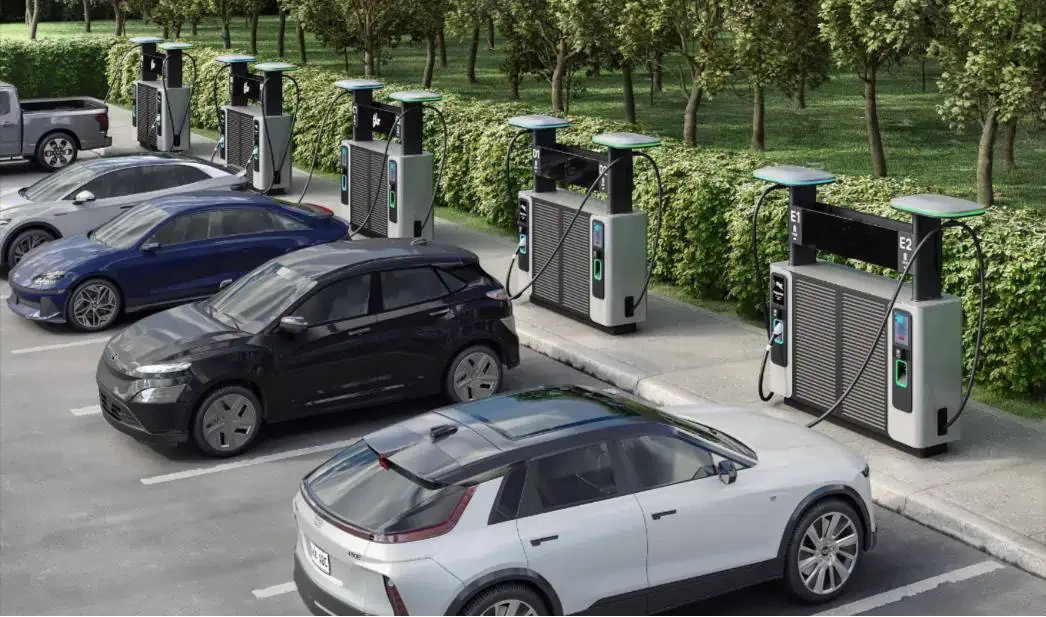
A Megawatt EV Charger refers to a high-power electric vehicle supply equipment (EVSE) capable of delivering more than 1 MW of charging power. These chargers are primarily designed for large battery electric vehicles, such as freight trucks, buses, and industrial vehicles.
The concept is formalized through the Megawatt Charging System (MCS), an international standard being developed by the industry alliance CharIN. The goal of MCS is to create a universal high-power charging interface for heavy-duty electric vehicles.
The MCS architecture builds upon the Combined Charging System (CCS) used by many passenger EVs but introduces several significant upgrades:
- Charging power exceeding 1 MW
- Currents potentially reaching 3,000 A
- Dedicated high-power connectors
- Advanced communication protocols
- Liquid-cooled cables and connectors
- High-voltage architectures above 1,000 V
These capabilities allow large EV batteries to charge rapidly while maintaining safety, reliability, and system stability.
Heavy-duty transportation is responsible for a substantial portion of global carbon emissions. Freight trucks alone account for nearly 25% of road transport emissions worldwide. Electrifying this segment is therefore a key strategy for achieving climate goals.
However, long-distance trucking presents unique challenges:
- Large energy consumption
- Long driving distances
- Limited downtime
- High payload requirements
Electric trucks often require batteries ranging from 500 kWh to over 1 MWh. Charging such batteries using conventional fast chargers could take several hours—an impractical timeframe for commercial logistics.
Megawatt chargers dramatically reduce charging time, making electric trucking economically viable.
For example, electric trucks equipped with megawatt charging technology can recharge from 20% to 80% in less than 30 minutes, aligning with mandatory driver rest periods in many regions.
China has become one of the most aggressive markets in developing ultra-fast charging technology. Several Chinese EV manufacturers are investing heavily in megawatt charging infrastructure.
BYD recently introduced a 1,500 kW “Flash Charging” system capable of adding nearly 250 miles of driving range in about five minutes under ideal conditions.
The technology integrates advanced battery chemistry with ultra-high-power chargers, allowing vehicles to charge from 10% to 70% in roughly five minutes.
The company plans to deploy thousands of megawatt-level charging stations nationwide, marking one of the largest infrastructure rollouts in the EV industry.
Industry analysts note that this level of charging performance begins to rival the convenience of traditional gasoline refueling.
Europe is also rapidly investing in megawatt charging infrastructure, particularly for freight transport corridors.
Scania announced plans to launch its Megawatt Charging System for electric trucks with charging power up to 750 kW, significantly faster than existing CCS chargers.
The project aims to establish 1,700 high-power charging points across Europe by 2027, enabling long-distance electric freight operations.
The charging network is being developed in partnership with the joint venture Milence, supported by major truck manufacturers including Volvo and Daimler.
This initiative aligns with European climate policies that aim to reduce transport emissions and accelerate the adoption of zero-emission heavy vehicles.
In the United States, megawatt charging infrastructure is closely tied to the electrification of freight fleets.
Tesla has introduced Megacharger stations designed specifically for its electric semi-truck platform. These stations are capable of delivering over 1 MW of charging power, enabling rapid recharging during delivery routes.
Several logistics companies and fleet operators are already deploying pilot programs to integrate megawatt chargers into depot operations.
Government funding programs such as the U.S. National Electric Vehicle Infrastructure (NEVI) initiative are also supporting the development of ultra-fast charging networks.
Megawatt charging requires extremely high electrical throughput. Most megawatt charging systems operate at 800 V to 1,000 V or higher.
High voltage allows the system to deliver large amounts of power while reducing current levels and minimizing energy loss.
For example:
- 1,000 V × 1,000 A = 1 MW charging power
- Future systems may exceed 3 MW charging capacity.
At megawatt power levels, charging cables must handle enormous currents without overheating.
To address this challenge, many megawatt chargers use liquid-cooled cables. These cables circulate coolant through internal channels to dissipate heat.
This technology allows connectors to safely deliver thousands of amps of current without becoming excessively heavy or bulky.
The MCS connector is significantly larger and more robust than traditional EV charging plugs.
Design considerations include:
- Ergonomic handling
- Electrical insulation
- High-current contacts
- Automated connection capability
Some designs also support robotic charging systems, which may be used in automated logistics depots.
Megawatt chargers rely on advanced communication protocols between the vehicle and charger.
These systems manage:
- Power negotiation
- Thermal monitoring
- Battery health protection
- Charging optimization
- Cybersecurity protection
Such communication ensures that ultra-fast charging does not damage the battery or compromise safety.
Megawatt chargers impose significant demands on electrical grids.
A single 1 MW charger consumes as much power as hundreds of homes. Large charging hubs could require several megawatts of electricity.
To address this challenge, infrastructure developers are integrating:
- Grid upgrades
- Renewable energy sources
- On-site battery storage
- Smart load management systems
Energy storage systems can store electricity during off-peak hours and deliver high power during charging sessions.
Companies such as Siemens are developing modular charging systems that can integrate energy management and distributed power architectures for megawatt charging applications.
Commercial fleets represent one of the most promising markets for megawatt charging technology.
Fleet operators benefit from:
- Predictable charging schedules
- Centralized depot infrastructure
- Lower operating costs
- Reduced emissions
Industries that may adopt megawatt charging include:
- Long-haul freight trucking
- Public transportation buses
- Mining and construction vehicles
- Port logistics equipment
- Airport ground vehicles
By enabling rapid recharging, megawatt chargers allow electric vehicles to maintain high utilization rates.
While megawatt charging was originally designed for trucks, some automakers are exploring its potential for passenger EVs.
Next-generation EV platforms with ultra-high-voltage batteries may support charging rates approaching 1 MW.
Such charging speeds could theoretically enable:
- 300–400 miles of range added in minutes
- Gasoline-like refueling times
- Improved long-distance travel convenience
However, passenger vehicle batteries must be specifically designed to handle such high power levels safely.
Despite its promise, megawatt charging infrastructure faces several challenges.
High-power chargers require significant upgrades to local electricity distribution networks.
Utilities must invest in:
- High-capacity substations
- Grid reinforcement
- Transmission upgrades
- Infrastructure Cost
Megawatt charging stations are expensive.
Costs include:
- High-power electronics
- Cooling systems
- Energy storage
- Grid connections
Installation costs can reach millions of dollars per site.
Ultra-fast charging can accelerate battery degradation if not carefully managed.
Manufacturers must develop:
- Advanced battery chemistries
- Improved thermal management
- Intelligent charging algorithms
- Standardization
Although the MCS standard is emerging, the industry must ensure global interoperability between vehicles and charging networks.
Standardization will play a critical role in large-scale adoption.
Industry analysts expect megawatt charging infrastructure to expand rapidly over the next decade.
Key drivers include:
- Growth of electric freight transport
- Government decarbonization policies
- Advances in battery technology
- Falling costs of power electronics
The global EV charging infrastructure market is projected to reach hundreds of billions of dollars by 2035, with megawatt charging playing a central role in heavy-vehicle electrification.
As megawatt charging stations become more common, they will enable electric vehicles to compete directly with diesel trucks in terms of operational efficiency.
Several trends are likely to shape the evolution of megawatt charging technology.
Autonomous Charging
Robotic charging systems may allow trucks to connect automatically without driver intervention.
Energy Storage Integration
Large battery storage systems may support megawatt charging hubs.
Renewable Energy Integration
Solar and wind power could supply clean energy for charging networks.
Smart Charging Networks
Artificial intelligence may optimize charging schedules and grid load balancing.
Megawatt EV chargers represent a transformative breakthrough in the evolution of electric mobility. By enabling ultra-fast charging for heavy-duty vehicles, these systems address one of the most significant barriers to the widespread electrification of freight transportation.
With automakers, technology providers, and governments investing heavily in megawatt charging infrastructure, the industry is moving rapidly toward a future where electric trucks and buses can recharge in minutes rather than hours.
As pilot deployments expand and standards mature, megawatt charging systems are expected to become a cornerstone of global EV infrastructure—supporting the transition to cleaner transportation and accelerating the decarbonization of logistics and mobility worldwide.
