How to Choose the Right DC Charging Solution for Long-Term Infrastructure Investment
As electric vehicles (EVs) continue their rapid global expansion, the infrastructure that supports them is evolving just as quickly. At the center of this transformation lies DC fast charging, the technology that enables high-power, rapid replenishment of vehicle batteries and makes long-distance travel, commercial fleets, and high-turnover public charging possible.
Yet, for investors, developers, municipal planners, fleet operators, and charging network providers, one critical question remains: How do you choose the right DC charging solution?
This decision is not simply about selecting the highest power rating or the lowest upfront cost. It requires a comprehensive understanding of technical performance, grid capacity, long-term scalability, operational economics, regulatory frameworks, user behavior, and sustainability objectives. A poorly planned deployment can lead to underutilized assets, high operating costs, reliability issues, and stranded infrastructure. Conversely, a well-designed DC charging strategy can generate stable revenue, improve brand reputation, and future-proof investments.
This extended industry guide explores every dimension of DC fast charging selection—technical, commercial, and strategic—providing a roadmap for making informed, resilient decisions in a fast-changing market.
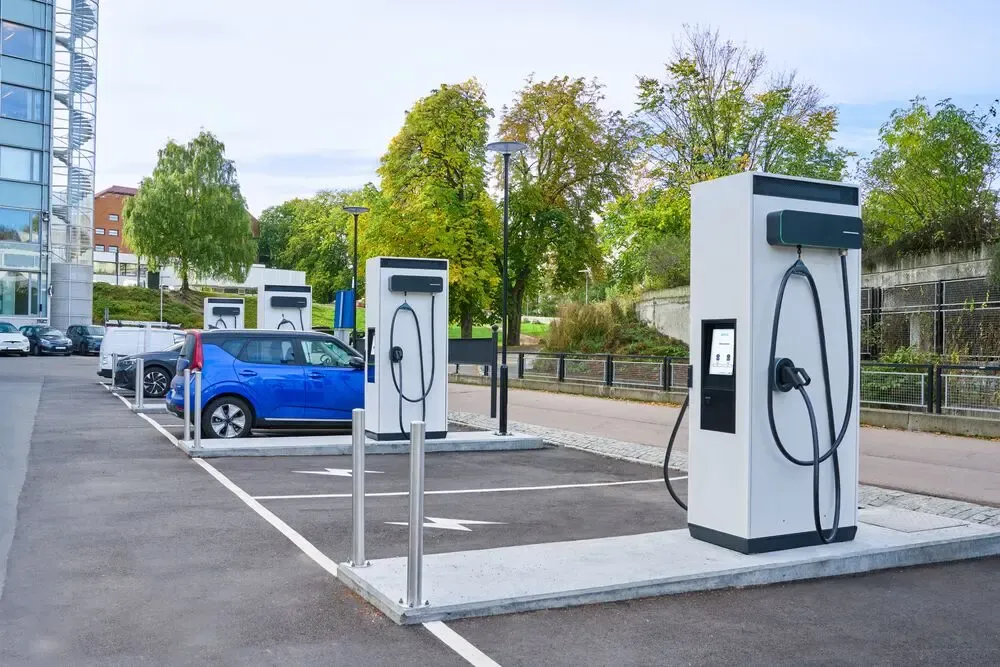
Electric mobility is shifting from niche adoption to mass-market acceptance. Passenger vehicles, buses, delivery fleets, ride-hailing services, and heavy-duty trucks are electrifying at unprecedented speed. While AC charging remains suitable for residential or long-dwell scenarios, it is DC charging that enables scale.
DC chargers convert AC grid power into direct current inside the charger itself and deliver it directly to the vehicle's battery at high power. This allows:
- 80% charging in 15–40 minutes for most modern EVs
- High vehicle throughput in public and commercial settings
- Operational viability for fleets that depend on uptime
For highway corridors, logistics hubs, public transport depots, and commercial parking facilities, DC fast charging is no longer optional—it is mission-critical.
Before comparing solutions, it is essential to understand how DC charging systems are built and how each component influences performance, reliability, and cost.
A DC charger consists of several major subsystems:
AC/DC Rectifiers: Convert grid AC into DC. Modular rectifier design allows scalability and redundancy.
Power Distribution Units: Manage output to multiple charging connectors.
Control Systems: Handle communication with vehicles, load management, safety protocols, and billing integration.
Cooling Systems: Air or liquid-based thermal management for high-power operation.
Modern DC chargers are often modular, meaning power modules can be added or replaced without shutting down the entire unit. This improves uptime and simplifies future expansion.
EV architectures vary significantly:
400 V systems: Common in older and many mid-range vehicles.
800 V systems: Increasingly popular in premium and next-generation EVs, enabling faster charging with lower current.
A future-ready DC charger should support wide voltage ranges (e.g., 200–1,000 V) to avoid performance throttling on newer vehicles and ensure compatibility across mixed fleets.
DC chargers are typically classified by output capacity:
50–100 kW: Entry-level DC fast chargers for low-traffic or budget-conscious sites.
100–150 kW: Balanced solution for urban hubs, retail centers, and small fleets.
150–350 kW: Standard for highway charging, high-turnover locations, and large fleets.
350–500 kW+: Ultra-fast charging for next-generation EVs, buses, and heavy-duty trucks.
While higher power reduces charging time, it also increases grid demand, installation cost, cooling complexity, and demand charges. Power must be matched to real-world usage patterns.
High current produces heat, which limits cable thickness and user comfort:
Air-cooled cables: Lower cost but bulkier and limited at high power.
Liquid-cooled cables: Enable ultra-fast charging with thinner cables, better ergonomics, and improved reliability.
For 250 kW and above, liquid cooling is increasingly essential.
A charger's communication protocol determines which vehicles it can serve:
CCS (Combined Charging System): Dominant in Europe and North America; supports high-power DC charging.
CHAdeMO: Widely used in earlier Japanese vehicles; still relevant for legacy compatibility.
GB/T: The Chinese national standard.
Multi-standard chargers can serve a broader user base, particularly in international or fleet applications.
Modern DC chargers rely on software-based communication standards:
OCPP (Open Charge Point Protocol): Enables remote monitoring, billing, firmware updates, and network integration.
ISO 15118: Supports plug-and-charge, secure authentication, and future V2G capabilities.
Selecting hardware that supports open standards prevents vendor lock-in and allows integration with third-party platforms.
The most common mistake in DC charging projects is choosing hardware without first defining how it will be used. Different environments require fundamentally different design priorities.
Primary objective: Maximum throughput and minimal dwell time.
Key characteristics:
- High power output (150–350 kW+)
- Multiple connectors per site
- Redundancy for uptime
- 24/7 reliability
Best practices:
Combine ultra-fast chargers with energy storage to mitigate grid constraints.
Design for future vehicle growth (larger batteries, higher voltages).
Integrate with navigation systems for real-time availability.
Primary objective: Balanced speed, space efficiency, and accessibility.
Key characteristics:
- Medium power (100–250 kW)
- Compact footprint
- High turnover but shorter dwell times
Best practices:
Use dynamic load sharing across multiple connectors.
Integrate parking management and reservation systems.
Prioritize user interface simplicity and vandal-resistant design.
Primary objective: Operational efficiency and cost optimization.
Key characteristics:
- Predictable charging schedules
- Large number of vehicles
- Sensitivity to energy costs and demand charges
Best practices:
Combine DC fast chargers with lower-power units for overnight charging.
Implement smart load management and energy storage.
Integrate with fleet management software for route planning and vehicle readiness.
Primary objective: Enhance customer experience and dwell time.
Key characteristics:
- Medium power aligned with typical stay (20–60 minutes)
- Branding opportunities
- Loyalty and payment integration
Best practices:
Use chargers as value-added services rather than pure revenue generators.
Incorporate digital signage and promotions.
Emphasize reliability and ease of use.
Even the most advanced DC charger is useless without sufficient electrical supply. Many sites underestimate:
- Transformer capacity
- Distribution line limitations
- Utility interconnection timelines
Early engagement with utilities is essential. Grid upgrades can take months or years and often dominate project costs.
High-power charging can trigger significant demand charges from utilities. Strategies to mitigate this include:
Battery Energy Storage Systems (BESS): Store energy during off-peak hours and discharge during peak usage.
Smart load management: Dynamically reduce power when multiple vehicles charge simultaneously.
Time-of-use scheduling: Align charging with lower tariff periods.
Pairing DC charging with solar or wind generation reduces carbon footprint and energy costs. While renewables alone cannot supply peak fast-charging demand, they contribute meaningfully when combined with storage.
Selecting the right DC charger requires evaluating lifecycle economics, not just capital expenditure.
- Hardware acquisition
- Site preparation and civil works
- Electrical upgrades
- Networking and software fees
- Maintenance and spare parts
- Energy costs and demand charges
A low-cost charger may incur higher long-term costs if it suffers from poor efficiency, frequent downtime, or limited upgrade options.
- Return on investment depends heavily on utilization rates:
- Public stations with low traffic may struggle to recover costs.
- Fleet depots benefit from predictable usage and operational savings.
- Retail locations may justify chargers through indirect revenue (increased foot traffic, customer loyalty).
- Developers should model revenue scenarios under conservative assumptions to avoid overestimating demand.
Charging infrastructure is only as good as its uptime. Frequent outages erode user trust and revenue.
Look for:
- Industrial-grade enclosures
- Weather resistance (IP ratings)
- Surge protection and grounding
- Proven field performance
Modern DC chargers should offer:
- Real-time performance data
- Predictive maintenance alerts
- Remote resets and software updates
This minimizes on-site service calls and downtime.
Evaluate suppliers based on:
- Global and local service networks
- Availability of spare parts
- Warranty terms
- Experience in similar projects
A strong partner reduces operational risk over the charger's 10–15 year lifespan.
Government policy plays a major role in infrastructure economics.
Many regions offer:
- Capital subsidies for charging equipment
- Grid upgrade cost sharing
- Renewable energy credits
- Tax incentives for EV infrastructure
Understanding eligibility requirements early can significantly reduce project cost.
DC charging equipment must meet:
- Electrical safety standards
- Grid interconnection requirements
- Accessibility and public safety regulations
Non-compliance can delay deployment or invalidate incentives.
For many organizations, DC charging is not just a business investment but also a sustainability initiative.
- Use renewable electricity where possible
- Implement energy-efficient power electronics
- Optimize site layout to reduce material use
Well-planned charging infrastructure supports:
- Urban air quality improvements
- Reduced noise pollution
- Access to clean transportation in underserved communities
Sustainability performance increasingly influences financing, public perception, and regulatory approval.
Next-generation vehicles, including heavy-duty trucks and electric buses, will require 500 kW+ charging. Modular, liquid-cooled architectures will become standard.
Bidirectional DC charging enables EVs to return energy to the grid, creating:
- Grid balancing services
- Emergency backup power
- New revenue streams
V2G-capable chargers require advanced communication standards and regulatory approval but represent a major future opportunity.
Artificial intelligence will optimize:
- Load forecasting
- Dynamic pricing
- Maintenance scheduling
This increases profitability and reduces operational risk.
A national operator deployed 350 kW chargers at regular intervals along highways. By integrating energy storage, they reduced grid upgrade costs and maintained high uptime. Utilization exceeded projections due to reliable performance and consistent user experience.
Lesson: High power paired with smart energy management maximizes throughput and customer satisfaction.
A delivery company installed a mix of 150 kW DC chargers and overnight AC units, coordinated by smart software. Demand charges were cut by 30% through load management and storage integration.
Lesson: Right-sizing power and optimizing energy use is more cost-effective than simply installing the fastest chargers available.
- Define Use Case: Public, fleet, retail, or mixed-use.
- Assess Demand: Expected vehicles per day, dwell time, peak usage.
- Evaluate Grid Capacity: Power availability, upgrade requirements.
- Select Power Level: Balance speed, cost, and utilization.
- Ensure Compatibility: Standards, voltage range, future vehicles.
- Analyze TCO: Include installation, energy, maintenance, and incentives.
- Choose a Reliable Partner: Service network, warranties, track record.
- Plan for Scalability: Modular design, software updates, expansion capability.
Choosing the right DC charging solution is not merely a technical procurement decision—it is a strategic investment that shapes long-term operational success, financial viability, and sustainability performance. As EV adoption accelerates across passenger, commercial, and heavy-duty segments, the demands placed on charging infrastructure will only intensify.
Organizations that succeed will be those that look beyond headline power ratings and short-term costs, instead embracing a holistic approach that integrates grid readiness, lifecycle economics, user experience, and future technology trends. By carefully aligning charging solutions with real-world use cases and long-term objectives, stakeholders can create infrastructure that is not only functional today, but resilient, scalable, and profitable for decades to come.
In the race toward electrification, the right DC charging strategy will define the leaders of tomorrow.