
The Rise of Commercial EV Chargers in a Rapidly Electrifying World
As electric vehicles (EVs) continue their meteoric rise in adoption around the world, commercial electric vehicle charging infrastructure has emerged as a cornerstone of the clean energy transition. From urban centers to highways and commercial hubs, the deployment of commercial EV chargers is accelerating as governments, businesses, and utilities work to support a future where zero-emission transportation is the norm — not the exception.
This transformation is reshaping energy systems, redefining mobility, and creating new opportunities for businesses large and small. With rising demand for fast, efficient, and reliable charging, commercial EV charging stations are now being designed to meet needs across a wide range of use cases — from corporate fleets and ride-hail fleets to retail destinations and public transit depots.
In this comprehensive report, we explore the state of the commercial EV charger market, the technologies driving innovation, key trends shaping deployment, and the challenges and opportunities that lie ahead.
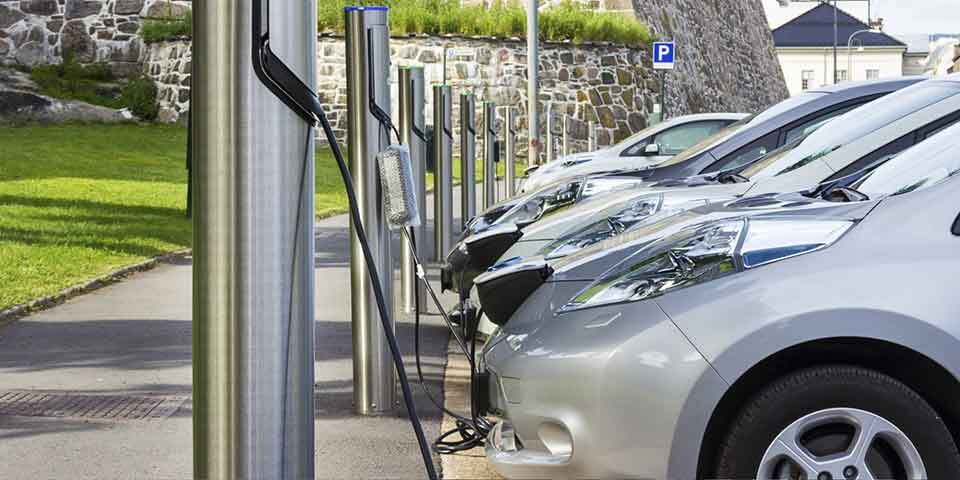
In the past decade, electric vehicles have transitioned from niche products to mainstream mobility solutions in many major markets. Sales of EVs — including battery electric vehicles (BEVs) and plug-in hybrids (PHEVs) — have broken records year after year, driven by stronger climate policies, falling battery costs, consumer demand, and intensified automaker commitments to electrification.
With this surge in EV adoption has come a parallel need for charging infrastructure capable of supporting vehicles beyond home and workplace charging. Commercial EV chargers — installed at public stations, shopping centers, office parks, parking garages, and along highways — play a critical role in enabling long-distance travel, supporting fleet operations, and alleviating “range anxiety” among drivers.
Unlike residential chargers that primarily serve overnight charging, commercial chargers must deliver rapid turnaround times, robust reliability, and accessibility for a diverse user base. This has led to increased investment and innovation in both hardware and software solutions tailored to commercial applications.
Commercial EV chargers are characterized by their power capacity, reliability, scalability, and network connectivity. While home Level 2 chargers (typically 3.3–7.7 kW) suit overnight charging, commercial applications often require:
- High-Power DC Fast Charging (DCFC): Ranging from 50 kW to 350 kW or more, DC fast chargers significantly reduce charging times, delivering 80% charge in as little as 15–30 minutes for compatible vehicles.
- Multiple Ports & Load Management: Commercial sites need to serve several vehicles simultaneously. Smart load balancing ensures efficient use of electrical capacity.
- Robust Construction: Equipment designed for outdoor, high-use environments must meet rigorous durability and safety standards.
- Network Connectivity: Online monitoring, payment processing, demand response, and usage data analytics are essential for commercial operations.
- Interoperability: Compatibility with multiple EV models and payment networks ensures broad customer access.
As EV adoption rises, standardization and enhanced user experiences — such as contactless payment and mobile app integration — become more important for commercial charging providers.
Public sector action has been a major catalyst in expanding commercial EV charging infrastructure. Many countries have set ambitious targets to phase out internal combustion vehicles, placing pressure on charging infrastructure to keep pace.
Government incentives — including grants, tax credits, rebates, and low-interest loans — have helped lower the financial barriers for businesses and municipalities installing commercial charging networks. For example, programs in the U.S., European Union, China, and various national and local jurisdictions offer support covering a portion of capital costs, grid upgrades, and even operational expenses.
Policy frameworks also tend to mandate accessibility standards, interoperability requirements, and grid integration provisions, ensuring that commercial charging stations meet user expectations and contribute positively to broader grid goals.
Large corporations — from logistics providers to ride-hailing services — are electrifying their fleets at an unprecedented pace. This shift requires robust commercial charging infrastructure at depots, warehouses, and transit hubs.
Electric fleets not only reduce emissions and fuel costs, but they also align with corporate sustainability goals and investor expectations.
Companies are installing on-site chargers and partnering with third-party charging providers to ensure seamless operation. Some are also investing in vehicle-to-grid (V2G) technologies to enhance grid stability and capture additional value from EV batteries.
Public perception and demand play a vital role. Drivers want assurance that they can charge quickly, reliably, and conveniently — whether they are shopping downtown, commuting to work, or embarking on long trips.
Retailers and commercial property owners are capitalizing on this by offering charging as an amenity that attracts customers and increases dwell time. Studies show that EV drivers are more likely to patronize businesses with charging stations, presenting a compelling business case for commercial adoption.
DC fast chargers represent the backbone of commercial charging networks. Unlike Level 2 chargers, which deliver alternating current to the vehicle’s onboard charger, DCFC units convert AC power to DC externally and deliver it directly to the battery.
Recent advancements include ultra-fast chargers at 150 kW, 250 kW, 350 kW, and beyond. These high-power units enable drivers to achieve significant charge levels in short timeframes — a key need for highway corridors and high-traffic sites.
Modularity allows charging providers to expand infrastructure as demand grows. By deploying systems that scale from a few ports to dozens, operators can optimize initial costs while future-proofing their investments.
Software-defined architectures also enable dynamic power distribution, which ensures efficient use of limited electrical capacity and reduces demand charges.
Commercial chargers increasingly integrate with energy management systems to coordinate demand, reduce peak loads, and participate in utility programs like demand response.
Battery storage and solar co-locations help mitigate grid impacts and enable lower-cost charging, especially in areas with high electricity prices. Smart chargers can also provide bi-directional capabilities — supporting vehicle-to-grid (V2G) or vehicle-to-building (V2B) functions.
Networked chargers provide a seamless experience for users with real-time availability data, reservation systems, digital payments, and customer support.
Predictive maintenance driven by charging analytics enhances uptime and reliability — crucial factors for commercial sites that rely on repeat traffic.
Across major transportation corridors, commercial charging installations have become critical infrastructure. Companies and governments are building fast-charging stations at rest stops, travel plazas, and service centers to facilitate long-distance EV travel.
These locations typically feature multiple high-power chargers, retail partnerships, and amenities for drivers during charging sessions. Strategically spaced stations reduce range anxiety for EV drivers, encouraging broader adoption.
In metropolitan areas, shopping malls, office parks, and entertainment districts are deploying Level 2 and DC fast chargers to attract EV drivers. These sites often utilize networked chargers that provide customer accounts, loyalty rewards, and seamless payment.
For property owners, EV charging is a differentiator — drawing in customers who spend more time and money onsite.
Delivery fleets, transit agencies, and logistics companies are electrifying their vehicles and installing high-capacity charging infrastructure at their facilities. In many cases, these depots integrate chargers with solar and energy storage to reduce peak demand charges and support operations.
Advanced fleet management platforms help schedule charging, optimize routing, and monitor energy use, maximizing efficiency and uptime.
The expansion of commercial EV chargers has both economic and environmental benefits:
The build-out of EV charging networks stimulates job growth in manufacturing, construction, electrical services, and software development. Commercial charging deployments attract investment from both domestic and international stakeholders.
Charging network operators often partner with local utilities and contractors, fostering community economic activity.
Commercial EV charging supports broader electrification goals that reduce greenhouse gas emissions and air pollution. Electrifying transportation — particularly heavy-use commercial vehicles — can significantly cut carbon emissions while lowering harmful tailpipe pollutants.
This trend improves urban air quality, reduces public health costs associated with respiratory diseases, and contributes to climate mitigation targets.
Despite rapid progress, several challenges persist:
High-power commercial chargers require substantial electrical capacity, often necessitating utility upgrades, transformers, and distribution enhancements. In some regions, permitting delays and grid bottlenecks slow deployment.
Policy reforms that streamline permitting, grid interconnection, and cost recovery are critical to smoothing rollout.
The upfront costs for high-power chargers, site preparation, construction, and grid upgrades can be significant. Although incentives help offset expenses, financing models must evolve to attract private capital and support long-term operations.
Revenue models — including charging fees, subscriptions, and advertising — continue to adapt as utilization patterns emerge.
Different charging standards and communication protocols create friction for users and operators. While much progress has been made toward uniform standards (such as CCS and CHAdeMO), continued alignment is needed — especially in global markets.
Interoperability between networks and payment systems enhances convenience and encourages adoption.
Commercial charging sites must deliver high uptime and rapid response to technical issues. Harsh weather, vandalism, and heavy usage can increase maintenance needs.
Remote diagnostics, proactive support, and robust service agreements are essential components of operational planning.
The intersection of commercial charging and renewable energy generation is a major area of innovation. Solar-paired charging stations with onsite storage can reduce electricity costs and carbon intensity.
Energy management systems that leverage renewables and storage also provide resilience — helping sites continue to operate during grid outages.
As battery technologies evolve and EV ranges increase, commercial charging systems will continue pushing the envelope with ultra-fast solutions. Future chargers may deliver 500 kW and beyond, supporting heavier vehicles such as buses and trucks.
Strategic planning will ensure these ultra-fast corridors support logistics, travel, and freight mobility.
Emerging business models — including “charging as a service,” pay-per-use, and subscription platforms — will diversify revenue streams. Retail partnerships, advertising, data services, and loyalty programs further enhance commercial viability.
Hardware-agnostic network platforms will enable site owners to choose optimal configurations and manage diverse assets across regions.
Policymakers are increasingly recognizing the importance of charging infrastructure as part of climate commitments. Future regulations may include stronger requirements for equitable access, universal standards, and incentives for disadvantaged communities.
Public-private collaborations will shape infrastructure planning, ensuring charging solutions align with economic, social, and environmental goals.
Industry leaders and analysts emphasize that commercial charging infrastructure is more than a physical network — it’s a catalyst for a broader energy transition.
“Reliable, high-power commercial charging infrastructure is essential to accelerate EV adoption and ensure a seamless customer experience,” says a leading EV charging executive.
“Commercial chargers are not just about speed — they’re about reliability, accessibility, and integration with energy systems that support sustainable growth,” adds a policy expert.
Fleet operators highlight the operational benefits:
“Electrifying our delivery fleet has reduced our total cost of ownership and strengthened our sustainability commitments,” explains a logistics company manager. “But it requires thoughtful planning and robust charging infrastructure that our partners help deliver.”
The transformation of transportation is underway, driven by shifting consumer behaviors, corporate commitments to sustainability, and policy incentives aimed at decarbonizing mobility. At the heart of this shift stands commercial EV charging infrastructure — a complex and rapidly evolving ecosystem that enables the electrification of vehicles at scale.
From ultra-fast highway chargers to urban retail installations and high-capacity fleet depots, commercial EV chargers are facilitating new mobility patterns, supporting economic growth, and contributing to climate goals.
While challenges remain — particularly around grid capacity, cost structures, and standardization — the industry’s momentum is undeniable. With continued innovation, investment, and collaboration among governments, utilities, businesses, and communities, commercial EV charging will play a central role in powering the transition to cleaner, smarter, more sustainable transportation.
